

The Importer’s Technical Handbook: Mastering the Grades and Varieties of Iranian Pistachios
To dominate your local market, you must speak the language of the industry. Importing Iranian pistachios in bulk requires more than just picking a type; it requires a deep understanding of “Ounce” counts, variety characteristics, and processing standards.
- Deciphering the “Ounce” (Size Matters)
The size of Iranian pistachios is measured by the number of nuts per 28.3 grams (one ounce).
- The Luxury Tier: Varieties like Akbari (Super Long) usually come in 18-20 or 20-22 grains per ounce. These are the “black diamonds” of the nut world, ideal for high-end gifting markets in the Gulf and Europe.
- The Commercial Tier: Fandoghi (Round) pistachios, often sized 28-30 or 30-32, are the workhorses of the industry. Because you get more nuts per kilogram, they are the smartest choice for snack packers and chocolate manufacturers who need volume and competitive pricing.
- Selecting the Right Variety for Your Market
Each global region has a specific “palate” for pistachios. Smart importers align their purchases with local demand:
- Ahmed Aghaei: Known for its white shell and red kernel, this is the top choice for markets like India and Russia. It provides the best “visual value.”
- Kalleh-Ghouchi (Jumbo): Famous for its large, brain-like shape, it is a favorite in the German and broader European markets for its bold appearance.
- Kernels (Gandomi or Green): For industrial bakeries and confectionery, importing the kernels directly saves on shipping costs and labor, but requires strict temperature-controlled logistics.
- The “Closed Shell” and Foreign Material Margin
A critical technicality often overlooked is the percentage of closed-shell nuts in a “Long” or “Round” shipment. While a 100% open rate is nearly impossible, professional contracts stipulate a maximum of 3% to 5% closed shells. Anything higher reduces the net value of your shipment. Furthermore, the presence of “Foreign Material” (sticks, stones, or hull pieces) is a sign of poor processing. Smart importers work only with suppliers who utilize double-aspiration and metal detection during the cleaning process. - Shell Color and Aesthetics
The aesthetic appeal of Iranian pistachios—the contrast between the cream-colored shell and the vibrant green/purple kernel—is their greatest selling point. Importers avoid “stained” shells (caused by delayed hulling after harvest), as they indicate lower grade processing. A bright, clean shell is a hallmark of a supplier who manages the harvest-to-dryer timeline efficiently. - Building a Direct Supply Chain
The most common mistake is buying through multiple layers of brokers. This adds cost and dilutes accountability. Smart importers seek a direct link to the source to ensure that the sample they approved is exactly what arrives in the container.
Partner with a Specialist
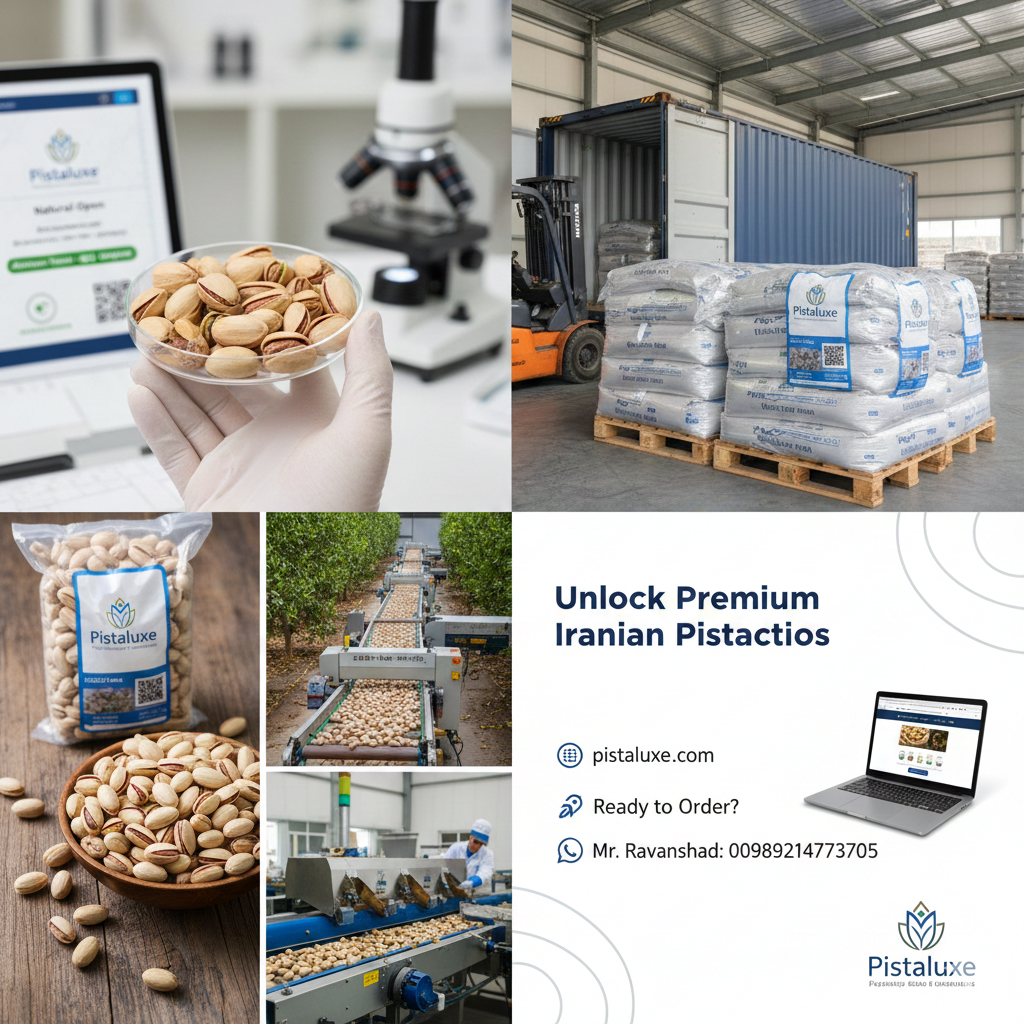
Navigating the Iranian pistachio market requires a partner who combines traditional product knowledge with modern export standards. We ensure your cargo meets every technical specification, from sizing to microbiological safety.
To receive our latest catalog, real-time cargo photos, or to place a bulk order, contact Mr. Ravanshad today:
📞 WhatsApp: 00989214773705