

Author: Mr. Ravanshad
WhatsApp for Orders and Inquiries: 00989214773705
Introduction: Pistachio, the Green Gold of Global Trade
Pistachio is one of the most valuable and widely recognized nuts in the international food market. Known as the “green gold,” it has a long history in agriculture, nutrition, and trade. Beyond its pleasant taste and attractive appearance, pistachio is highly valued for its nutritional density, health benefits, and versatility in food processing industries. In recent decades, global demand for premium nuts has increased significantly, and pistachio has emerged as a strategic export product for producers and exporters who aim to serve high-value markets in Europe, Asia, the Middle East, and North America.
For export businesses, pistachio is not simply a commodity; it is a product whose success depends on scientific cultivation, careful harvesting, post-harvest processing, quality control, packaging, and compliance with international food safety standards. Buyers in foreign markets are highly sensitive to product consistency, traceability, moisture level, kernel appearance, taste, aflatoxin safety, and packaging quality. Therefore, exporters must present pistachio not only as a delicious nut, but also as a professionally handled agricultural product with reliable specifications.
This article provides a comprehensive scientific, educational, and commercial overview of pistachio, designed specifically for export websites, international buyers, wholesalers, distributors, and food processing companies.
1. Botanical Characteristics of Pistachio
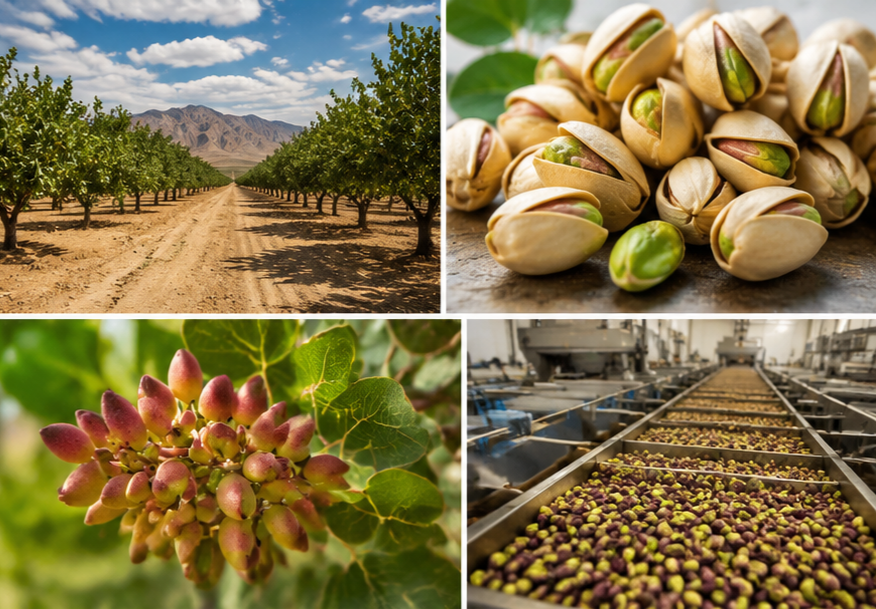
Pistachio belongs to the family Anacardiaceae and the genus Pistacia. The main cultivated species is Pistacia vera L. It is a deciduous tree adapted to semi-arid and arid climates, making it highly suitable for regions with hot summers and cold winters.
The pistachio tree is known for its resilience. It can withstand drought, saline soil conditions, and temperature fluctuations better than many other nut-bearing trees. However, commercial production of high-quality export pistachios requires more than natural resilience; it demands precise orchard management, pruning, irrigation control, pest management, and nutrient balancing.
The tree has separate male and female plants, and pollination is wind-driven. This biological feature makes orchard design very important. A proper ratio of male to female trees is required to ensure good fruit set. A failure in pollination management can reduce yield and affect the size and quality of the harvested nuts.
2. Nutritional Composition and Health Value
Pistachios are among the most nutritious tree nuts. They contain a balanced combination of protein, healthy fats, fiber, vitamins, and minerals. Their nutritional richness is one of the major reasons they are highly demanded in international markets.
Key nutritional components include:
- Protein: Pistachios contain a significant amount of plant-based protein, making them attractive to health-conscious consumers and vegetarian diets.
- Healthy fats: The fat profile is dominated by unsaturated fatty acids such as oleic acid and linoleic acid.
- Dietary fiber: Fiber supports digestion and contributes to satiety.
- Vitamins: Pistachios are a source of vitamin B6, thiamine, and vitamin E.
- Minerals: Potassium, phosphorus, magnesium, copper, and manganese are present in meaningful amounts.
- Antioxidants: Pistachios contain compounds that help protect the body against oxidative stress.
From a nutritional standpoint, pistachios are often recommended as part of a balanced diet. They are associated with heart health, weight management, blood sugar control, and improved metabolic support when consumed in moderation. For export markets, this nutritional reputation adds strong marketing value and increases consumer demand.
3. Major Pistachio Varieties for Export
One of the most important aspects of pistachio export is variety selection. Different varieties have different shell shapes, kernel sizes, split percentages, colors, and market appeal. Exporters usually supply several varieties depending on customer preference and target market.
3.1 Akbari Pistachio
Akbari is one of the largest and most luxurious pistachio varieties. It is highly valued for its long shape, elegant appearance, and premium market positioning. This variety is often preferred in high-end retail and gift packaging.
3.2 Ahmad Aghaei Pistachio
Ahmad Aghaei is known for its attractive shape, high split percentage, and good kernel appearance. It is very popular in Asian and Middle Eastern markets because of its balance between quality and price.
3.3 Kalleh Ghouchi Pistachio
This variety has a round shape and large size. It is widely recognized in the export market and often selected for bulk trade and snack products.
3.4 Fandoghi Pistachio
Fandoghi is smaller and rounder than premium varieties, but it has strong commercial value due to its high productivity, lower cost, and suitability for industrial processing.
3.5 Other Processing Grades
In addition to whole nuts, exporters may supply pistachio kernels, slices, pistachio meal, and pistachio paste. These products are widely used in confectionery, bakery, ice cream, chocolate, and culinary applications.
4. Scientific Factors Affecting Quality
The quality of pistachio is determined by several scientific and agricultural factors. Export buyers evaluate these characteristics carefully before placing large orders.
4.1 Kernel Size and Uniformity
Size is one of the most visible quality indicators. Larger and more uniform nuts generally command higher prices in export markets.
4.2 Split Percentage
Naturally split shells are preferred in many markets because they are easier to open and more attractive to consumers. A high split percentage increases commercial value.
4.3 Moisture Content
Moisture is critical for storage stability. Excess moisture can encourage mold growth and reduce shelf life. Properly dried pistachios must meet strict moisture standards to remain safe and marketable.
4.4 Aflatoxin Control
Aflatoxins are toxic compounds produced by certain fungi and are one of the most important food safety concerns in pistachio export. International buyers, especially in Europe, pay close attention to aflatoxin limits. Therefore, drying, sorting, storage, and transport must be carefully managed to prevent contamination.
4.5 Shell and Kernel Color
The shell should be clean and natural in appearance, while the kernel color should be bright and appealing. Discoloration may indicate poor processing or storage issues.
5. Harvesting and Post-Harvest Processing
The export value of pistachio depends heavily on how it is harvested and processed after picking. Even high-quality orchard production can lose value if post-harvest handling is poor.
5.1 Harvesting
Pistachios are typically harvested when they reach full maturity. Timely harvest is important because delayed picking may affect shell splitting, kernel quality, and fungal exposure.
5.2 Removal of Outer Hull
Immediately after harvest, the outer hull must be removed to reduce moisture-related damage and fungal growth.
5.3 Drying
Drying is one of the most critical stages. Nuts should be dried quickly and evenly to reach safe moisture levels. Proper drying improves storage stability and reduces the risk of aflatoxin contamination.
5.4 Sorting and Grading
Modern exporters use mechanical, optical, and manual grading systems to classify pistachios by size, color, defect level, and split rate. This improves consistency and supports premium pricing.
5.5 Packaging
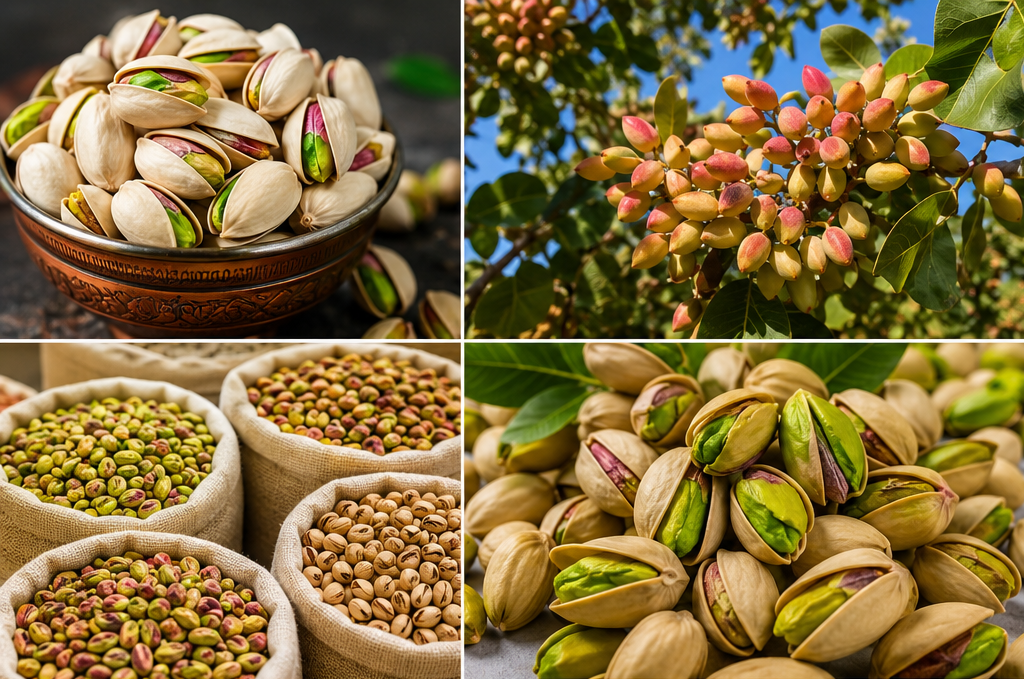
Packaging plays a major role in maintaining freshness during transportation. Export-grade pistachios are often packed in vacuum bags, laminated bags, cartons, or modified atmosphere packaging to protect them from oxygen, humidity, and contamination.
6. International Market Demand
The global market for pistachio continues to grow due to increasing consumer interest in healthy snacks, natural foods, and premium ingredients. Countries in Europe, China, India, the Gulf region, and North America import large volumes of pistachios every year.
Demand is driven by several trends:
- growth in healthy snacking
- expansion of plant-based diets
- demand from confectionery and bakery industries
- increasing popularity of pistachio-flavored products
- premium gifting and retail consumption
Exporters who can provide stable quality, clear documentation, and competitive pricing have strong opportunities in this market.
7. Why International Buyers Prefer Reliable Suppliers
Foreign buyers do not only purchase a product; they purchase consistency, trust, and compliance. A reliable pistachio supplier must be able to provide:
- consistent quality across shipments
- accurate specifications
- food safety documentation
- timely delivery
- professional communication
- attractive packaging
- flexible trade terms
In export markets, long-term cooperation matters more than one-time deals. Buyers prefer suppliers who understand the expectations of importers and can respond quickly with samples, quotations, technical details, and logistics support.
8. Pistachio Applications in Food Industry
Pistachios are used in a wide variety of food products:
- roasted snack nuts
- mixed nuts
- chocolate products
- nougat and confectionery
- ice cream toppings
- pistachio paste and cream
- bakery fillings
- desserts and premium culinary recipes
This broad industrial usage increases demand and makes pistachio a valuable export crop with multiple sales channels.
9. Competitive Advantages of Iranian Pistachio
Iranian pistachio is globally recognized for its rich taste, aroma, natural quality, and diverse varieties. The country has long been one of the world’s important pistachio producers and exporters. Iranian pistachios are especially appreciated for their flavor profile and attractive appearance, which create a strong advantage in competitive international markets.
With proper sorting, drying, and packaging, Iranian pistachios can meet the needs of premium retailers, wholesalers, food manufacturers, and distributors worldwide.
10. Contact and Order Information
If you are looking for premium pistachio for wholesale purchase, export, or private label supply, direct contact with a reliable supplier is essential.
Author: Mr. Ravanshad
WhatsApp for Purchase and Order Registration: 00989214773705
For international buyers, quick communication, product samples, and transparent trade discussions are essential. Direct WhatsApp contact allows fast order processing, quotation requests, and export coordination.