

Author: Mr. Reza Ravanshad
Introduction
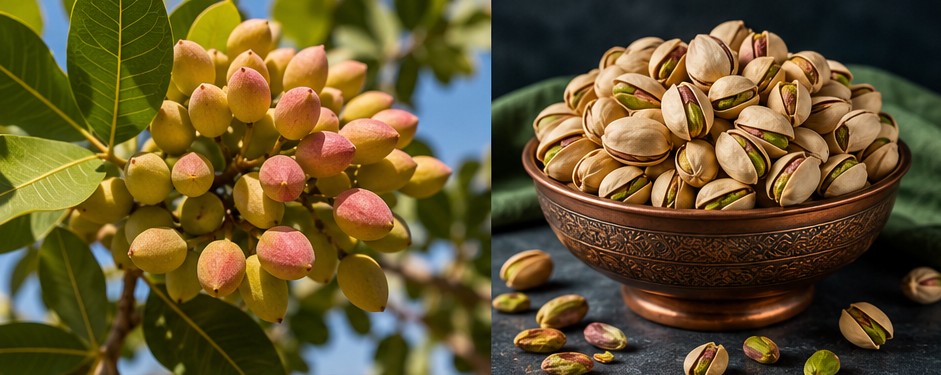
Iranian pistachios have long been recognized as one of the world’s most valuable agricultural products. Beyond their exceptional taste, premium quality, and international reputation, Iranian pistachios possess a remarkable genetic diversity that distinguishes them from many competing origins. This diversity is not only a scientific asset but also a strategic advantage in the global marketplace.
As climate change reshapes agricultural production worldwide and consumer demand shifts toward premium, traceable, and specialty products, understanding the genetic resources of Iranian pistachios becomes increasingly important. In 2026, buyers and importers are looking beyond standard varieties and are showing growing interest in unique cultivars, sustainable production systems, and climate-resilient products.
This article explores the scientific foundations of Iranian pistachio genetic diversity, examines rare and valuable cultivars, analyzes climate adaptability, and highlights emerging export opportunities for international buyers and food industry stakeholders.
The Global Importance of Iranian Pistachios
Iran is widely recognized as one of the historical centers of pistachio cultivation. The country possesses centuries of cultivation experience and a vast collection of native genetic resources.
Several factors contribute to Iran’s leadership in pistachio production:
- Extensive genetic diversity
- Favorable climatic conditions
- Traditional cultivation knowledge
- High-quality kernels
- Distinct flavor profiles
- Strong export infrastructure
Unlike many producing regions that rely on a limited number of commercial cultivars, Iran maintains a broad spectrum of pistachio varieties, each offering unique characteristics in size, appearance, taste, yield, and environmental tolerance.
Understanding Genetic Diversity in Pistachios
Genetic diversity refers to the variation of genes within a species. In agriculture, genetic diversity is essential because it provides resilience against:
- Climate stress
- Drought
- Diseases
- Pests
- Soil salinity
- Market fluctuations
The rich genetic pool of Iranian pistachios represents one of the most valuable resources for future breeding programs and sustainable cultivation.
Researchers have identified significant genetic variation among Iranian pistachio populations, particularly in:
- Nut size
- Shell characteristics
- Kernel color
- Oil composition
- Flowering time
- Yield performance
- Environmental adaptability
This diversity allows growers and exporters to meet different market preferences around the world.
Major Commercial Iranian Pistachio Cultivars
Akbari Pistachio
The Akbari variety is often considered the premium luxury pistachio.
Characteristics include:
- Long and elegant shape
- Large kernel size
- Attractive appearance
- Excellent flavor
- High export value
Akbari pistachios are especially popular in Europe, the Middle East, and luxury food markets.
Ahmad Aghaei Pistachio
Known for its bright shell and elongated shape, Ahmad Aghaei pistachio is highly favored by international buyers.
Advantages include:
- Attractive appearance
- Uniform size
- Excellent roasting performance
- Strong consumer appeal
This cultivar is widely exported to Asia and Europe.
Fandoghi Pistachio
Fandoghi pistachios are among the most economically important varieties due to their high productivity.
Key features:
- Round shape
- High yield
- Competitive pricing
- Versatile industrial applications
Fandoghi pistachios are commonly used in food manufacturing and confectionery industries.
Kaleh Ghouchi Pistachio
This variety is recognized for its large size and high kernel percentage.
Benefits include:
- Premium market positioning
- Excellent taste
- Strong consumer preference
- High commercial value
Rare and Underutilized Iranian Pistachio Cultivars
While commercial varieties dominate international trade, several rare cultivars are attracting scientific and commercial attention.
Badami Pistachio
Badami pistachios possess:
- Almond-like shape
- Distinct flavor
- Early maturation characteristics
Their unique appearance offers opportunities for specialty export markets.
Daneshmandi Pistachio
This lesser-known cultivar demonstrates excellent adaptability under challenging environmental conditions.
Researchers are studying its potential role in climate-resilient agriculture.
Shahpasand Pistachio
The name “Shahpasand” translates roughly as “King’s Favorite.”
Characteristics include:
- Unique flavor profile
- Attractive shell opening
- Strong consumer acceptance
This cultivar has significant potential in premium niche markets.
Climate Change and Pistachio Production
Climate change is becoming one of the most important challenges facing global agriculture.
Increasing temperatures, water scarcity, and unpredictable weather patterns are affecting crop productivity worldwide.
Fortunately, pistachio trees possess several natural advantages:
- Deep root systems
- Drought tolerance
- Heat resistance
- Adaptability to arid environments
However, not all cultivars respond equally to climate stress.
Climate Adaptability of Iranian Pistachio Varieties
One of the most valuable aspects of Iranian genetic resources is the availability of cultivars adapted to different ecological zones.
Researchers have identified varieties capable of performing under:
High Temperature Conditions
Some Iranian cultivars continue producing quality yields despite prolonged heat waves.
Saline Soils
Several local genotypes demonstrate increased tolerance to soil salinity, a growing concern in many agricultural regions.
Water Scarcity
Water-efficient cultivars are becoming increasingly valuable as irrigation resources become limited.
Variable Winter Conditions
Certain cultivars maintain stable flowering and fruit set despite fluctuations in winter chilling hours.
These characteristics make Iranian genetic resources highly relevant for future agricultural development programs.
Scientific Advances in Pistachio Breeding
Modern breeding programs increasingly utilize molecular tools to improve pistachio cultivation.
Technologies include:
- DNA marker analysis
- Genomic selection
- Molecular breeding
- Genetic mapping
- Phenotypic characterization
Iranian germplasm collections provide valuable material for these advanced breeding initiatives.
Future objectives include:
- Increased yield
- Improved drought resistance
- Enhanced nut quality
- Disease resistance
- Better climate adaptability
Emerging Export Trends in 2026
The international pistachio market is evolving rapidly.
Several trends are shaping buyer preferences in 2026.
Demand for Premium Products
Consumers increasingly seek:
- Large kernels
- Natural products
- Premium appearance
- Traceable origin
High-end Iranian cultivars are well-positioned to meet these requirements.
Organic Pistachio Market Growth
Demand for organically produced pistachios continues to expand.
Importers are looking for:
- Reduced chemical inputs
- Sustainable production methods
- Environmental certifications
Iranian producers adopting organic practices may access higher-value markets.
Specialty and Rare Cultivar Markets
Specialty food sectors are growing worldwide.
Rare pistachio varieties offer:
- Unique flavor profiles
- Product differentiation
- Premium pricing opportunities
Importers seeking exclusive products increasingly view these cultivars as attractive alternatives.
Health-Conscious Consumer Trends
Modern consumers value foods that provide nutritional benefits.
Pistachios contain:
- Plant protein
- Healthy fats
- Fiber
- Antioxidants
- Essential minerals
This nutritional profile continues to drive international demand.
Opportunities for International Importers
Importers seeking long-term competitive advantages should consider diversifying beyond conventional products.
Benefits of sourcing Iranian pistachios include:
- Broad cultivar selection
- Flexible pricing options
- Premium quality
- Strong market reputation
- Adaptability to customer requirements
The diversity of Iranian pistachio varieties allows importers to target multiple consumer segments simultaneously.
Sustainability and the Future of Pistachio Exports
The future of agricultural trade increasingly depends on sustainability.
Buyers are paying greater attention to:
- Water efficiency
- Environmental impact
- Biodiversity conservation
- Traceability systems
- Sustainable packaging
Iranian pistachio genetic diversity contributes directly to these objectives by supporting resilient agricultural systems capable of adapting to future environmental challenges.
Conclusion
Iranian pistachios represent far more than a premium nut product. They embody one of the richest genetic resources within global horticulture. The country’s extensive collection of commercial and rare cultivars provides exceptional opportunities for scientific innovation, climate adaptation, and international trade.
As global markets continue evolving in 2026, demand for premium, traceable, climate-resilient, and specialty pistachio products is expected to increase. Importers who recognize the value of genetic diversity and unique cultivar characteristics will be better positioned to capture emerging market opportunities.
For wholesalers, distributors, food manufacturers, and international buyers, Iranian pistachios offer an unmatched combination of quality, diversity, sustainability, and long-term commercial potential.
About the Author
Mr. Reza Ravanshad
Pistachio Exporter and International Supplier
Specializing in premium Iranian pistachios and high-quality dried fruits for global markets.
Contact for Orders and Export Inquiries
📱 WhatsApp: +98 921 477 3705
For wholesale purchases, bulk orders, private labeling, and international export cooperation, please contact Mr. Reza Ravanshad directly via WhatsApp.