

Author: Mr. Ravanshad
Company: Pistaluxe (Qomes Tejarat Asia)
The Invisible Enemy: Oxidation and Thermal Degradation
For food technologists and R&D managers, the challenge of using pistachio paste isn’t just about the initial flavor—it’s about consistency.
You might start with a batch of vibrant, emerald-green paste, but after incorporating it into a high-temperature bakery dough or a fat-rich chocolate ganache, the color turns dull brown, and the bright, nutty aroma fades into a muted, cooked scent.
This phenomenon isn’t a failure of your recipe; it is a biochemical reaction known as oxidative degradation and thermal sensitivity.
1. Why Does Pistachio Paste Change Color?
The vibrant green color of pistachios comes from chlorophyll. However, chlorophyll is notoriously unstable. In industrial food processing, two main factors trigger its breakdown:
- Light & Oxygen (Oxidation): When the fats in the pistachio paste are exposed to oxygen, they undergo lipid oxidation. This not only creates “off-flavors” (rancidity) but also degrades the pigment molecules, turning the green into a muddy brown.
- Thermal Stress (Heat): During baking or pasteurization, high temperatures cause the chlorophyll to lose its magnesium atom, converting it into pheophytin—the chemical responsible for that dull, olive-brown color.
2. The Impact on Product Quality
Degradation affects more than just aesthetics:
- Sensory Profile: The loss of “top-note” volatile aromas makes the product taste “flat.”
- Shelf Life: Oxidation doesn’t just change color; it shortens the shelf life of the entire finished product by introducing rancid notes.
- Premium Branding: In the luxury dessert market, visual “greenness” is the primary cue for pistachio flavor. A brown tint signals a low-quality or “artificial” product to the consumer.
3. Engineering Stability: Technical Solutions for Manufacturers
How can you mitigate these effects in a professional production environment?
A. Optimized Milling Temperatures
The milling process itself can generate heat. To maintain color, the paste must be produced using cold-milling techniques. Keeping the temperature below 40°C during production prevents the immediate onset of thermal degradation.
B. Controlling Water Activity ($a_w$)
Oxidation is accelerated in the presence of moisture. By ensuring the pistachio paste has a very low water activity ($a_w < 0.6$), you create a more stable environment for both the pigments and the fats.
C. Strategic Ingredient Integration
- In Bakery: Add the paste at the end of the mixing process or during the cooling phase if possible, to minimize the duration of high-heat exposure.
- In Chocolate/Ganache: Ensure the paste is well-emulsified. A stable emulsion prevents the “free oil” from reacting too quickly with oxygen.
4. The Pistaluxe Approach: Stability by Design
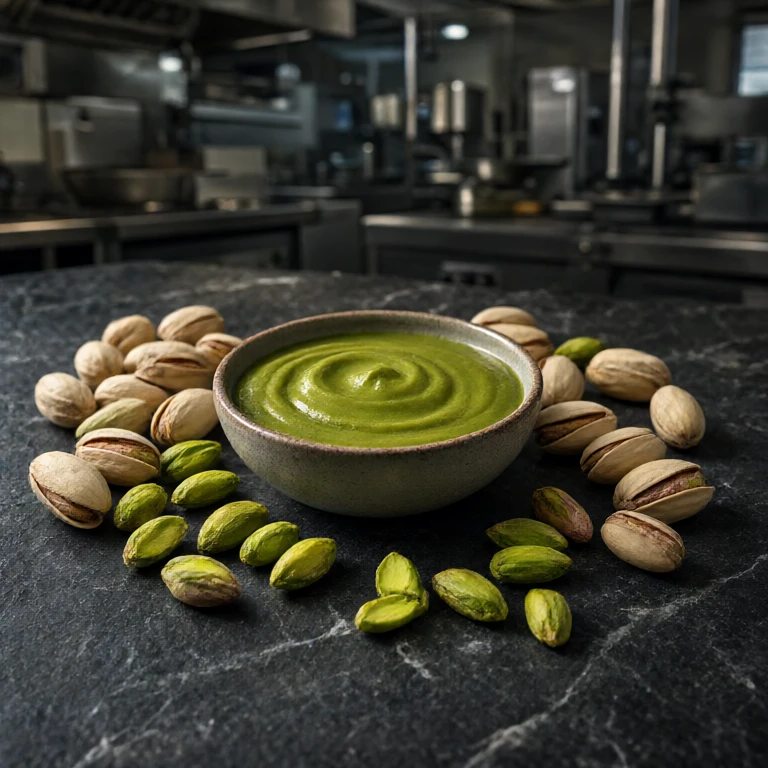
At Pistaluxe, we don’t just sell paste; we provide a stable ingredient. Our industrial pastes are processed with:
- Controlled Cold-Milling: To preserve the integrity of chlorophyll.
- Strict Oxidation Control: Using nitrogen-flushed packaging to ensure that the first gram used in your factory is as fresh as the last.
- Consistency Testing: Every batch is tested for color parameters ($L^, a^, b^*$) to ensure it meets your R&D standards.
Conclusion
Maintaining the “emerald green” standard is a technical challenge, but it is what separates a premium product from a commodity. By understanding the chemistry of oxidation and implementing controlled processing, you can protect your brand’s sensory promise.
📞 Partner with a Technical Expert
Need a technical data sheet (TDS) or a sample optimized for your specific heat-processing requirements?
Direct WhatsApp / Call: +98 921 477 3705
Professional Email: info@pistaluxe.com
Official Website: pistaluxe.com