
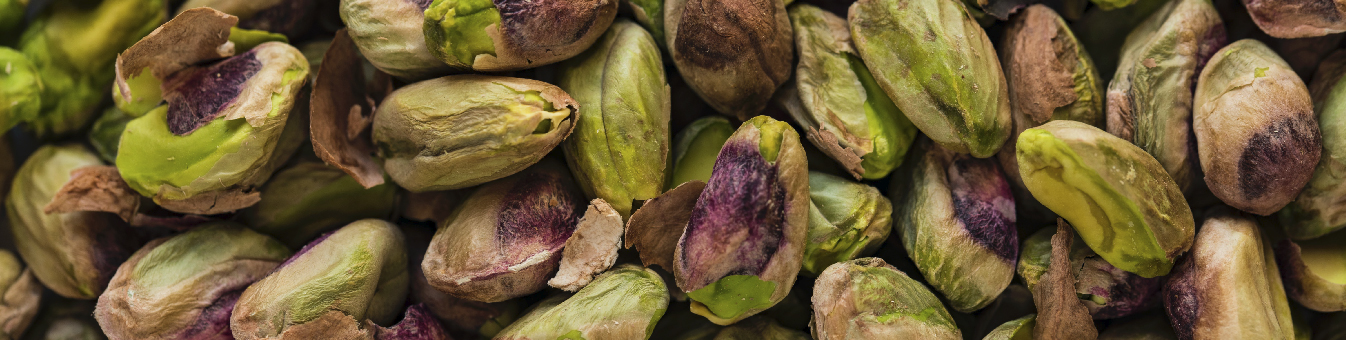

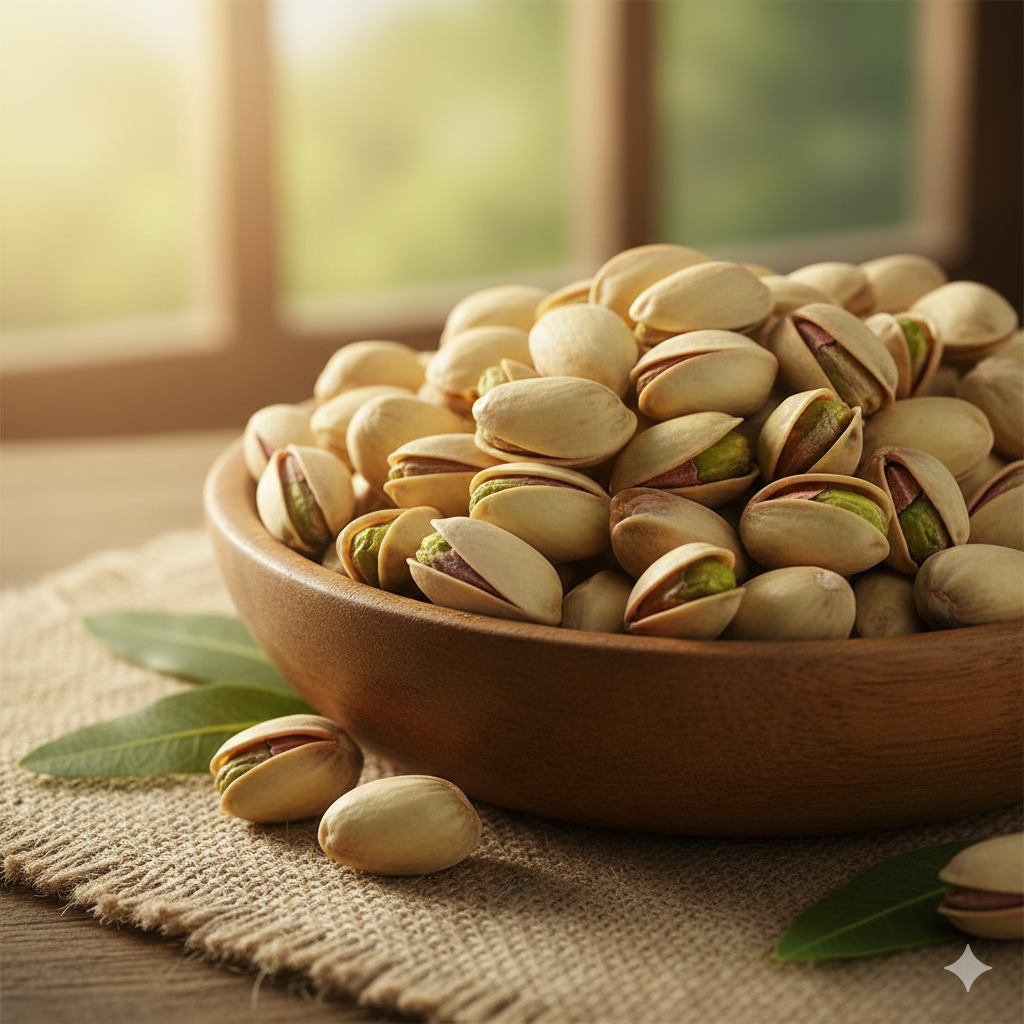
If you grew up in the 70s or 80s in the United States or Europe, your memory of pistachios is likely stained—literally—bright red. These vibrant, crimson nuts were a staple in vending machines and grocery stores. But have you ever wondered why pistachios were red and why they have almost vanished today? This article dives into the fascinating history of the “Red Pistachio” and its transition to the natural, ivory-colored nut we see today.
The Origin: Why Were Pistachios Dyed Red?
Contrary to popular belief, pistachios do not grow red. The practice of dyeing them was a clever, albeit temporary, solution to a logistical challenge in the mid-20th century.
- Hiding Harvest Imperfections: In the past, harvesting and processing methods were less advanced. When the outer husk (the hull) was removed, it often left dark, brownish tannins or mottled stains on the inner woody shell.
- Visual Uniformity: To make the product look more appealing and uniform for export, processors dyed the shells with bright red food coloring. This masked all imperfections and created a “premium” look for the era.
- The “Antonin Magliocco” Influence: It is widely believed that a Brooklyn-based importer named Antonin Magliocco began dyeing Syrian and Iranian pistachios red to distinguish his brand and attract attention in the American market.
The Shift to Natural: Why the Red Color Faded Away
By the 1980s and 90s, the “Red Pistachio” began to decline. The reasons were purely technological and health-driven: - Mechanical Harvesting: The invention of rapid, automated hulling machines meant the outer skin was removed so quickly that it no longer had time to stain the shell.
- Health Regulations: Consumers and health organizations (like the FDA) became more cautious about synthetic food dyes.
- The Symbol of Quality: Today, a clean, white shell is the true indicator of a high-quality, fresh pistachio.
Legacy of the Iranian Pistachio
Iran, as the heartland of pistachio cultivation, has moved beyond these old practices. Modern Iranian pistachios—such as the Akbari or Ahmad Aghayi varieties—are now celebrated for their natural golden shells and vibrant green kernels, requiring no artificial enhancement.