

Why is Pistachio More Expensive Than Almonds & Walnuts? Global Market and Iranian Quality
Meta Description: Delve into the economic and agricultural factors behind the high price of pistachios compared to other nuts. Explore the superior quality of Iranian varieties like Akbari and Kalleh Ghouchi. For bulk orders, contact us (WhatsApp: 00989214773705).
💰 The High Price of Iranian Pistachios: Why Are They So Premium?
One of the most frequent points of contention in the debate between pistachios and other nuts is the glaring difference in price. Why is the pistachio consistently more expensive than its counterparts like almonds and walnuts? This premium pricing is not arbitrary; it is rooted in a combination of complex agricultural challenges and the pistachio’s status as a global, luxury commodity.
- The Complexity of Pistachio Farming: Agriculture Challenges
Pistachio trees demand highly specific and challenging farming conditions that directly impact the cost of production compared to other nuts:
a. Alternate Bearing Cycle (On/Off Year):
Pistachio trees exhibit a strong natural tendency toward an “alternate bearing” cycle—one year of heavy yield (“on” year) is followed by a year of very light yield (“off” year). This inherent instability in annual supply leads to significant price volatility and drives the overall cost up, especially during “off” years, unlike almonds which have more consistent yields.
b. Intensive Resource Management:
Although often grown in arid regions, the trees require very precise water management, particularly during critical growth phases. Furthermore, the specialized processing required—including mechanical harvesting, meticulous sorting, drying, and the high cost of “farsing” (mechanically opening closed-mouth pistachios)—adds substantial overhead to the final product cost.

c. Grading and Quality Control:
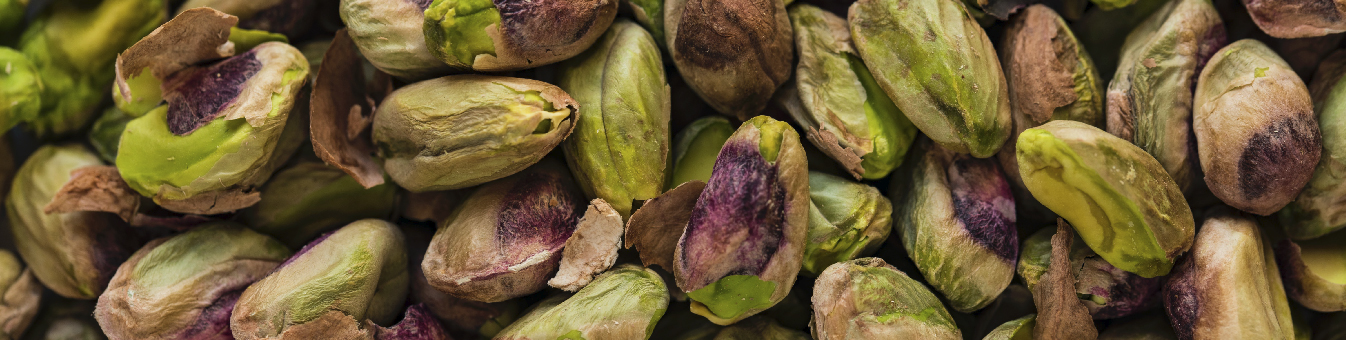
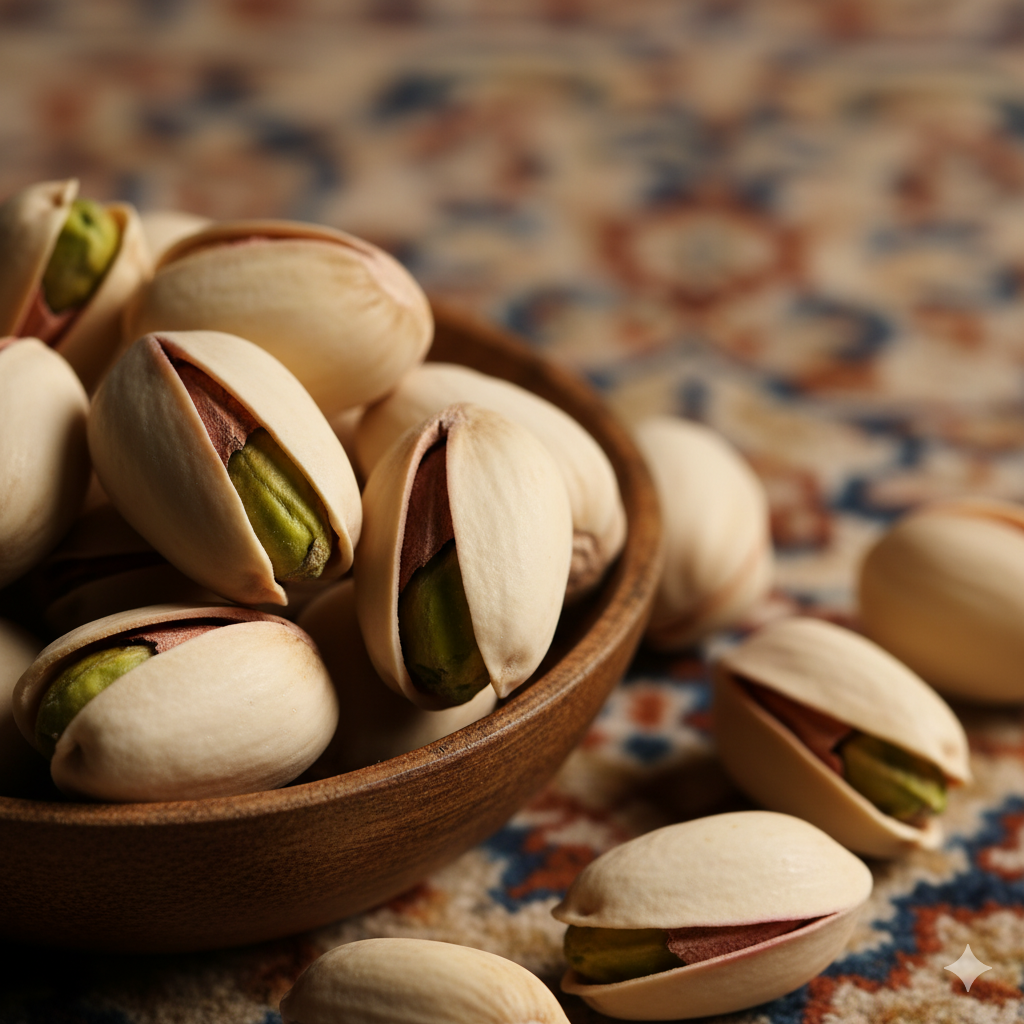
Premium Iranian pistachios, such as the long Akbari or the large Kalleh Ghouchi, are graded based on factors like count (ounce) and open-mouth percentage. The larger the size and the higher the open-mouth percentage, the higher the grade and the resulting price. This rigorous quality standard further elevates the cost above less strictly graded nuts.
- Global Value and Luxury Commodity Status
The international demand for pistachios solidifies its status as a high-value commodity, dictating its price across the globe:
a. Export-Driven Market:
Iran and the USA are the two primary global producers. Pistachios are a heavily export-driven product. High demand from lucrative international markets (Europe, China, Middle East) often sets the global price, which domestic markets must follow. This foreign demand, tied to exchange rates, inevitably pushes the price up for local consumers.
b. The Premium Taste of Iranian Pistachio:
Global connoisseurs agree that Iranian pistachios offer a richer, oilier, and more nuanced flavor profile compared to other origins. The distinct climate in key growing regions like Kerman and Rafsanjan contributes to this superior quality, making Iranian pistachios a premium brand worldwide. Consumers are paying for this unparalleled taste and quality.
Conclusion: A Justified Premium
In summary, the higher price of pistachios is a reflection of complex cultivation requirements, unstable supply cycles, and its position as a highly coveted global export and luxury snack. By choosing pistachios, the buyer is investing in a high-value commodity with superior taste and unique nutritional benefits.
📱 Contact Information for Orders
To purchase high-quality Iranian pistachios (Akbari, Kalleh Ghouchi, Ahmad Aghaei, etc.) and place bulk orders, please contact Mr. Ravanshad directly via WhatsApp:
📞 WhatsApp Contact Number for Orders:
00989214773705