
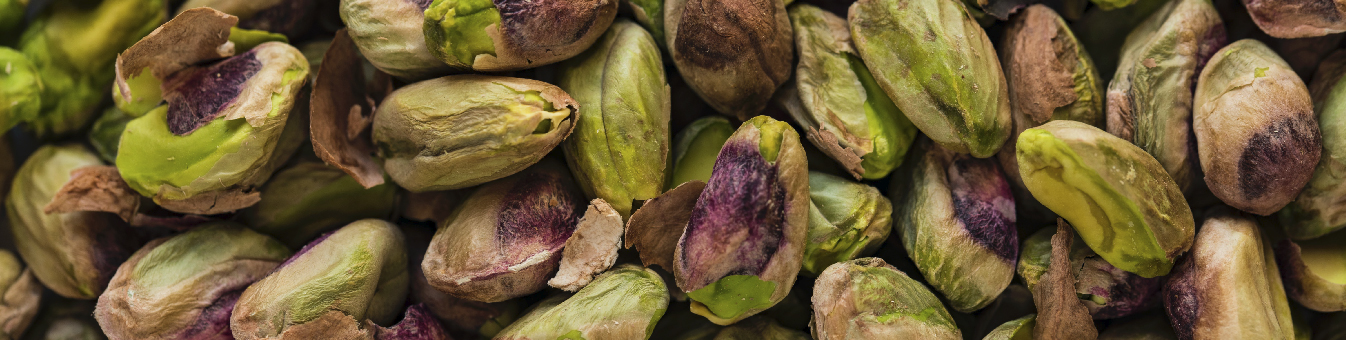

Pistachio, often nicknamed “The Green Gold,” is moving beyond its traditional role as a simple snack or a garnish for baklava. In contemporary gastronomy, it has secured its place as a functional, indispensable ingredient that is vital for achieving complex flavor profiles and desirable textures in high-end cuisine. Chefs today leverage the pistachio not just for its subtle sweetness, but for its structural and aesthetic contributions.
- Mastering Texture and Mouthfeel (Mouthfeel)
The crispness of the pistachio is its most powerful textural asset. It offers a crucial contrast to soft, creamy, or yielding elements, elevating the overall mouthfeel of a dish.
- Pistachio Crusting: A hallmark of modern plating, finely crushed pistachios (often mixed with panko or pain de mie crumbs and grated Parmesan) form a vibrant, crunchy crust on proteins like seared scallops, lamb loin, or halibut. This crust locks in moisture and adds a signature nutty aroma.
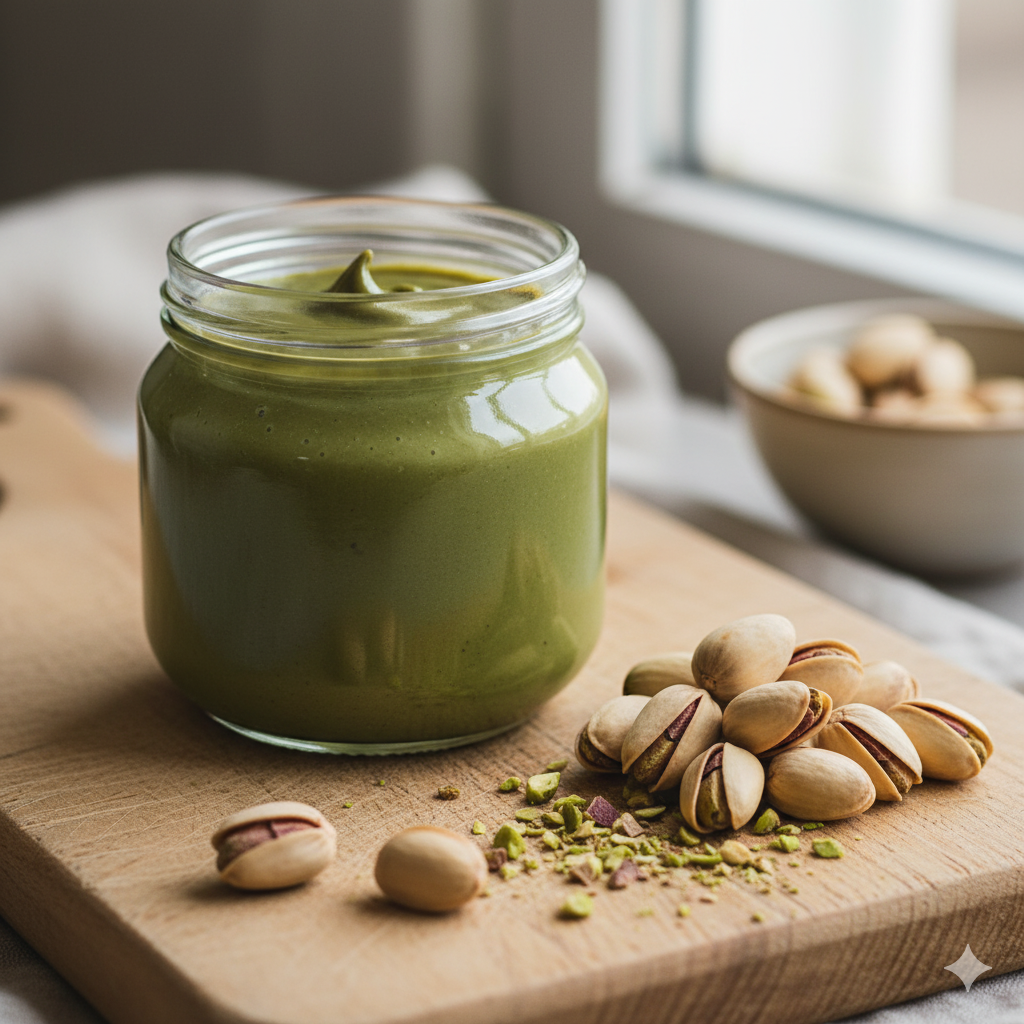
- Emulsification and Viscosity: Pure Pistachio Paste (made from blanched, raw pistachios) is a highly valued emulsifier in pastry. Its natural fat and fine grind create a stable, velvety texture in mousses, ganaches, and even savory dressings, lending a rich, smooth viscosity without relying solely on heavy cream or egg yolks.
- The Aesthetic and Flavor Depth
The visual appeal of the pistachio—its characteristic jade-green hue—is a powerful tool in food presentation. However, its complex flavor profile offers even more depth.
- Natural Coloring: In haute cuisine and patisserie, the natural, slightly muted green of pure pistachio paste is prized, often signaling high quality over artificially bright versions. This color is leveraged in entremets, macaron shells, and gelato for an elegant, authentic look.
- The Terroir Profile: Pistachios possess a distinct earthiness (terroir) and a subtle, almost floral sweetness, which act as a powerful flavor binder. When gently toasted, this flavor intensifies, acting as a profound base note that carries and enhances the more volatile top notes (like citrus zest or fresh herbs).
- Versatile Pistachio Preparations
Modern kitchens utilize the pistachio in numerous transformative formats:

- Pistachio Butter/Crema: A dense spread, often slightly sweetened, used as a filling in viennoiserie (croissants, Danish pastries) or layered into complex tarts. Its stability makes it ideal for piping and structural fillings.
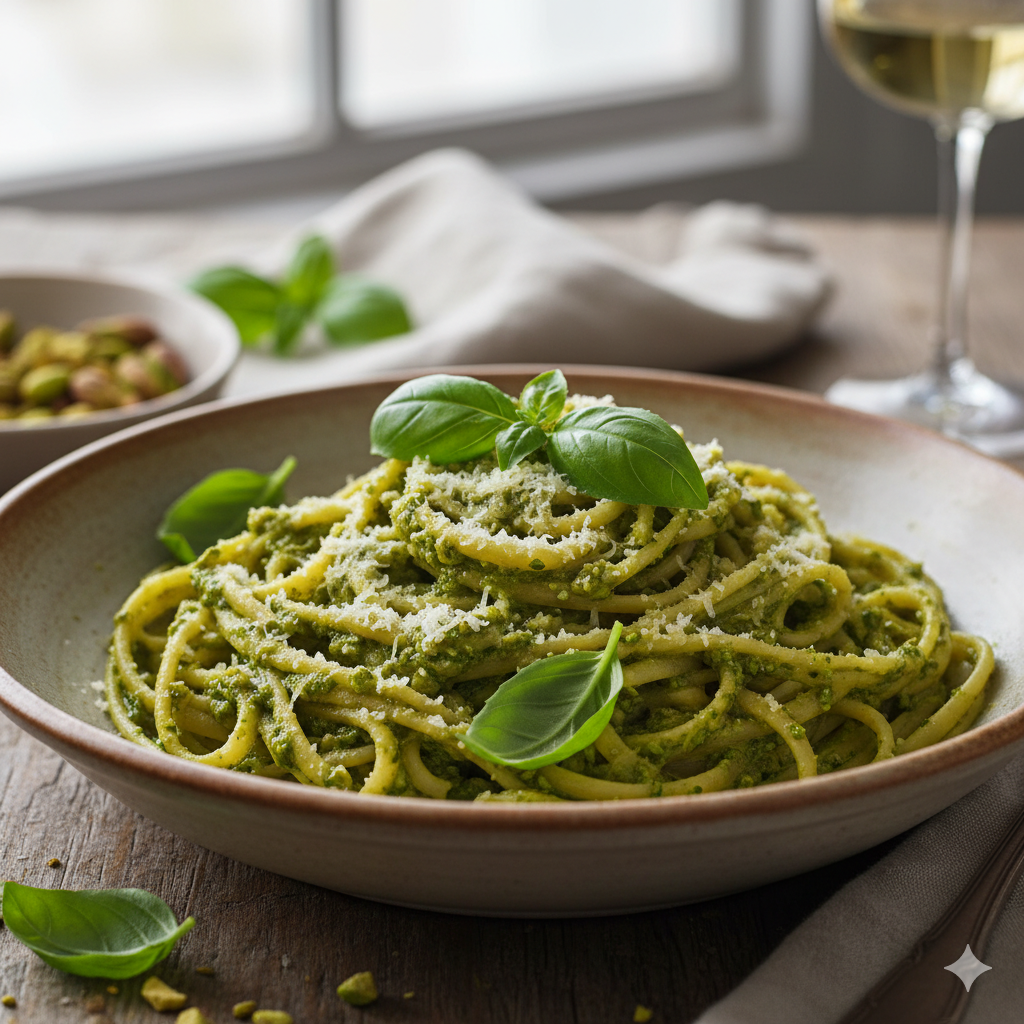
- Pistachio Pesto: A contemporary take on the classic Pesto Genovese, where pine nuts are replaced with pistachios. This variant is creamier, less oily, and pairs exceptionally well with light seafood, grilled vegetables, and fresh pasta.
- Infusions and Oils: Pistachio-infused olive oil, extracted gently or cold-pressed, provides a delicate finishing oil for salads, carpaccios, and cold vegetable soups, preserving its strong nutty fragrance.