
In the complex landscape of international agri-food trade, the “Landed Cost” of a product often dictates market dominance more than the inherent quality of the commodity itself. The global pistachio industry is currently a primary case study for how Economic Diplomacy and Free Trade Agreements (FTAs) shape market share. While Iran remains the historical heartland of pistachio cultivation, it faces a significant disadvantage due to the lack of preferential tariff agreements compared to competitors like the United States. This research article explores how Iranian exporters can navigate these fiscal barriers through technical superiority and supply chain optimization.
The Tariff Gap: A Barrier to Market Equilibrium
Current trade data indicates a stark disparity in import duties. US-origin pistachios often benefit from bilateral trade agreements in key Asian and Southeast Asian markets, where tariffs are frequently reduced to 0-5\%. Conversely, Iranian pistachios in markets such as India or certain Eurasian Economic Union (EAEU) zones face “Most Favored Nation” (MFN) tariffs that can exceed 30\%. This fiscal burden artificially inflates the retail price of Iranian nuts, regardless of their superior production efficiency.
Scientific Superiority: The Biochemical Counter-Argument
To overcome the price gap, buyers must look at the Value-to-Cost Ratio. Research into the biochemical profile of Iranian pistachios (such as the Akbari and Ahmad Aghayi varieties) reveals a higher oil content and a superior fatty acid profile.
- The Smoke Point Advantage: Iranian pistachios have a higher roasting tolerance. This allows for high-temperature roasting (160-180^\circ C) which develops a deeper “umami” flavor without carbonizing the kernel—a feat US pistachios struggle to achieve due to their lower density.
- Kernel Recovery Rate: Comparative studies show that Iranian varieties offer a higher kernel-to-shell ratio. A buyer purchasing 1,000kg of Iranian pistachios effectively receives more edible biomass than a similar purchase of mechanically-opened US varieties.
Conclusion
While economic diplomacy is a slow-moving governmental process, the private sector can bypass these challenges by emphasizing Direct Sourcing. By removing third-party intermediaries in transit hubs, the “intermediary margin” can be redistributed to offset the high import tariffs, making the superior Iranian pistachio a viable economic choice for the premium sector.
Article 2: Strategic Sourcing in the EAEU and Asian Markets: Mitigating Trade Barriers in the Pistachio Industry
Target Keywords: Direct Sourcing Iranian Pistachios, EAEU Pistachio Import Regulations, Wholesale Pistachio Suppliers, Natural Open vs. Mechanical Open Pistachios, Logistics of Dried Fruit Export.
The Logistics of Economic Diplomacy
The lagging pace of trade negotiations between Iran and major economic blocs like the EAEU or the BRICS nations has created a temporary vacuum in price competitiveness. However, for a professional commodity trader, the “Sticker Price” is only one part of the equation. This article analyzes how Supply Chain Engineering can mitigate the lack of favorable trade treaties.
Strategic Advantage: Proximity and Lead Time
One of the most overlooked factors in the pistachio trade is the Shelf-Life and Oxidation Rate. Iranian pistachios exported to Eurasia and China benefit from shorter transit times via the International North-South Transport Corridor (INSTC).
- Freshness Factor: Shorter transit means less exposure to humidity and temperature fluctuations in maritime containers, reducing the risk of aflatoxin development and rancidity.
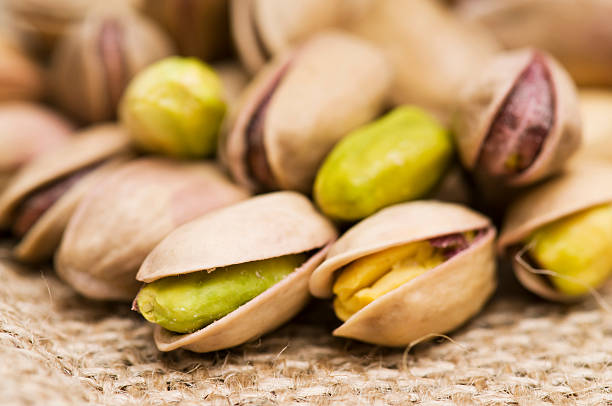
- Natural Open vs. Mechanical Open: A critical scientific distinction is that Iranian pistachios are predominantly Natural Open. This means they ripen and split on the tree. In contrast, a large percentage of competitor products are “Mechanical Open,” which exposes the kernel to premature oxidation. For a wholesaler, the longer shelf-life of a naturally open pistachio reduces “Shrinkage” (inventory loss), effectively neutralizing the 10-15% tariff disadvantage.
Direct Engagement as a Fiscal Tool
In the absence of a Free Trade Agreement, the most effective tool for price reduction is the Elimination of the “Brokerage Layer.” Traditional pistachio trades often pass through three different countries before reaching the final consumer, with each stop adding 5-8\% in costs.
By utilizing a Direct Supply Model, international buyers can secure premium Iranian cultivars at a price point that remains competitive even after paying the full customs duty in their home country. This requires a partner with deep roots in the Iranian farming regions and a sophisticated understanding of international compliance.
Summary for Stakeholders
The future of the pistachio trade lies in “Value Engineering.” While we wait for diplomatic breakthroughs to lower tariffs, the market is won by those who understand the technical advantages of the Iranian nut and the logistical shortcuts that preserve both quality and capital.
📞 Order Placement & International Inquiries
To navigate the complexities of the current market and secure the most competitive pricing for premium Iranian pistachios, direct communication with our export department is essential. We provide full logistical support, quality certification, and direct-from-origin pricing to offset global tariff challenges.
Export Manager: Mr. Ravanshad
WhatsApp & Direct Mobile: +989214773705