
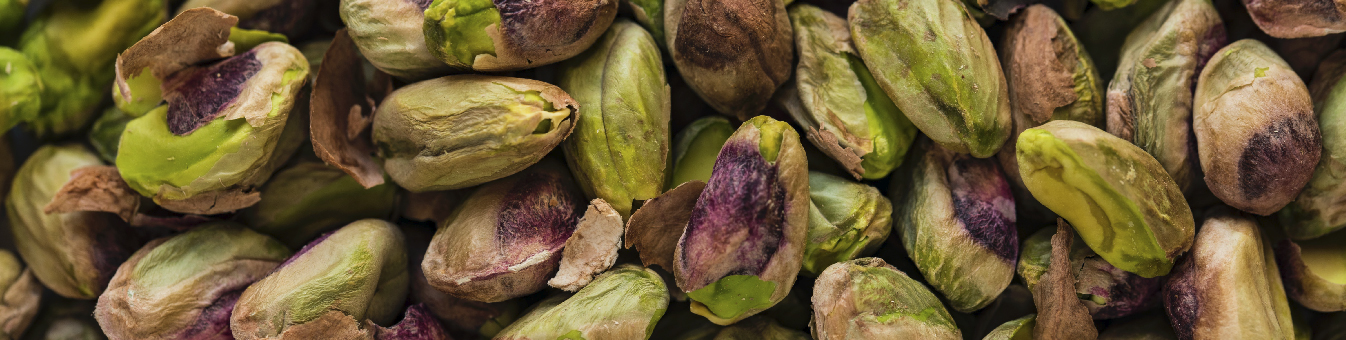

By Mr. Ravanshad
Director, Pistaluxe & Qomes Tejarat Asia
Iranian Pistachios & Derivatives: The Complete B2B Buyer’s Guide for European Manufacturers
Introduction: Why the Pistachio Industry Is Being Rewritten Right Now
For most of the last three decades, the global pistachio trade was a relatively simple business. Growers harvested a nut, processors sorted and shelled it, exporters loaded containers, and importers sold it into retail snack aisles. The value chain was linear, the product was largely undifferentiated, and the competitive advantage of any given supplier came down to price, origin reputation, and the reliability of shipment schedules.
That model is now obsolete.
Three forces have converged to reshape the pistachio industry from top to bottom. The first is consumer-driven demand for pistachio as a premium flavor, not merely as a snack. Pistachio has migrated from the nut bowl into gelato counters, chocolate bars, pastry laminations, plant-based spreads, protein products, granola clusters, and even beverages. The second is the rise of value-added derivatives — paste, butter, flour, powder, oil, and coated kernels — which allow manufacturers to buy flavor and color rather than raw commodity, and which carry dramatically higher margins for everyone in the chain. The third is regulatory tightening in the European Union, where aflatoxin limits, traceability requirements, and clean-label expectations have turned food safety documentation into a genuine competitive moat.
For European manufacturers, importers, distributors, and private-label brands, this convergence creates both an opportunity and a risk. The opportunity is to build product lines around an ingredient with exceptional sensory appeal and strong consumer recognition. The risk is that the supply side is fragmented, quality is inconsistent, documentation is frequently incomplete, and the difference between a good pistachio derivative and a mediocre one is invisible on a spec sheet but obvious in the finished product.
This guide is written to close that gap. It is a comprehensive, practical reference covering the entire pistachio value chain as it applies to industrial buyers: the botany and agronomy behind flavor differences, the full taxonomy of varieties and their industrial use cases, the technology of each derivative, the food safety architecture required for European compliance, the logistics of moving perishable nut products across borders, the commercial mechanics of pricing and contracts, and the strategic question of how to select and retain a supplier in a volatile market.
It is long by design. Procurement decisions worth hundreds of thousands of euros deserve more than a one-page product sheet.
Part I — The Foundation: Understanding the Pistachio as an Industrial Raw Material
1.1 Botany, Agronomy, and Why Origin Matters
The pistachio (Pistacia vera L.) is a deciduous tree of the Anacardiaceae family, the same botanical family as cashew, mango, and — importantly for allergen labeling — the source of several cross-reactivity concerns that buyers should understand. The tree is dioecious, meaning male and female flowers occur on separate trees, and it is wind-pollinated, which makes orchard placement and the ratio of male to female trees a meaningful determinant of yield and uniformity.
Pistachio trees are famously slow to reach commercial productivity. Grafted orchards typically begin bearing in the fourth or fifth year and reach meaningful commercial volumes between years seven and ten, with full maturity arriving later still. This long juvenile period has a profound commercial consequence: supply cannot respond quickly to demand shocks. When global demand for pistachio paste spikes because a viral confectionery product captures consumer attention, the industry cannot simply plant more trees and harvest next season. The supply response takes years. Buyers who fail to secure forward contracts during periods of rising demand routinely find themselves paying spot prices that have doubled.
The pistachio is also an alternate-bearing species, meaning that a heavy crop year is typically followed by a lighter one. This biennial pattern introduces an inherent volatility into annual volumes that is further amplified by weather. Pistachios require a sufficient number of chill hours during winter dormancy, are vulnerable to late spring frosts that can destroy a flower crop entirely, and are sensitive to heat stress and water scarcity during kernel fill. In Iran specifically, the combination of prolonged drought in key growing regions, groundwater depletion, and periodic frost events has produced significant year-to-year swings in output.
For an industrial buyer, the practical lesson is that origin is not a marketing detail — it is a technical specification. The same variety grown in different soil, altitude, and climate will produce different kernel color, oil content, and flavor intensity. Iranian pistachios, grown largely in the warm, dry provinces of Kerman, Rafsanjan, and Yazd, are renowned for a particular combination of characteristics: an unusually deep green kernel color, a high oil content that translates into rich mouthfeel, and a distinctive roasted aroma profile that is often described as sweeter and more buttery than competing origins.
1.2 The Anatomy of the Nut and What Each Part Becomes
Understanding the physical structure of the pistachio is essential to understanding the derivative market, because each anatomical component maps to a different product stream.
The outermost layer is the hull, a soft fleshy skin that surrounds the shell during growth. The hull must be removed quickly after harvest — typically within twenty-four hours — because it decomposes rapidly and is a primary vector for aflatoxin-producing mold contamination. Hulling is therefore the single most time-critical operation in the entire post-harvest chain.
Beneath the hull is the hard shell, which splits naturally along its suture as the kernel expands during maturation. The degree of split is itself a quality grading parameter in the in-shell trade. Shells are a by-product stream with real commercial value: they are used as biomass fuel, as a growing medium amendment, in activated carbon production, and increasingly as a source of natural dyes and bioactive extracts.
Inside the shell sits the kernel, consisting of the green cotyledons covered by a thin papery pellicle or skin. The pellicle is rich in polyphenols and tannins; it contributes a slightly bitter, astringent note and is responsible for much of the browning that occurs during roasting and grinding. Whether the pellicle is retained or removed is one of the most consequential processing decisions in the derivative business, and we will return to it repeatedly.
The kernel itself is roughly fifty percent oil, a composition that explains both the extraordinary richness of pistachio products and the technical challenges of working with them. That oil is predominantly oleic and linoleic acid, giving pistachio its favorable fatty acid profile and its vulnerability to oxidation. The kernel also contains significant protein, dietary fiber, potassium, vitamin B6, and — critically for the color story — chlorophyll and carotenoid pigments concentrated in the green outer cotyledon.
The derivative map follows directly from this anatomy:
- Whole in-shell and shelled kernels serve the snack and retail trade.
- Green and split kernels serve confectionery and bakery decoration.
- Kernels become paste (fine grind, whole nut), butter (finer grind, often with added oil for flow), flour (defatted, finely milled), powder (roasted and milled, sometimes with carriers), and oil (cold-pressed or expeller-pressed).
- The pellicle becomes a source of natural colorant and polyphenol extracts.
- The shell becomes biomass and industrial feedstock.

1.3 The Green Color Question: Pigment Chemistry and Commercial Consequences
No single topic generates more confusion among buyers than pistachio color. Let us settle it.
The green hue of a pistachio kernel comes from chlorophyll, concentrated in the outer layer of the cotyledons. The intensity of that green depends on several interacting factors: variety genetics, the position of the nut on the tree, sun exposure during kernel development, harvest timing, and — decisively — the processing and storage history after harvest.
This matters commercially because color is the single most visible quality signal in finished pistachio products. A gelato maker in Italy will reject a paste that produces a dull, olive-brown gelato, regardless of how good it tastes. A chocolatier building a premium pistachio-filled bar needs the filling to read as unmistakably pistachio at a glance. Consumers have been trained by decades of marketing to associate vivid green with freshness, naturalness, and quality — even though, ironically, much of the vivid green in older commercial products came from added colorants.
Three processing variables dominate color outcomes:
Pellicle removal. The brown-red pellicle masks green. Removing it — by blanching, mechanical abrasion, or a combination — dramatically brightens the kernel. Unpeeled kernels produce darker, earthier pastes; peeled kernels produce the vivid emerald tone that premium applications demand. The trade-off is yield loss and higher cost.
Thermal treatment. Roasting develops flavor but degrades chlorophyll. High-temperature, long-duration roasting will push a paste toward khaki and brown. Precise, moderate roasting preserves both aroma and color. This is where process control separates serious processors from commodity operators.
Storage and oxidation. Chlorophyll degrades under light, heat, and oxygen exposure. A brilliantly green kernel stored badly for six months becomes a dull kernel. Cold storage, nitrogen flushing, and light-blocking packaging are not luxuries in this business; they are the difference between a premium product and a discounted one.
A note on added colorants. Historically, some pistachio products were colored with chlorophyllin (a semi-synthetic derivative of chlorophyll), tartrazine, or blends. Under EU regulation, tartrazine (E102) carries mandatory warning labeling regarding potential effects on activity and attention in children, and consumer sentiment has turned decisively against synthetic dyes. The commercial logic now favors genuinely natural color — which means buyers should be skeptical of any paste whose color is implausibly vivid and uniform across batches, and should ask directly whether colorants are present.
Part II — Variety Intelligence: Matching Cultivar to Application
Iran cultivates a remarkable diversity of pistachio varieties, each with a distinct commercial personality. For industrial buyers, variety selection is not a matter of preference but of functional fit. The following analysis covers the principal commercial cultivars and their specific behavior in derivative applications.
2.1 Akbari
Akbari is the largest and most elongated of the major Iranian varieties, prized for its impressive size and its exceptionally high proportion of split nuts in the in-shell trade. Its kernel is elongated, with good green color and a rich, pronounced flavor.
In-shell performance: Excellent. Akbari commands premium retail pricing and is the variety most associated with luxury gift packaging and export-grade snack presentation.
Kernel and derivative performance: Akbari’s large kernel size makes it attractive for whole-kernel applications — chocolate inclusions, bakery decoration, and premium ice cream variegates where visible pistachio pieces are a selling point. In paste production, Akbari yields a rich, intensely flavored product with good color, though its lower kernel-to-shell ratio raises the effective cost per kilogram of finished paste.
Best industrial fit: Premium confectionery inclusions, luxury gelato with visible pieces, high-end retail packs, gift and specialty channels.
Commercial caution: Akbari’s premium positioning means it is the most price-sensitive to market sentiment and the most exposed to substitution pressure. Buyers should specify variety explicitly in contracts, because “Iranian pistachio” is not a specification.
2.2 Ahmad Aghaei
Ahmad Aghaei is, for many processors, the gold standard for paste and butter production. It is a long, relatively slender nut with an exceptionally high proportion of green kernel and a notably rich, sweet, buttery flavor profile. Its oil content is high, which translates directly into superior mouthfeel in finished products.
Kernel and derivative performance: Outstanding. Ahmad Aghaei’s deep green color and intense flavor make it the preferred choice for premium gelato, pistachio butter, and confectionery fillings where color and aroma are the primary differentiators. Processors frequently use Ahmad Aghaei as the “color and flavor backbone” of a blend, supplemented with higher-yielding varieties for cost control.
Best industrial fit: Premium pistachio paste and butter, artisanal gelato, luxury chocolate fillings, clean-label spreads, high-color applications.
Commercial caution: Its desirability makes it the most expensive of the mainstream varieties on a per-kernel basis, and availability can tighten sharply in poor crop years.
2.3 Fandoghi
Fandoghi is the workhorse of Iranian pistachio production — round, compact, and produced in the largest volumes. It is the variety most likely to be found in commodity channels and in blended products.
Kernel and derivative performance: Good and reliable. Fandoghi’s round shape makes it well suited to certain mechanical processing lines, and its flavor is pleasant though generally less intense than Ahmad Aghaei. Its color is typically a shade less vivid. Fandoghi is the natural base for cost-optimized paste blends, pistachio flour, and applications where pistachio is one component among several rather than the headline flavor.
Best industrial fit: Blended pastes, pistachio flour and powder, bakery applications, ice cream bases, granola and cereal inclusions, private-label spreads, cost-sensitive industrial volumes.
Commercial caution: Because Fandoghi dominates volume, it is the variety most exposed to quality variability. Buyers should insist on batch-level color and flavor specifications rather than accepting variety name alone.
2.4 Kalleh Ghouchi
Kalleh Ghouchi is a large, round, visually striking nut with a wide, open split — the “smiling” pistachio familiar from retail displays. Its kernel is large and well colored.
In-shell performance: Excellent for visual retail appeal; widely used in roasted and salted snack lines.
Kernel and derivative performance: Good, with large kernels suitable for inclusions and coarse grinds. Its round shape and size make it less efficient for fine paste production than Ahmad Aghaei, but it performs well in products where kernel pieces are visible.
Best industrial fit: Roasted and salted snack lines, visible-kernel confectionery, decorative applications, premium mixed-nut products.
2.5 Other Varieties and the Blending Question
Beyond the four commercial pillars, Iran cultivates varieties including Momtaz, Shahpasand, Badami, and various regional selections, each with niche characteristics. Some are valued for early or late ripening (which spreads harvest labor and processing load), others for specific shell or kernel traits.
On blending. Almost every industrial pistachio paste on the market is a blend, and this is not inherently a problem — it is a legitimate formulation strategy. A processor might combine Ahmad Aghaei for color and aroma with Fandoghi for body and cost efficiency, achieving a product that meets a defined sensory and color specification at a defined price point. The problem arises when blending is undisclosed and when the specification is not defined in measurable terms.
Practical recommendation: Require suppliers to declare variety composition, and define acceptance criteria numerically — color measured by a standardized method (L*a*b* values on a calibrated colorimeter), flavor assessed by a documented sensory panel, and consistency verified across at least three consecutive batches before a supply agreement is signed.
Part III — The Derivative Portfolio: Technology, Specifications, and Applications
This is the commercial heart of the guide. Each derivative is a distinct product with its own manufacturing logic, specification set, application profile, and failure modes.
3.1 Pistachio Paste: The Core Industrial Ingredient
Definition. Pistachio paste is produced by milling whole pistachio kernels — typically roasted, sometimes raw, usually peeled, occasionally unpeeled — to a fine, homogeneous consistency. In its purest form it contains nothing but pistachios.
Manufacturing process. Kernels are inspected and sorted, optionally blanched or mechanically peeled to remove the pellicle, roasted under controlled time-temperature profiles, cooled, and then milled. Milling is the critical operation. Industrial mills — colloid mills, bead mills, or stone mills — reduce particle size progressively. The target is typically in the range of twenty to forty microns, at which point the human palate no longer detects grittiness and the product reads as silky.
Critical process control points:
- Roast profile. Time and temperature determine the balance between aroma development and color retention. Under-roasting leaves a raw, green, slightly grassy note; over-roasting produces bitterness and a dull brown color. This is the single greatest source of differentiation between processors.
- Particle size distribution. Measured by laser diffraction or sieve analysis. A narrow distribution correlates with superior mouthfeel.
- Temperature during milling. Friction generates heat. Excessive milling temperature volatilizes aroma compounds and accelerates oxidation. Controlled-temperature milling preserves quality.
- Homogeneity and oil separation. Pure pistachio paste will naturally separate, with oil rising to the surface, because it is an unstable emulsion of solid particles in oil. This is normal and reversible by stirring — but it alarms buyers unfamiliar with natural nut butters. Some processors stabilize paste by adding a small quantity of a hard fat or emulsifier, or by controlling crystal structure through tempering. Buyers must decide which behavior they want and specify accordingly.
Key specifications to demand:
| Parameter | Typical Range | Why It Matters |
|---|---|---|
| Purity | 100% pistachio (or declared blend) | Clean-label claims, allergen and labeling accuracy |
| Moisture | 1.0–2.5% | Shelf life, microbial stability |
| Fat content | 45–55% | Mouthfeel, flow behavior, caloric declaration |
| Protein | 18–22% | Nutritional panel |
| Particle size | 20–40 µm (D90) | Smoothness perception |
| Color (L*a*b*) | Defined per product grade | Batch consistency, finished-product appearance |
| Peroxide value | Low, monitored | Freshness, rancidity risk |
| Aflatoxin B1 / total | Below EU limits | Legal compliance, non-negotiable |
| Microbiological profile | Per EU Reg. 2073/2005 | Food safety |
Applications. Gelato and ice cream, chocolate and praline fillings, pastry creams, macarons, spreadable nut butters, protein bars, beverage bases, sauces, and savory applications in some cuisines.
Failure modes buyers encounter. Paste that is gritty rather than smooth (insufficient milling); paste that tastes raw or “green” (under-roasting); paste that is dull khaki rather than green (over-roasting, poor pellicle removal, or oxidized raw material); paste that separates aggressively within days (expected in pure product, but can indicate excessive milling heat); paste with inconsistent color between batches (poor raw material control); paste with a soapy or cardboard off-note (oxidation, rancid raw material).
3.2 Pistachio Butter: Texture, Flow, and Formulation
Definition. The terms “paste” and “butter” are used inconsistently across the industry. In this guide, butter refers to a product milled to an even finer, more fluid consistency, often with a small addition of pistachio oil or another declared fat to achieve a spreadable, pourable texture at ambient temperature.
The distinction matters commercially. A manufacturer filling a jar for retail wants a product that spreads easily from a knife. A confectionery line pumping filling through a depositor wants controlled viscosity at a specific temperature. A gelato producer wants a product that disperses rapidly into a cold base without seizing. These are three different rheological requirements, and they may require three different products from the same supplier.
Rheology as a specification. Viscosity should be measured and specified — typically with a rotational viscometer at a defined temperature and shear rate. Buyers should request viscosity data at the temperature at which their own process operates, not at an arbitrary reference point.
Applications. Retail nut butter jars, squeeze packs, bakery fillings, dessert sauces, ice cream ripples, and as a base for compound chocolate fillings.
3.3 Pistachio Flour: The Defatted Stream
Definition. Pistachio flour is produced by pressing kernels to remove a substantial portion of the oil, then milling the resulting press cake to a fine powder. The result is a lower-fat, higher-protein, higher-fiber ingredient with a concentrated pistachio flavor and a pale green-tan color.
Why it exists commercially. Flour solves two problems. First, it captures value from the oil stream: the extracted pistachio oil is itself a high-value product. Second, it provides manufacturers with a pistachio ingredient that does not disrupt the fat balance of their formulation — critical in baked goods, where excess oil changes crumb structure and spread.
Specifications. Fat content typically in the range of ten to twenty-five percent depending on the degree of pressing; protein correspondingly higher; moisture low for stability; particle size tailored to application (coarse for texture, fine for incorporation).
Applications. Macarons and almond-flour substitution, cookies and shortbread, cake and muffin formulations, biscuit and wafer production, nutritional bars, gluten-free baking blends, and dry-mix products.
Technical notes. Pistachio flour has limited water absorption compared with cereal flours and behaves more like ground nuts than like wheat flour. It does not form gluten and cannot simply replace wheat flour one-to-one. In macaron production, partial substitution of almond flour with pistachio flour is a well-established route to pistachio-flavored shells, but the substitution rate must be tuned because fat and moisture differ.
3.4 Pistachio Powder: Instant and Soluble Formats
Definition. Pistachio powder is a roasted, milled product often formulated with a carrier — such as maltodextrin, glucose syrup solids, or milk solids — to improve flowability, dispersibility, and shelf stability. Truly pure pistachio powder without carriers is available but is prone to caking and oil migration.
The purity question. This is a category where buyers are frequently misled. A product labeled “pistachio powder” may contain anywhere from thirty to one hundred percent pistachio, with the balance being carriers, sugar, salt, or anti-caking agents. For clean-label products, this is disqualifying. Always demand the full ingredient declaration and the percentage of pistachio content.
Applications. Beverage powders and instant drinks, ice cream dry mixes, bakery premixes, dessert dusting, and flavoring systems.
3.5 Pistachio Oil: The Premium Extraction Stream
Definition. Pistachio oil is obtained by cold pressing or expeller pressing kernels, yielding a delicate, green-gold oil with an intense pistachio aroma. Cold-pressed oil retains more aroma and color; refined oil is more stable and neutral but loses character.
Commercial characteristics. Pistachio oil is expensive — it takes a large quantity of kernels to produce a liter of oil — and it is highly susceptible to oxidation because of its polyunsaturated fat content. It is typically sold in small formats for gourmet retail, and used in premium culinary applications, cosmetics, and as a flavor carrier.
Applications. Gourmet finishing oil, salad dressings, ice cream and pastry flavoring, chocolate and confectionery flavor systems, and cosmetic formulations.
Handling requirements. Nitrogen flushing, dark glass or opaque packaging, cold storage, and short shelf-life expectations. Buyers should specify peroxide value limits at delivery and monitor during storage.
3.6 Green Kernels, Split Kernels, and Coated Products
Beyond the milled derivatives, several kernel-based products serve specific industrial needs.
Green kernels are whole kernels selected for exceptional color and uniformity, used where the kernel itself is the visual centerpiece — premium chocolate bars, luxury ice cream, and gift confectionery.
Split or diced kernels provide controlled piece size for inclusions, allowing manufacturers to specify a particle range that fits their depositing equipment and their desired visual effect.
Coated kernels — with chocolate, yogurt, honey, or savory seasonings — are a growing category in snacking and confectionery, and represent an opportunity for processors with coating capability.
Roasted and salted kernels remain the backbone of the snack trade and the entry point for most buyers into the pistachio market.
3.7 By-Products and the Circular Economy Angle
Increasingly, European buyers ask about sustainability and waste valorization, and pistachio offers a genuinely strong story here.
Shells are used as biomass fuel, as a bulking agent in composting and growing media, as feedstock for activated carbon, and as a source of natural dyes. Some processors gasify shells to power their own operations, reducing the carbon footprint of the finished product.
Pellicles contain polyphenols and natural pigments with potential applications as natural colorants and antioxidants, an area of active research and early commercial development.
Press cake from oil extraction becomes flour, as described above.
For buyers subject to corporate sustainability reporting requirements or consumer-facing environmental claims, a supplier who can document waste valorization and renewable energy use in processing is a meaningful differentiator.
Part IV — Food Safety: The Non-Negotiable Architecture
This section is the most important in the guide. A pistachio product that fails a food safety test is not a discounted product — it is a liability, a recall, and potentially a criminal matter for the importer. European enforcement is rigorous and the consequences are severe.
4.1 Aflatoxin: The Central Risk
Aflatoxins are mycotoxins produced by Aspergillus flavus and Aspergillus parasiticus, molds that thrive in warm, humid conditions and colonize nuts, grains, and oilseeds. Aflatoxin B1 is the most toxic and is classified as a Group 1 human carcinogen by the International Agency for Research on Cancer.
Why pistachios are vulnerable. Pistachios are grown in hot, dry climates — precisely the conditions in which these molds flourish when moisture is present. The critical window is the period around harvest and immediately after: nuts that are harvested late, that fall to the ground and contact soil, that are hulled slowly, or that are dried inadequately are at elevated risk. Early split nuts — nuts whose shells split before harvest — are particularly susceptible because the exposed kernel invites insect damage, which in turn creates entry points for mold.
The EU regulatory framework. European limits are set in Commission Regulation (EU) No 165/2010, amending Regulation (EC) No 1881/2006. For pistachios intended for direct human consumption, the maximum level for aflatoxin B1 is 8 µg/kg and for total aflatoxins (B1 + B2 + G1 + G2) is 10 µg/kg. For pistachios intended for sorting or further processing before consumption, higher limits apply (B1 at 12 µg/kg, total at 15 µg/kg), provided the product is not placed on the market for the final consumer and is clearly labeled as intended for sorting or processing.
The sampling problem. Aflatoxin contamination is notoriously heterogeneous — a small number of highly contaminated nuts can contaminate a large lot, and a small sample may entirely miss them. EU sampling procedures for aflatoxins in nuts are therefore specific and demanding, involving incremental sampling from multiple points in the lot and comminution of a large aggregate sample. Buyers should understand that a certificate of analysis from a small grab sample carries limited assurance; the sampling plan matters as much as the laboratory result.
Mitigation at origin. Effective aflatoxin control is primarily preventive:
- Timely harvest and rapid collection of fallen nuts.
- Rapid hulling, ideally within twenty-four hours of harvest.
- Controlled drying to bring moisture below the critical threshold quickly.
- Optical and manual sorting to remove damaged, discolored, and insect-damaged nuts — the primary contaminated fraction.
- Clean, dry storage with humidity control and pest management.
- Batch segregation and testing before shipment.
What buyers should require. A certificate of analysis from an accredited laboratory for every lot, stating aflatoxin B1 and total aflatoxins with the test method referenced; documentation of the sampling plan; and — critically — a supplier who can explain their sorting and segregation process in detail. Suppliers who cannot describe their process are suppliers who do not control it.
4.2 Microbiological Safety
Beyond aflatoxins, pistachio products are subject to microbiological criteria under Commission Regulation (EC) No 2073/2005. Relevant parameters include Salmonella (which must be absent in 25 g for products placed on the market during their shelf life), Enterobacteriaceae, and — for products where relevant — Listeria monocytogenes and mold counts.
Salmonella risk and control. Nuts have been implicated in multiple salmonella outbreaks globally, and the low-moisture environment of nuts makes thermal inactivation challenging without damaging quality. Control strategies include validated roasting processes (roasting is a genuine kill step if properly validated), post-roast environmental hygiene to prevent recontamination, and finished-product testing. The critical insight for buyers is that roasting is a kill step only if it is validated — a supplier must be able to demonstrate that their roast profile achieves the required log reduction across the full product depth, not just at the surface.
The recontamination trap. A validated roast can be undone by poor post-roast handling. Roasted kernels exposed to unhygienic air, water, or surfaces in the cooling, conveying, or packing stages can be recontaminated. Buyers should ask specifically about the physical segregation of raw and roasted zones and about environmental monitoring programs.

4.3 Certification Landscape
Certifications are not a guarantee of quality, but they are evidence of a functioning management system. The relevant credentials for pistachio processors include:
- HACCP — the foundational food safety management system, and a baseline expectation for any serious exporter.
- ISO 22000 — the international food safety management standard, providing a more comprehensive framework than HACCP alone.
- BRCGS Food Safety — a Global Food Safety Initiative (GFSI) benchmarked standard widely demanded by European retailers. BRCGS certification is often a hard requirement for supplying major retail chains.
- IFS Food — another GFSI-benchmarked standard, particularly common in German, French, and Italian retail supply chains.
- FSSC 22000 — a GFSI-benchmarked scheme based on ISO 22000, increasingly common in manufacturing.
- Organic certification — required for organic claims, and notably difficult to obtain for Iranian product given sanctions-related certification and inspection challenges. Buyers seeking organic Iranian pistachios should verify the certification body and its EU recognition status carefully.
- Halal and Kosher certification — relevant for specific market segments and for certain manufacturers’ own compliance requirements.
A practical caution. Certificates are frequently presented as PDFs that may be expired, superseded, or issued to a different legal entity than the one invoicing you. Verify the certificate number with the issuing body, confirm the scope covers the specific product, and check the expiry date. This is basic due diligence that is routinely skipped.
4.4 Traceability and the EU Regulatory Environment
European food law requires traceability “one step back, one step forward” — a business must be able to identify its supplier and its customer for any lot. In practice, importers face intense pressure from retailers and from authorities to demonstrate deeper traceability, ideally to farm or at least to collection region and processing date.
What good traceability looks like. A lot code that links a finished product to a specific processing date, a specific raw material intake batch, and ideally a specific growing region or group of orchards. Documentation of sorting and testing at each stage. Retention samples. The ability to reconstruct, within hours, exactly what went into the product a customer is holding.
Additional regulatory considerations. Buyers should also consider:
- Maximum residue limits (MRLs) for plant protection products under Regulation (EC) No 396/2005. Iranian pistachios are subject to EU border controls and occasional increased-frequency checks, and MRL non-compliance is a real risk. Ask for pesticide residue testing against the EU MRL database.
- Contaminants beyond aflatoxin — heavy metals (lead, cadmium) and, where relevant, process contaminants.
- Allergen labeling. Pistachio is a tree nut and must be declared as such under Regulation (EU) No 1169/2011. Cross-contamination controls in facilities handling multiple nuts are essential.
- Nutrition and health claims. Any claim made about pistachio content must comply with Regulation (EC) No 1924/2006.
- Novel food and additive rules if the derivative involves new processes or added substances.
- Packaging and food contact materials compliance for the materials that touch the product.
4.5 Building a Supplier Audit Program
For buyers committing to meaningful volumes, a documented audit program is worth the investment. A pragmatic approach for a mid-sized importer:
- Desk audit — collect and review HACCP plan, certifications, organizational chart, process flow diagram, product specifications, and three years of test results.
- Remote or on-site audit — verify that documented procedures match reality. Focus on hulling and drying, sorting, roasting validation, segregation of raw and roasted, pest control, water quality, and employee hygiene.
- Sampling verification — send independently drawn samples to a laboratory of your choosing, not the supplier’s, for aflatoxin, microbiology, and pesticide residues.
- Trial shipment — a small commercial lot, fully documented, before committing to a supply agreement.
- Ongoing monitoring — a testing schedule across the contract term, with defined consequences for failure.
Part V — Logistics, Packaging, and Cold Chain
5.1 Container Logistics from Iran to Europe
Pistachio derivatives move primarily by sea, in twenty-foot or forty-foot containers, typically through the ports of Bandar Abbas and, for some routes, via overland transport to Turkey and onward. Transit times to Northern European ports commonly run in the range of three to five weeks depending on routing, with considerable variability introduced by congestion, customs procedures, and carrier schedules.
The sanctions dimension. This deserves direct treatment because it is the single most common reason European buyers hesitate with Iranian suppliers. Agricultural food products, including pistachios, are generally permitted under EU and US sanctions frameworks, which include explicit humanitarian and agricultural exemptions. However, the practical environment is complex: banking channels are restricted, some shipping lines and insurers are cautious, and documentation requirements are stringent. The critical operational implication is that payment routing must be established before the first shipment, not after. Suppliers and buyers who have not solved the banking question in advance routinely see goods stranded at port. A supplier with a genuinely workable, tested payment structure is worth considerably more than a supplier quoting a marginally lower price.
Documentation set. A typical shipment requires commercial invoice, packing list, bill of lading, certificate of origin, phytosanitary certificate, health certificate, certificate of analysis, fumigation certificate where applicable, and any certificates supporting specific claims (organic, halal, kosher).
5.2 Temperature and Humidity Control
Pistachio kernels and derivatives are sensitive to heat, moisture, and oxygen.
Recommended conditions. Kernels and paste are best shipped and stored cool — commonly cited as 4–10 °C for extended storage, with ambient conditions acceptable for shorter periods if humidity is controlled. Relative humidity should be kept low; moisture uptake drives both mold risk and texture degradation. Pistachio oil requires cooler storage and light protection.
Reefer versus dry container. For paste, butter, and oil, refrigerated containers are strongly preferred, particularly for long transits or warm seasons. For whole kernels in good packaging, dry containers with desiccant and proper stowage are often adequate for European routes, but the decision should be made on the basis of season, transit time, and product form rather than habit.
The condensation problem. Temperature fluctuations during transit cause condensation inside containers, which can wet packaging and create localized moisture pockets — a classic pathway to mold. Ventilated stowage, desiccant bags, and avoiding containers stowed against hot bulkheads all help.
5.3 Packaging Formats for Industrial Buyers
Packaging must serve three functions: protect the product, fit the customer’s production line, and support the customer’s own labeling and traceability.
Common formats:
- Vacuum-sealed foil bags in cartons — excellent barrier properties, good for kernels and paste in smaller industrial units.
- Food-grade pails and jerry cans (5–25 kg) — convenient for smaller manufacturers and for products where the customer wants portion control.
- Steel drums and fiber drums (up to 200 kg) — standard for bulk paste and butter; good protection but require pumping or scooping equipment at the customer end.
- Aseptic bag-in-drum — high-barrier bags inside rigid drums, offering excellent shelf life for paste.
- Nitrogen-flushed packaging — displaces oxygen, dramatically slowing oxidation; strongly recommended for oil and for premium paste.
Specification points buyers should not overlook: food-contact compliance of the packaging material, tamper evidence, labeling with lot code and production date, net weight tolerances, pallet configuration and dimensions for the customer’s warehouse, and the practical question of how the product will be dispensed on the customer’s line.
5.4 Shelf Life and Storage at the Customer End
Shelf life claims vary widely and are only meaningful if tied to defined storage conditions. A typical claim for paste might be twelve months at 20 °C in unopened packaging, or eighteen months under refrigeration — but these figures are product- and process-specific.
Buyers should establish internally: a receiving inspection protocol (temperature check, packaging integrity, lot documentation), a defined storage condition, a first-expired-first-out rotation rule, and a periodic quality check on retained samples. Oxidation and color drift are gradual and easy to miss until a customer complains.
Part VI — Commercial Mechanics: Pricing, Contracts, and Risk
6.1 How Pistachio Prices Are Actually Formed
Pistachio pricing is driven by a stack of interacting variables, and understanding them is essential to negotiating intelligently.
Raw material supply. Crop size in Iran, the United States (California), Turkey, and increasingly other origins sets the global tone. A short Iranian crop tightens supply of Iranian varieties specifically; a short California crop raises prices across the board because buyers substitute.
Variety and grade. Akbari and Ahmad Aghaei trade at substantial premiums to Fandoghi. Kernel grade, color grade, and split percentage each move price.
Processing yield. The conversion from in-shell to kernel, and from kernel to paste or flour, determines the effective cost of the derivative. Buyers comparing paste prices should ask about the underlying kernel cost and the extraction yield, because a low paste price often signals a low kernel input.
Currency and banking friction. The practical cost of moving money into and out of Iran is embedded in the price. Buyers comparing an Iranian quote with a Californian quote are not comparing like with like unless they account for payment routing costs and delays.
Logistics and freight rates. Container rates are volatile and can move the landed cost by a meaningful percentage.
Regulatory friction. Border inspection frequency, detention risk, and the cost of compliance testing all feed into the importer’s risk premium.
6.2 Total Landed Cost: The Only Comparison That Matters
Comparing unit prices is the most common and most expensive mistake in pistachio procurement. The correct comparison is total landed cost per kilogram of usable product at the point of use.
Build the calculation from these components:
| Cost Element | Notes |
|---|---|
| Product price | Per kg, ex-works or FOB/CIF — specify Incoterm |
| Inland transport at origin | To port |
| Export documentation | Certificates, legalization |
| Ocean freight | Reefer vs dry, season |
| Insurance | Cargo coverage |
| Import duties | EU tariff treatment for pistachios from Iran |
| Customs clearance | Brokerage, port charges |
| Compliance testing | Aflatoxin, microbiology, residues |
| Inland transport to facility | Including temperature-controlled if needed |
| Rejection and shrinkage allowance | Historically a real cost with weak suppliers |
| Storage cost | Until consumption |
| Working capital cost | Longer transit and payment terms tie up cash |
| Quality adjustment | If the product underperforms specification, the effective cost per usable kg rises |
That last line is the one buyers most often ignore. A paste that is ten percent cheaper but requires a higher usage rate to achieve the same flavor intensity, or that produces a higher rejection rate in finished goods, is not cheaper at all.
6.3 Contract Structures
Spot purchases offer flexibility and suit small or exploratory volumes, but expose the buyer to price volatility and to inconsistent quality across lots.
Forward contracts lock price and volume for a defined period. They are the standard tool for managing the alternate-bearing cycle: buying forward in a heavy crop year to cover a light one. The trade-off is commitment risk if the market moves against you.
Annual supply agreements with price formulas — linking price to a published market index or to a defined raw material benchmark — are increasingly common and can be the most sophisticated solution, aligning both parties’ interests while sharing market risk.
Quality-linked pricing with bonuses and penalties tied to measurable specifications (color, particle size, aflatoxin results, sensory panel scores) creates strong incentives for consistency and is worth the negotiation effort.
Essential clauses to insist upon:
- Exact specification, with measurable parameters and referenced test methods.
- Sampling and acceptance procedure, including who samples, which laboratory, and what happens on disagreement.
- Rejection and remedy — replacement, credit, or refund, and who bears freight on rejected goods.
- Delivery terms with clear Incoterms and defined tolerance for delay.
- Force majeure defined narrowly enough to be meaningful — crop failure and export restriction should be addressed explicitly.
- Payment terms with the banking mechanism specified and tested.
- Confidentiality and non-circumvention where relevant.
- Governing law and dispute resolution.
6.4 Payment and Banking
This is where Iranian trade most often fails in practice. Buyers should expect to discuss, early and concretely:
- The specific banking channel and the currencies involved.
- Whether the supplier has an established structure for receiving payment, and how long settlement typically takes.
- Alternatives such as payment through a third-country intermediary, escrow arrangements, or documentary collections, each with its own risk profile.
- Documentary requirements that banks will scrutinize — invoice wording, certificate contents, and consistency across documents.
A candid note: any supplier who is evasive about payment mechanics, or who asks the buyer to solve the banking problem unilaterally, is signaling operational weakness. The ability to receive payment cleanly is a core competency of an exporter.
6.5 Incoterms in Practice
Most Iranian pistachio exports are quoted FOB or CFR/CIF. Buyers should understand precisely where risk transfers and what that means for insurance and claims. For derivative products where temperature control is critical, CIF with a reefer container requires the buyer to verify that the carrier and the stowage plan are appropriate — a nominal CIF quote with poor stowage is a false economy.
Part VII — Supplier Selection: A Structured Framework
7.1 The Five Dimensions of Supplier Evaluation
Capability. Can they produce the product you actually need, at the volume you need, with the consistency you require? Ask for production capacity, number of lines, and evidence of scale.
Compliance. Are certifications current, scoped correctly, and issued to the contracting entity? Is testing done at accredited laboratories? Is traceability real or aspirational?
Consistency. The most underrated dimension. Request data from at least five consecutive batches and look at variance, not averages. A supplier with a slightly lower average quality but tight variance is often more valuable than one with high average quality and wild swings.
Communication. Responsiveness, technical literacy, and honesty about problems. A supplier who tells you about a crop problem before you discover it is worth far more than one who ships and hopes.
Commercial reliability. Do they deliver on time? Do documents arrive complete? Is payment friction-free? Track record matters more than promises.
7.2 Red Flags
- Prices dramatically below market without a credible explanation.
- Reluctance to provide full specifications or ingredient declarations.
- Certificates that cannot be verified with the issuing body.
- Vague answers about aflatoxin control or sorting processes.
- Unwillingness to provide batch-level data or retention samples.
- Pressure to move quickly without due diligence.
- Inability to name the specific variety or growing region.
- No clear answer on payment routing.
7.3 The Onboarding Sequence
A disciplined onboarding protects both parties: specification agreement, sample approval against measurable criteria, small trial order with full documentation, independent laboratory verification, production trial at the buyer’s facility, and only then a volume commitment with defined quality-linked terms.
Part VIII — Market Outlook and Strategic Considerations
8.1 Demand Trends Shaping the Derivative Market
Premiumization of flavor. Pistachio has become a signature flavor in confectionery and frozen dessert, and the trend shows no sign of abating. The commercial consequence is rising demand specifically for high-color, high-aroma paste — the derivative, not the raw nut.
Clean label. Consumers reject additives, and manufacturers are reformulating to remove colorants and stabilizers. This favors genuinely pure, well-processed paste and penalizes diluted or artificially colored products.
Plant-based and high-protein. Pistachio butter and flour fit naturally into plant-based and protein-enriched formulations, and pistachio’s nutritional profile supports credible positioning.
Traceability and sustainability. Retailers increasingly demand origin transparency and environmental documentation, which favors suppliers who can tell a verifiable story.
Supply diversification. European buyers are actively diversifying origins away from single-country dependence, which creates opportunity for well-organized Iranian exporters who can demonstrate reliability — and pressure on those who cannot.
8.2 Risks Buyers Should Plan For
Crop volatility — plan purchases around the alternate-bearing cycle rather than reacting to spot prices.
Regulatory tightening — assume border controls will become stricter, not looser, and build compliance costs into budgets.
Logistics disruption — maintain buffer stock and qualify a second supplier.
Currency and banking friction — solve payment structurally, not transactionally.
Quality drift over a long contract — monitor with periodic independent testing rather than trusting the relationship.
8.3 Where the Value Lies for a European Manufacturer
The strategic insight is straightforward: the further you move from the raw commodity, the more defensible your position. A manufacturer buying paste rather than kernels gains consistency, reduces processing labor, and can build a product story around a specific ingredient. A manufacturer buying flour and oil separately can optimize formulations more precisely than one buying whole kernels. And a manufacturer working with a supplier who provides technical support, documentation, and reliable logistics is buying risk reduction as much as product.
Part IX — Practical Reference: Specifications and Checklists
9.1 Derivative Comparison Table
| Product | Pistachio Content | Fat | Primary Use | Key Spec Risk |
|---|---|---|---|---|
| Paste | 100% (or declared blend) | 45–55% | Gelato, chocolate filling, spreads | Color consistency, roast level |
| Butter | 100% + optional declared oil | 50–58% | Retail spreads, sauces, ripples | Viscosity, separation |
| Flour | Press cake, defatted | 10–25% | Bakery, macarons, bars | Fat content, particle size |
| Powder | Variable, often with carriers | Variable | Beverages, dry mixes | Undeclared carriers |
| Oil | 100% extracted oil | ~100% | Finishing, flavoring, cosmetics | Oxidation, peroxide value |
| Green kernels | 100% whole kernel | ~50% | Premium inclusions | Color grade, uniformity |
9.2 RFQ Checklist
Before requesting quotes, define: product form and exact specification; variety or blend requirement; annual and per-shipment volume; packaging format and size; required certifications; testing requirements and acceptable laboratories; delivery terms and destination; payment mechanism; required documentation set; shelf life at delivery; and acceptance criteria with remedy provisions.
9.3 Receiving Inspection Checklist
Verify container seal and temperature record; inspect packaging integrity and signs of moisture; confirm lot codes and documentation match the shipment; draw retention samples; confirm certificate of analysis against specification; record arrival date and condition; and store under defined conditions with rotation.
Conclusion: Building a Supply Chain Worth Defending
The pistachio is an unusual ingredient. It carries centuries of cultural association, a genuinely distinctive sensory profile, and a price point that places it firmly in the premium tier. Its derivatives — paste, butter, flour, powder, oil — extend that premium character into an extraordinary range of manufactured products.
But the ingredient’s value is only realized when the supply chain behind it is sound. A brilliant paste from an unreliable supplier is a production stoppage waiting to happen. A well-priced contract with unclear specifications is a dispute waiting to happen. A shipment without verifiable food safety documentation is a recall waiting to happen.
The buyers who succeed in this category are the ones who treat pistachio procurement as an engineering discipline rather than a purchasing transaction: who specify numerically, verify independently, contract precisely, and build relationships with suppliers who can demonstrate capability rather than merely claim it.
At Pistaluxe, we work with European manufacturers, importers, and brands on exactly this basis — with defined specifications, batch-level documentation, verifiable food safety testing, and a direct line to the people who actually control the process. Whether you are sourcing whole kernels, green kernels, paste, butter, flour, or oil, the conversation starts with your specification, not our catalog.
📞 Connect with Us Directly…
Direct WhatsApp/Call: +98 921 477 3705
Professional Email: info@pistaluxe.com
Official Website: pistaluxe.com
Pistaluxe — Qomes Tejarat Asia. Iranian pistachios and derivatives, sourced and specified for international manufacturers.