

- Introduction: Diagnosing the “Dead Tree” Syndrome
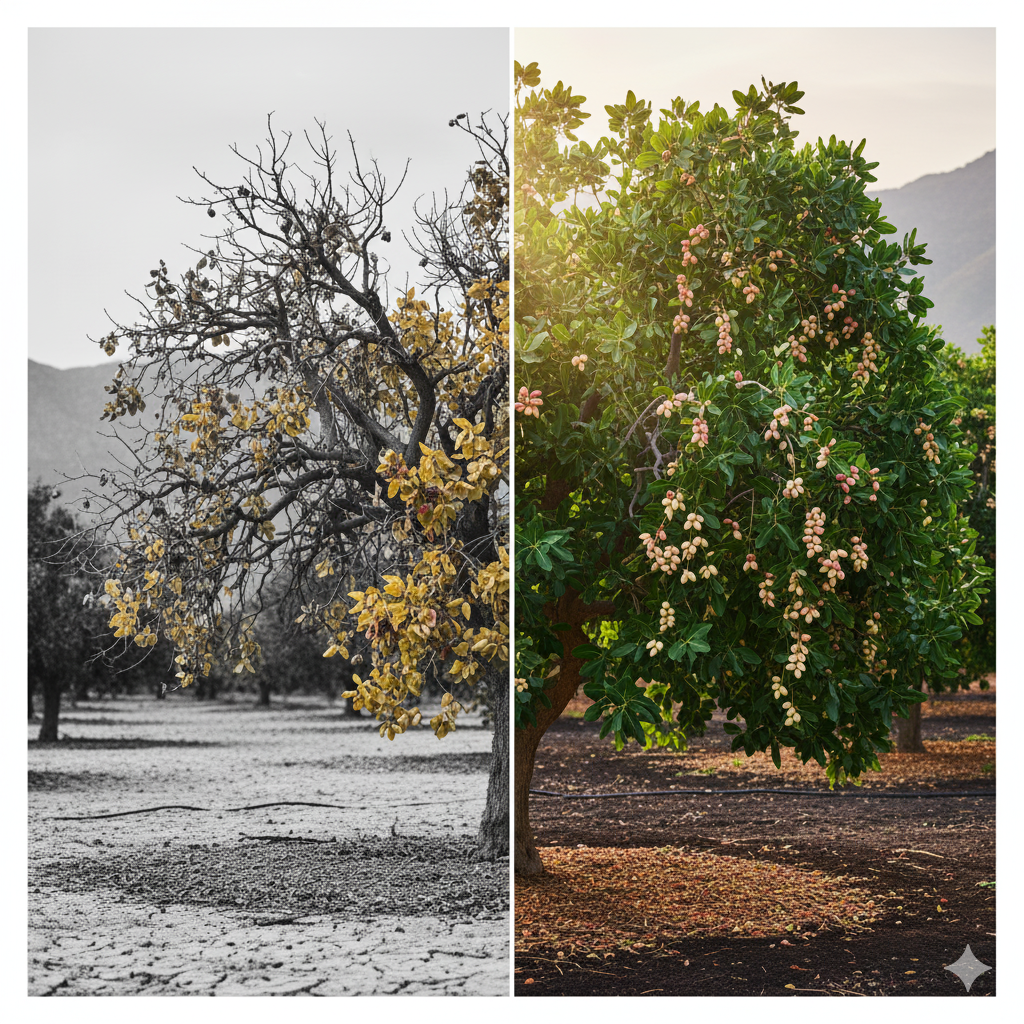
The decline observed in old pistachio trees is primarily a sign of root system failure—its inability to cope with environmental stresses. The root system of these older trees, embedded in compacted, saline, and low-organic-matter soil, suffers from “functional insufficiency.” Simply adding more chemical fertilizer is ineffective and counterproductive, often exacerbating salinity. The true solution is to introduce the biological agents—Mycorrhizal fungi—to assume the critical function of nutrient absorption and soil healing. - Product Selection and Procurement: Choosing the Right Mycorrhiza
Selecting the correct mycorrhizal product for Pistacia vera is a specialized task. The required fungus is from the Arbuscular Mycorrhizal Fungi (AMF) group.
Essential Purchasing Criteria:
- Native vs. Exotic Strains: Prioritize products containing native AMF strains isolated and multiplied from local pistachio-growing regions (e.g., Kerman, Rafsanjan). Native strains exhibit superior adaptation to the local soil chemistry, high \text{pH}, salinity, and climatic extremes of Iran.
- Viability and Concentration: Ensure the product guarantees a minimum concentration of viable spores, hyphae, and colonized root fragments. Since the fungus is a living organism, check the expiration date and ensure the product has been stored away from heat and direct sunlight.
- Commercial Form: For ease of application in established orchards, granular or powdered forms are generally preferred, as they are best suited for the essential deep hole application (Chalkoud) method.
- Comprehensive Practical Steps for Inoculation and Revival
Inoculation must be performed with precision to ensure effective contact between the fungus and the active feeder roots.
3.1. Timing and Preparation
- Optimal Timing: The best time for inoculation is either in the early spring (just before the start of vigorous vegetative growth) or in the late autumn (after harvest but before deep dormancy).
- Soil Moisture: A light irrigation a few days before application is recommended to ensure optimal soil moisture, which is necessary for spore germination and hyphal formation.
3.2. The Deep Hole (Chalkoud) Technique for Mature Trees - Locate the Active Roots: Holes should be dug along the tree’s drip line (the area under the outermost branches), as this zone hosts the highest density of active feeder roots. Avoid the tree trunk base.
- Depth and Number: For old trees (50+ years), digging 4 to 6 holes per tree is recommended, reaching a depth of 35 to 50 centimeters. This depth is crucial to reach the active roots of deep-rooted pistachio trees.
- Application: The specific, measured dose of Mycorrhizal product (as recommended by the supplier based on tree age and decline severity) should be evenly distributed at the bottom and sides of the holes.
- Covering: Mix a portion of the excavated soil with fully decomposed organic material (quality compost or vermicompost) and use this mixture to cover the fungus completely. Then, fill the remainder of the hole.
- Activation Irrigation: An immediate and deep irrigation after filling the holes is mandatory. Sufficient moisture provides the essential signal for the spores to germinate and begin forming the mycorrhizal network.
3.3. Application for New Saplings (Prevention)
For newly planted pistachio saplings, the Dipping Method is highly effective: the roots are briefly dipped in a slurry (suspension) of the mycorrhizal inoculum before transplanting. This establishes a strong fungal network early on, maximizing the sapling’s survival and growth under harsh conditions.
- Post-Inoculation Management: Sustaining the Symbiosis
The full functional benefits of AMF colonization require two to three growing seasons to become fully evident in terms of yield and quality.
- Drastic Reduction of Soluble Phosphate: The most critical post-inoculation step is to reduce or eliminate the use of soluble phosphate fertilizers. High phosphate concentrations inhibit the plant’s natural signaling process to the fungi, thus weakening the symbiosis. Allow the fungi to perform their mobilization task.
- Careful Use of Fungicides: Avoid applying systemic fungicides, especially those targeting Oomycetes, in the immediate root zone, as these can destroy the delicate mycorrhizal network.
- Increase Organic Matter: Applying compost and organic mulches under the canopy creates a favorable environment for fungal proliferation and overall root health, maximizing the efficacy of the AMF.
- Final Conclusion: Ensuring the Future of Pistachio
The revival of 50-year-old pistachio orchards using Mycorrhizal fungi is a breakthrough in soil biological management. This technology revives the “dead” tree, enhances the farmer’s economic resilience in times of water scarcity and salinity, and provides a sustainable strategy essential for securing Iran’s position in the global pistachio market.