
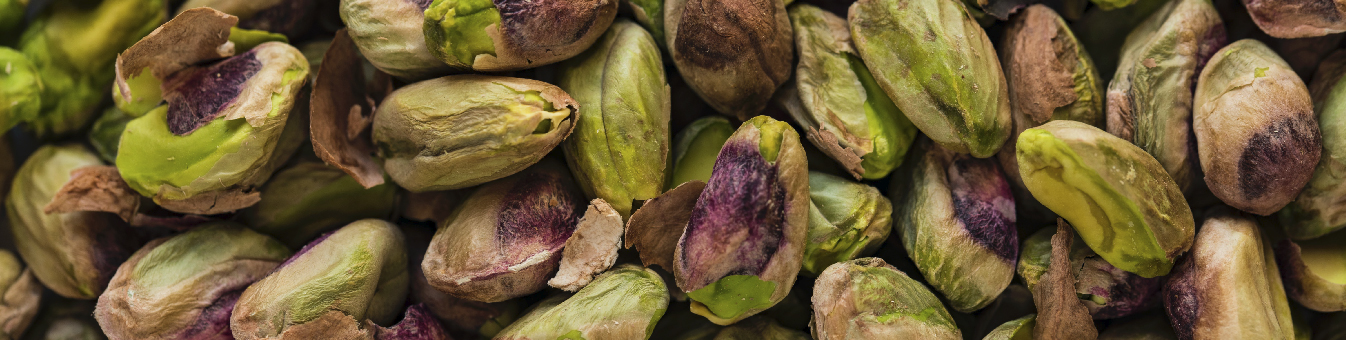

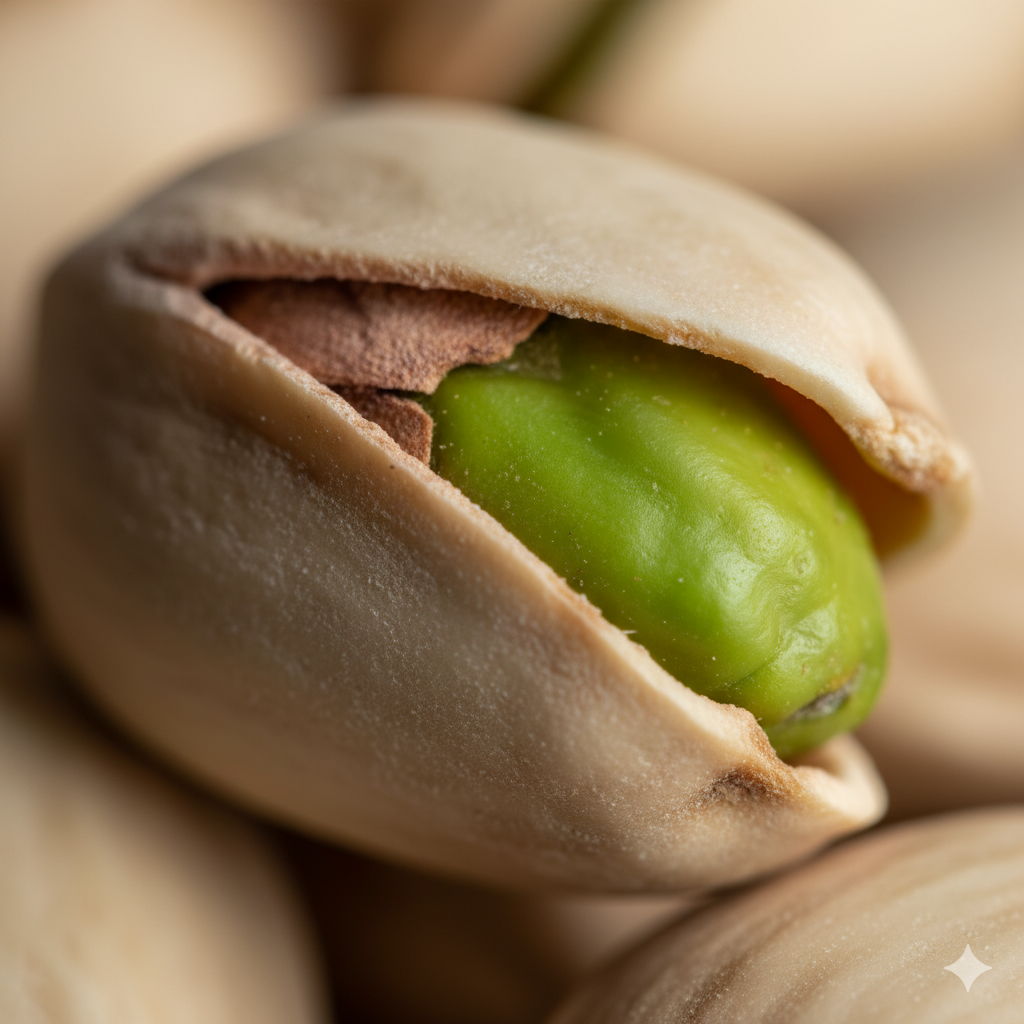
The global food industry is undergoing a paradigm shift toward sustainable protein sources. This study investigates the potential of Pistachio Protein Isolate (PPI) as a primary functional ingredient for high-moisture meat analogs. Due to its unique globular protein structure and rich amino acid profile, pistachio extract offers superior emulsification and gelling properties compared to traditional soy-based alternatives. Our research focuses on the fibrous transformation of these proteins under thermal and mechanical stress.
Introduction
The environmental footprint of conventional livestock farming has catalyzed the search for “Green Proteins.” While soy and wheat gluten have dominated the market, there is a growing demand for allergen-free and gourmet-tier alternatives. Pistachios, primarily grown in Iran, contain approximately 20–25% protein. This article explores how the molecular weight distribution of pistachio globulins facilitates the creation of a “meat-like” texture through advanced extrusion technology.
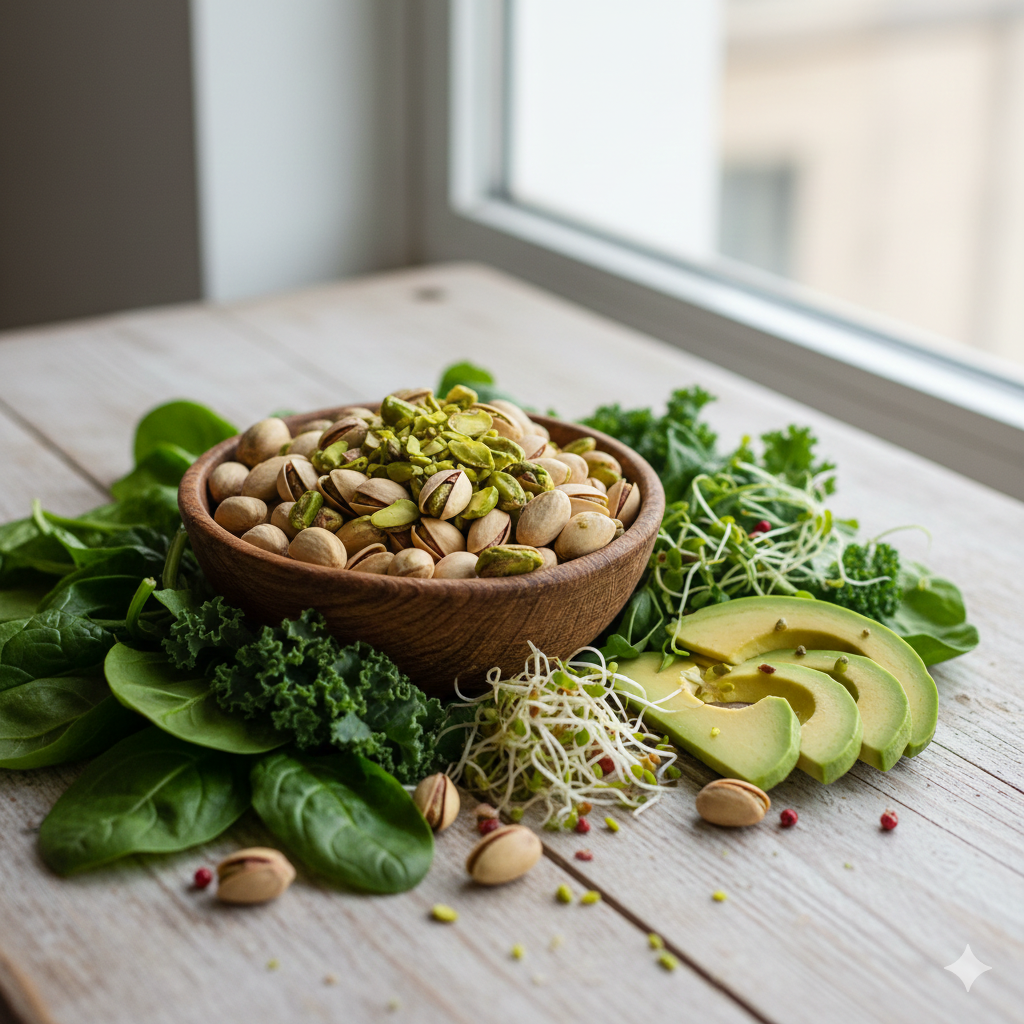
Methodology: The Extrusion Process
To simulate the longitudinal fibers of bovine muscle, we employed High-Moisture Extrusion Cooking (HMEC).Proteins
- Extraction: were extracted using alkaline dissolution followed by isoelectric precipitation (pH \approx 4.5).
- Formulation: The PPI was blended with 5% sodium alginate to enhance the cross-linking of protein chains.
- Thermomechanical Treatment: The mixture was processed at temperatures ranging from 140^{\circ}C to 160^{\circ}C.
Results and Discussion
The resulting “Pistachio Meat” exhibited a Texture Profile Analysis (TPA) score highly comparable to chicken breast. - Fibrousness: Scanning Electron Microscopy (SEM) revealed that pistachio proteins align into dense, parallel sheets when subjected to high shear.
- Water Holding Capacity (WHC): Unlike pea protein, which can become dry, pistachio proteins retain moisture effectively, resulting in a “juicy” mouthfeel.
- Flavor Profile: The natural presence of aromatic terpenes in pistachios masks the “beany” off-flavors often associated with plant proteins, reducing the need for synthetic masking agents.
Conclusion
Pistachio-based meat represents a high-value-added product. It combines the health benefits of nuts—such as high antioxidants and monounsaturated fats—with the structural satisfaction of meat, offering a premium solution for the “Flexitarian” market.