
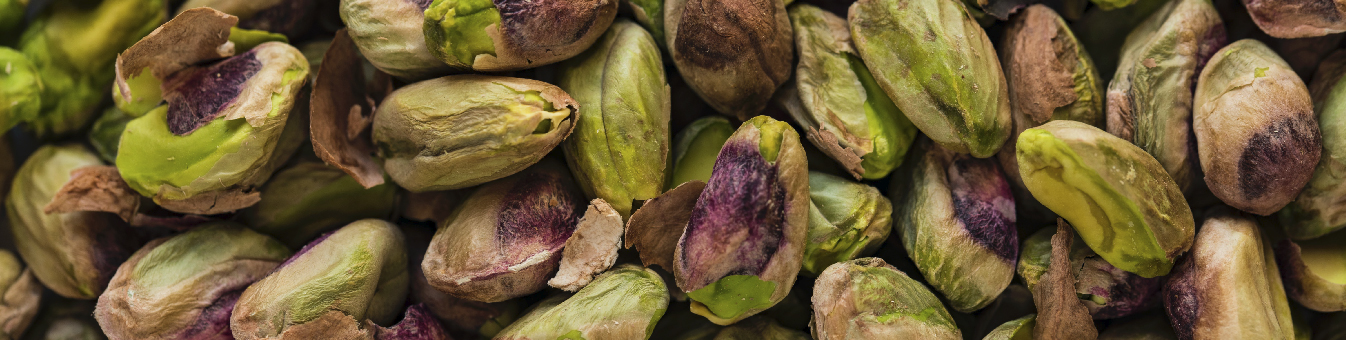


Ensuring the safety of human capital is essential for sustainable pistachio production. This article outlines the standardized safety protocols and Personal Protective Equipment (PPE) required to mitigate chemical risks in the field.
- Engineering and Administrative Controls
Before relying on protective gear, orchard managers should Conclusion
A healthy workforce is the backbone of a high-yielding pistachio orchard. By integrating scientific safety training with high-quality agricultural inputs, producers can maximize efficiency while minimizing health-related liabilities.
Professional Consultation & Order Inquiries
For expert advice on pistachio orchard management, high-quality agricultural inputs, and specialized consulting, please contact our management team:
Mr. Ravanshad
📱 Phone & WhatsApp: +989214773705
Click the link above to chat directly on WhatsApp for orders or technical support. systemic safety measures:
- Meteorological Monitoring: Spraying should never occur in wind speeds exceeding 5 km/h to prevent “spray drift,” which endangers the operator and the surrounding environment.
- Equipment Calibration: Regularly checking nozzles and pressure valves reduces the likelihood of accidental leaks and over-exposure.
- Standardized Personal Protective Equipment (PPE)
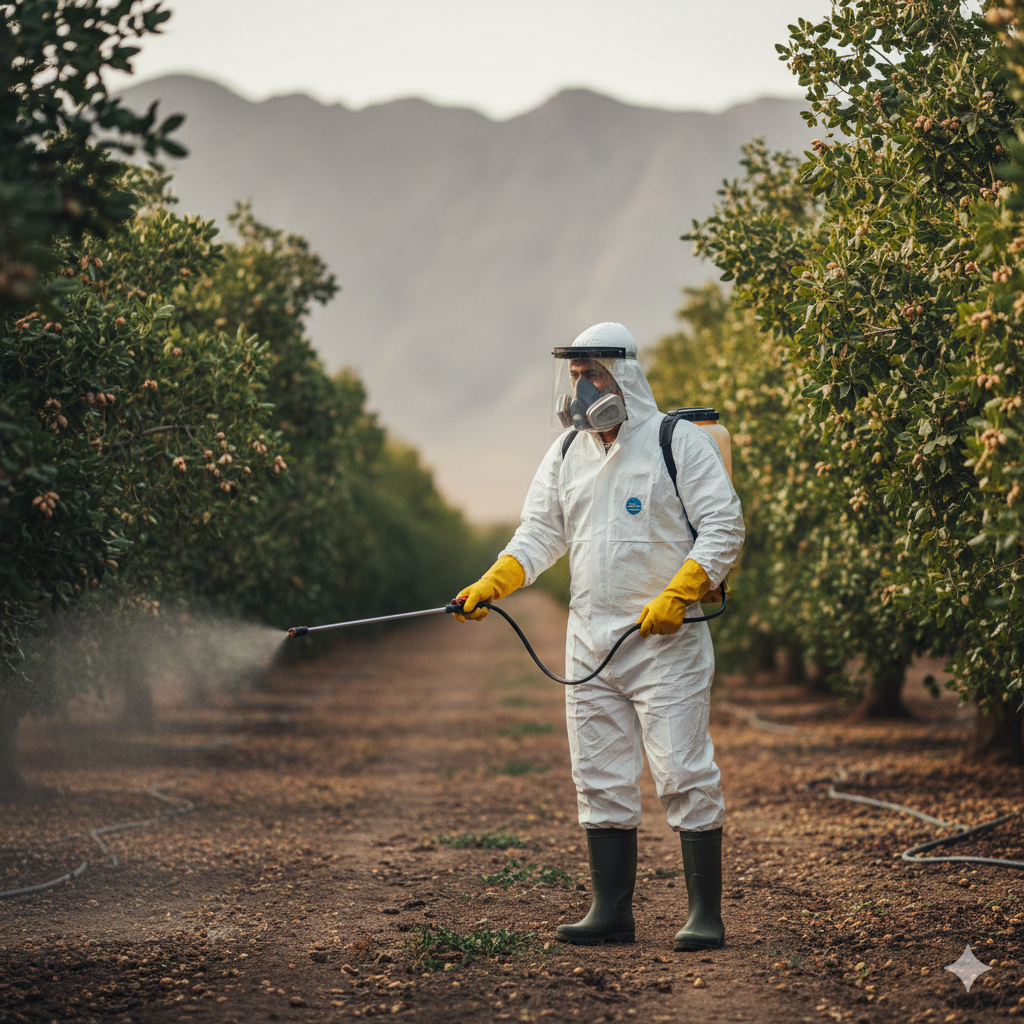
To comply with international health and safety standards, workers must utilize:
- Chemical-Resistant Suits: Tyvek or high-density polyethylene coveralls are mandatory. Standard cotton clothing is discouraged as it absorbs liquid pesticides and holds them against the skin.
- Respiratory Protection: Half-face or full-face respirators equipped with organic vapor cartridges (typically color-coded brown).
- Nitrile Gloves: Unlike latex, nitrile provides a superior barrier against synthetic chemicals and solvents used in pesticide formulations.
- Decontamination and Hygiene Education
Post-application hygiene is critical in preventing “take-home” exposure:
- Strict Segregation: Work clothes must be washed separately from household laundry.
- Cold Water Rinsing: Workers should shower with cool water and soap immediately after their shift. Hot water is avoided initially as it opens pores and may facilitate the absorption of residual chemicals.
- Hydration and Rest: Providing clean, pesticide-free rest areas and ensuring adequate hydration helps the body naturally process and eliminate minor metabolic toxins.
- Conclusion
A healthy workforce is the backbone of a high-yielding pistachio orchard. By integrating scientific safety training with high-quality agricultural inputs, producers can maximize efficiency while minimizing health-related liabilities.
Professional Consultation & Order Inquiries
For expert advice on pistachio orchard management, high-quality agricultural inputs, and specialized consulting, please contact our management team:
Mr. Ravanshad
📱 Phone & WhatsApp: +989214773705
Click the link above to chat directly on WhatsApp for orders or technical support.