


🌟 Introduction: The Pistachio’s Two Global Identities
The pistachio, one of humankind’s oldest cultivated crops, now holds two major global identities: the historical legacy of Iran, its place of origin, and the modern, technological identity of California, which has become a dominant industrial player in the last fifty years. These two production powerhouses, while fierce competitors, narrate distinct stories of growth and identity in the global market, each emphasizing a different facet of the nut’s consumption and trade.
👩🍳 Flavor Analysis: The Case for Sensory Superiority in Gastronomy
The difference in flavor between the Iranian and Californian pistachios is a subject intensely discussed by culinary experts. Food scientists suggest that the environmental stress (salt water, drought, and temperature oscillation) in Iran’s desert regions stimulates the synthesis of secondary compounds in the fruit. These compounds, including essential oils and phenolic materials, result in the stronger aroma and higher flavor concentration of the Iranian pistachio. This richness is why Iranian pistachios are often considered unmatched for applications like Sohan, Baklava, or traditional ice creams where the nut flavor must penetrate and endure the sweetness.
The Californian pistachio, with its milder taste, blends seamlessly with other flavors and is favored for industrial applications requiring a balanced and standardized profile. Its brighter green color is also an asset in visually-driven culinary decoration and confectionery.
🛠 Processing Challenges: Safety vs. Tradition and Scale
One of the most significant challenges for Iranian pistachios in international markets, particularly in Europe, is the issue of food safety and Aflatoxin control. This carcinogenic fungus, which thrives in high humidity and slow drying conditions, poses a serious threat to exports. The traditional structure of orchard ownership, small-scale production, and the lack of widespread industrial drying facilities make it difficult to implement the stringent, unified global standards required.
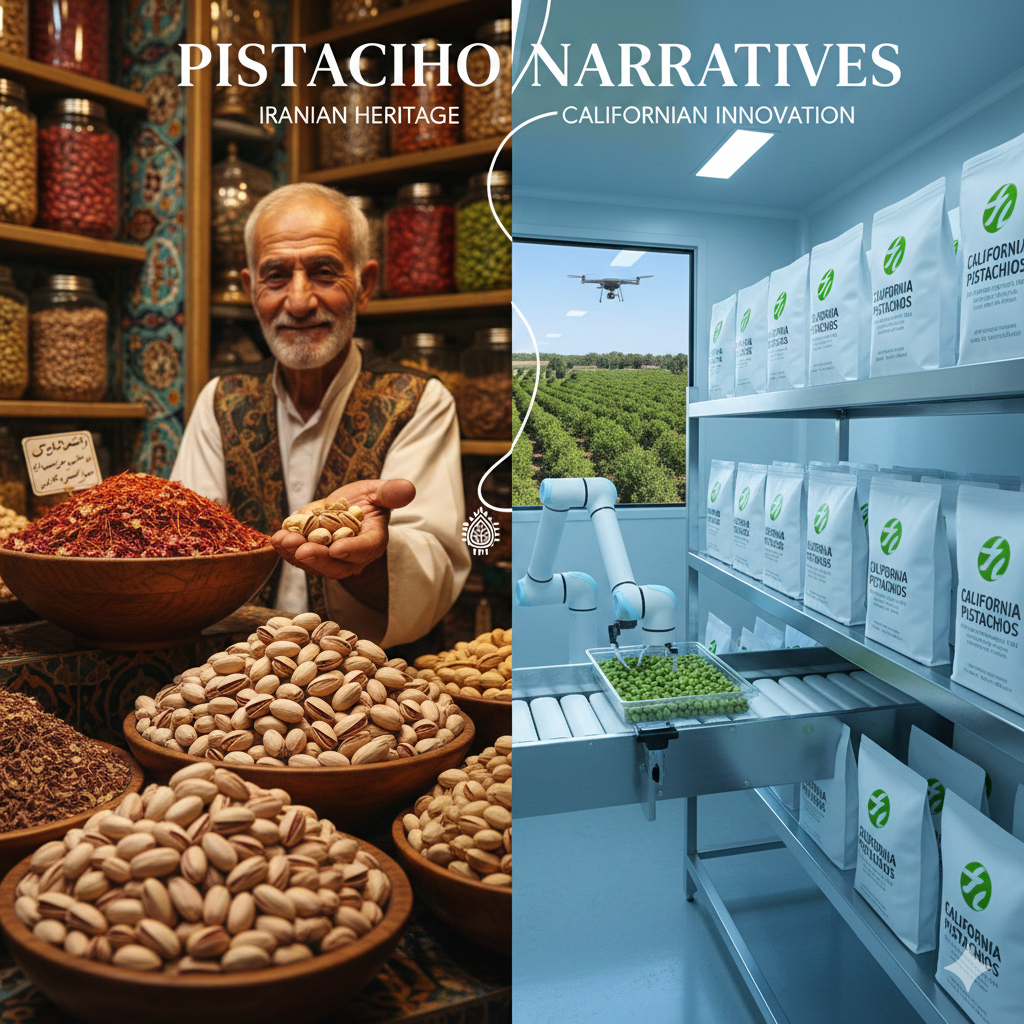
In stark contrast, California has made massive investments in Post-Harvest Technology, including huge dryers, laser sorters, and intelligent climate control systems. This approach drastically minimizes the risk of contamination, providing the American product with a critical competitive advantage centered on “safety” and “trust” in sensitive Western markets. This industrialized processing ensures that product quality remains consistent across millions of units of output.
🚀 The Future of Trade: Two Distinct Paths for Growth
The future trajectories of these two pistachio powers are likely to diverge based on specialization in different market segments:
- Iranian Pistachio (The Luxury Good): Iran’s future growth must pivot on Geographical Indication and marketing the product as a “Global Heritage” item with an inimitable flavor. By enhancing primary processing to address safety concerns, the Iranian pistachio can solidify its position as a high-end, premium product suitable for specialty foods and gourmet consumption.
- Californian Pistachio (The Mass-Market Staple): California will maintain its dominance in processed snacks, industrial ingredients, and health-focused packaged goods, leveraging its advantages in scale, strong branding, and technological efficiency to maintain its presence in large supermarkets and global commodity exchanges.
Ultimately, the success of both nations depends not on replicating the other, but on effectively narrating their unique story: one of deep-rooted authenticity in the desert, and the other of success through technology and modern production.
For purchase and order registration on WhatsApp:
Mr. Ravanshad: 00989214773705