
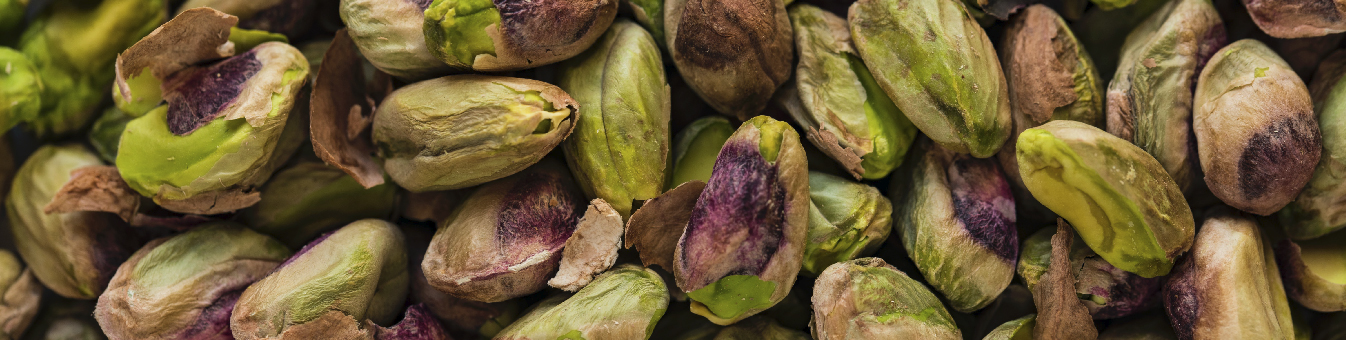


Global livestock production faces increasing pressure from rising conventional feed prices and the need for sustainable practices. Pistachio Hull (PH), a significant agricultural byproduct in pistachio-producing regions, represents a promising alternative fiber and energy source. This paper provides an in-depth analysis of its chemical composition and the critical physiological considerations for its successful inclusion in ruminant diets.
- Detailed Chemical Composition and Nutritional Profile Assessment
Pistachio Hull is categorized primarily as a fibrous feedstuff. A thorough understanding of its constituent compounds is vital for precise feed formulation.
1.1. Fiber Fraction Analysis (NDF and ADF)
The high levels of Neutral Detergent Fiber (NDF), typically ranging from 50% to 65% of Dry Matter (DM), position PH as an effective source of bulk fiber, essential for maintaining ruminal health and stimulating rumination in cattle, sheep, and goats. However, the Acid Detergent Fiber (ADF) content is also notably high (40% to 50% DM).
The relatively high ADF:NDF ratio (often close to 0.7) signifies a substantial presence of less-digestible lignocellulose, which limits the overall Metabolizable Energy (ME) content. This high fibrous component requires efficient processing to enhance microbial access to the cellulose and hemicellulose fractions.
1.2. The Dual Role of Secondary Metabolites: Condensed Tannins (CTs)
The most distinctive feature of Pistachio Hull is the presence of Condensed Tannins (CTs). These polyphenolic compounds are critical for determining the feedstuff’s efficacy.
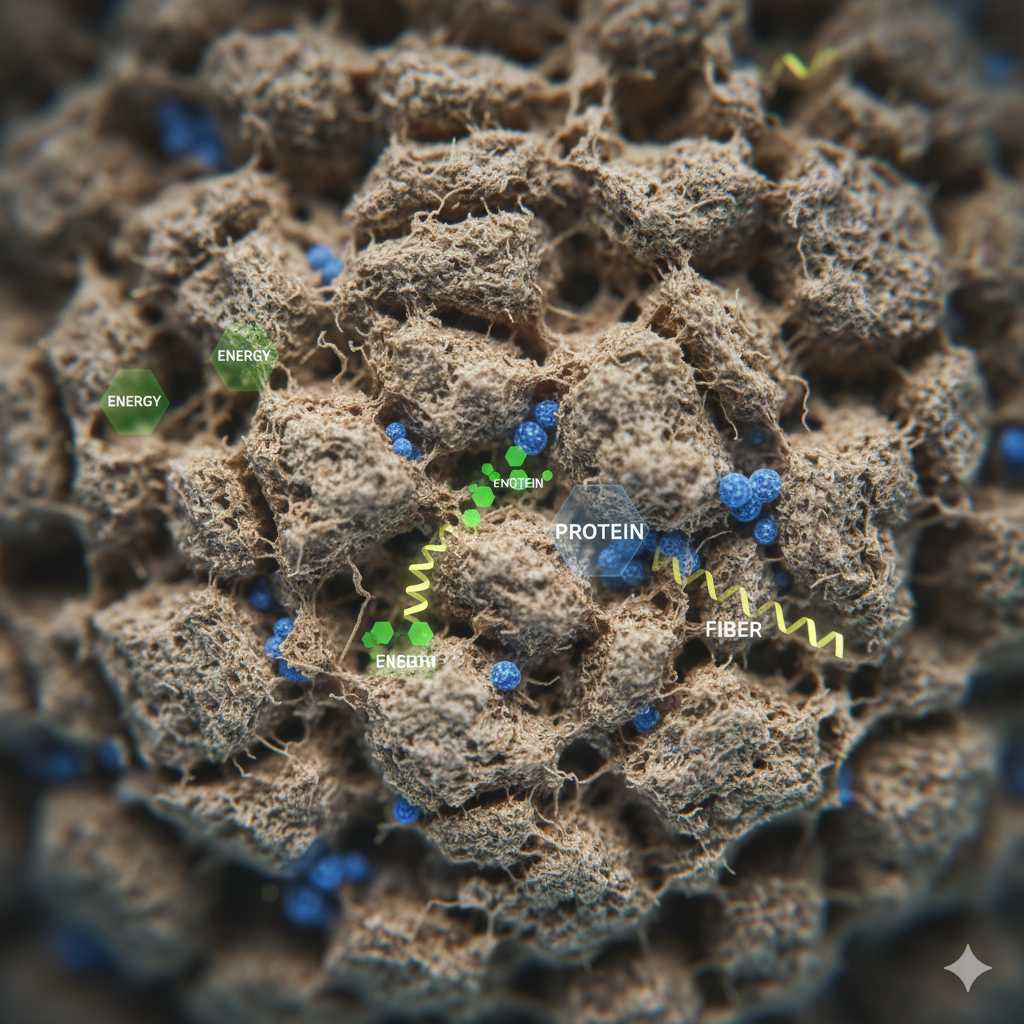
- Anti-Nutritional Effect: At high concentrations (typically exceeding 5% DM), CTs form complexes with feed proteins and digestive enzymes, which can significantly decrease palatability and hinder the overall digestibility of protein and fiber.
- Positive Physiological Benefits (at optimal levels): When CTs are present at moderate levels (typically 1% to 3% DM), they offer substantial advantages:
- Protein Protection (Bypass Protein): CTs bind reversibly with dietary proteins within the neutral pH of the rumen, forming complexes that resist microbial degradation. These complexes dissociate in the highly acidic environment of the abomasum, releasing the protein for intestinal absorption. This mechanism enhances the Nitrogen Utilization Efficiency of the animal.
- Methane Mitigation: Tannins have been shown to modulate the methanogenic archaea population in the rumen, leading to a reduction in the production of methane—a potent greenhouse gas. This offers a significant ecological benefit for sustainable livestock farming.
- Processing Technologies for Digestibility Enhancement
To fully unlock the nutritional value of PH, appropriate processing technologies are mandatory to overcome the limitations imposed by lignification and tannin content.
- Alkaline Treatments: Chemical treatments, such as applying sodium hydroxide (\text{NaOH}) or calcium hydroxide (\text{Ca(OH)}_2), are designed to hydrolyze the ester bonds linking lignin to hemicellulose. This process increases the surface area available for microbial colonization, thus significantly improving fiber digestibility.
- Pelletization and Grinding: Mechanical processes reduce the particle size, which improves physical palatability and mixing uniformity. Pelletization is crucial for increasing the Bulk Density, which optimizes transportation logistics and storage efficiency.
- Biological Treatments: Utilizing white-rot fungi or specific enzyme cocktails (cellulases and hemicellulases) can selectively degrade the highly recalcitrant lignin component, a method that is environmentally friendlier than chemical alternatives.
- Scientific Conclusion and Outlook
Pistachio Hull is a valuable fiber source capable of replacing a portion of high-cost forages in ruminant diets. However, its successful integration hinges on precise processing and diet formulation based on rigorous in \ vitro and in \ vivo digestibility trials. The goal is to carefully manage the concentration of CTs to maximize the beneficial effects on protein efficiency and methane reduction while preventing adverse effects on overall feed intake and digestibility.