


Introduction
Training at a professional level places enormous stress on the body. Athletes must maintain muscle strength, stabilize blood sugar levels, improve metabolic efficiency, and support rapid recovery after intense workouts. Pistachios have become increasingly recognized in sports nutrition research due to their exceptional nutrient profile that supports both performance and recovery.
In this in-depth scientific and educational article, we explore how pistachios enhance metabolic energy pathways, stimulate muscle synthesis, protect cells from oxidative damage, and support brain function during athletic activity.
- Pistachios and Energy Metabolism: A Scientific Overview
1.1. Low Glycemic Index for Controlled Blood Sugar
Foods with a low glycemic index release glucose slowly. Pistachios maintain:
Stable blood sugar
Better endurance
Lower fatigue levels
This is crucial for long-duration sports such as cycling, running, football, swimming, or CrossFit.
1.2. Monounsaturated Fats for Long-Term Energy
These fats provide a dense, slow-burning source of fuel that athletes rely on during extended training sessions.
They also reduce inflammation and support cardiovascular health.
1.3. Enhanced ATP Production
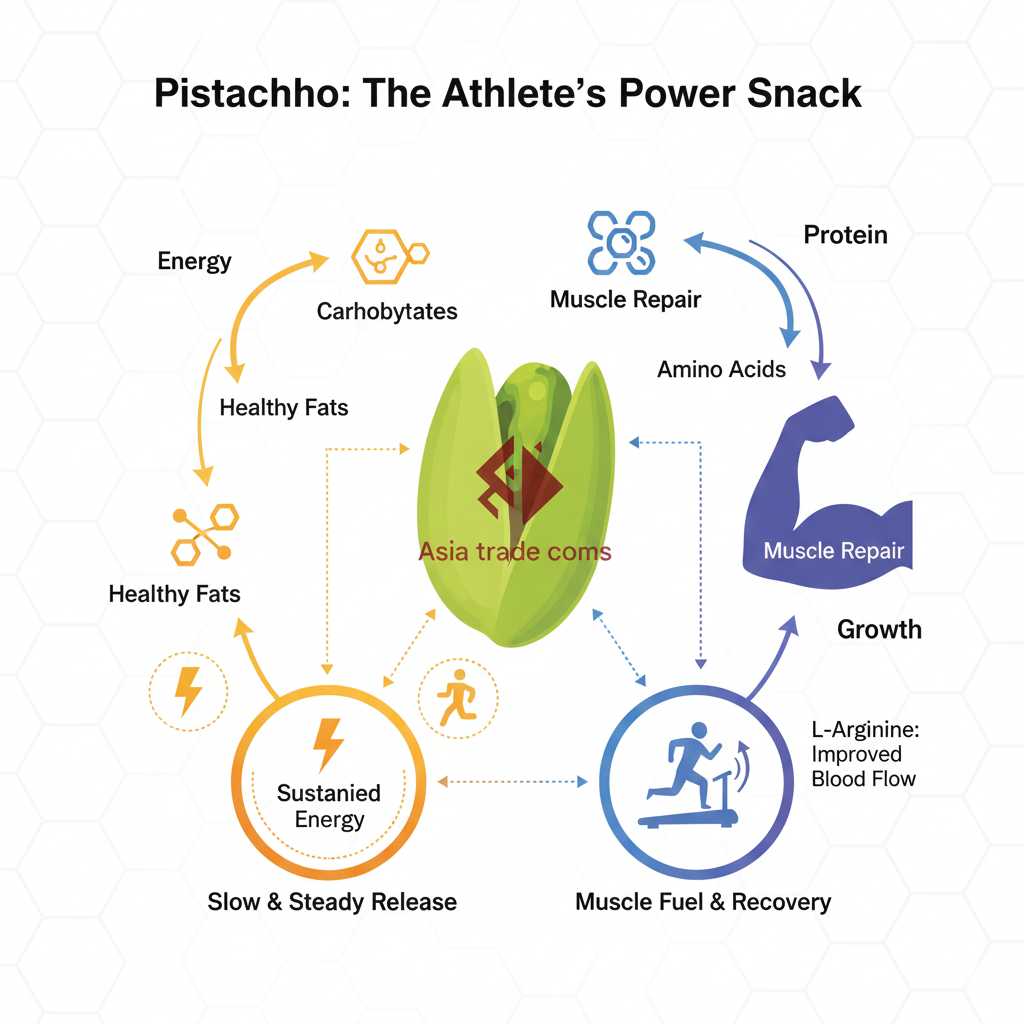
The combination of protein, fats, B vitamins, and minerals in pistachios promotes efficient ATP generation—the body’s primary energy molecule.
- Neurological Benefits: Pistachios and Brain Performance
2.1. Neurotransmitter Production and Focus Enhancement
Vitamin B6 plays a major role in synthesizing neurotransmitters that regulate:
Mood
Concentration
Reaction speed
Decision-making
Optimal mental performance is critical in sports requiring tactical awareness and rapid decision processing.
2.2. Fatty Acids that Support Nerve Cell Function
The healthy fats in pistachios:
Strengthen neuronal membranes
Improve communication between nerve cells
Enhance coordination and balance - Muscle Health and Tissue Repair
3.1. Proteins and Amino Acids for Muscle Growth
Pistachios contribute to muscle repair and growth by providing essential amino acids necessary for protein synthesis. This reduces the breakdown of muscle fibers during intense workouts.
3.2. Antioxidants that Protect Muscle Cells
Athletes generate a high level of oxidative stress. The antioxidants in pistachios neutralize free radicals and help prevent:
Muscle fatigue
Micro-tears
Post-workout soreness
Long-term cellular damage
3.3. Anti-Inflammatory Properties
Pistachios contain compounds that help reduce inflammation caused by repetitive muscle stress, making recovery faster and more efficient.
- Pistachios and Prevention of Muscle Cramps
4.1. Potassium and Electrolyte Homeostasis
Potassium regulates:
Muscle contraction
Nerve signaling
Prevention of cramps
Fluid balance
Athletes who sweat heavily benefit significantly from foods rich in potassium such as pistachios. - Timing and Optimal Intake
Before Training:
Enhances energy levels
Improves mental focus
Stabilizes glucose
Prevents fatigue
After Training:
Supports muscle repair
Reduces inflammation
Speeds up recovery
Replenishes minerals
Conclusion
Pistachios are not just a simple snack—they are a scientifically valuable athletic fuel. Their balanced combination of protein, healthy fats, antioxidants, minerals, and essential vitamins allows the body to perform at peak levels while supporting efficient recovery.
Both professional and amateur athletes can benefit enormously from integrating pistachios into their daily nutritional routines.
To buy premium pistachios and dried fruits, contact Mr. Ravanshad directly on WhatsApp:
📞 00989214773705