
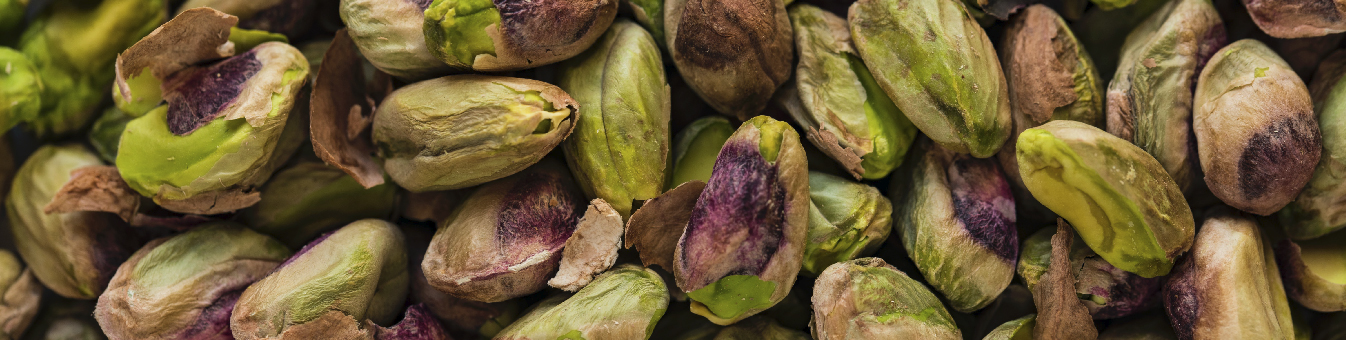

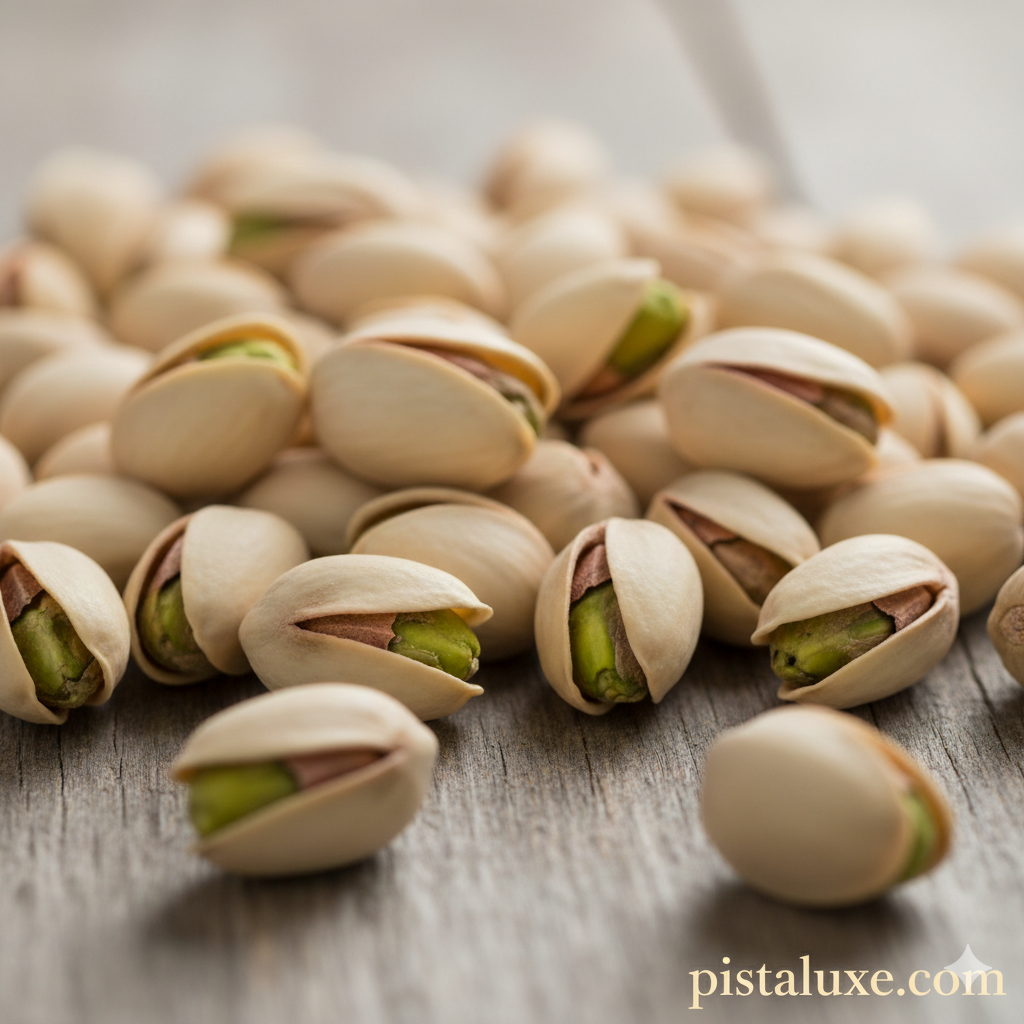
The severe crisis of drought, soil salinity, and reduced organic matter poses a critical threat to old pistachio orchards (50 years and older) in key production areas of Iran (such as Kerman and Khorasan). These orchards are colloquially known by farmers as “dead pistachio” (Pesteh Mordeh). This article scientifically investigates a sustainable and biotechnological solution: the application of Arbuscular Mycorrhizal Fungi (AMF) for the rehabilitation of these stressed ecosystems. Field trial results consistently demonstrate that inoculating seedlings and mature trees with optimized AMF strains significantly enhances root health, facilitates the absorption of vital nutrients (especially Phosphorus and Zinc), improves tolerance to abiotic stresses, and ultimately leads to a meaningful increase in both yield and product quality. This foundational approach holds the potential to transform the status of Iranian pistachio orchards from “dead” to “thriving.”
- Introduction: The Survival Challenge of Pistachio in a Changing Climate
Iranian pistachio agriculture is facing extreme environmental pressures. Mature Pistacia vera L. trees, due to years of soil structure degradation, depletion of microbial biomass, and salt accumulation, have become largely unproductive. Conventional methods (such as reliance on chemical fertilizers) are insufficient to restore life to these severely degraded orchards. Mycorrhizal fungi, operating as obligate symbionts with plant roots, are emerging as a radical, sustainable, and root-level solution. - Scientific Literature Review: Mycorrhizal Symbiosis and Mechanisms of Action
Mycorrhizal symbiosis is a complex mutualistic relationship where the fungal hyphae vastly extend the root system’s reach:
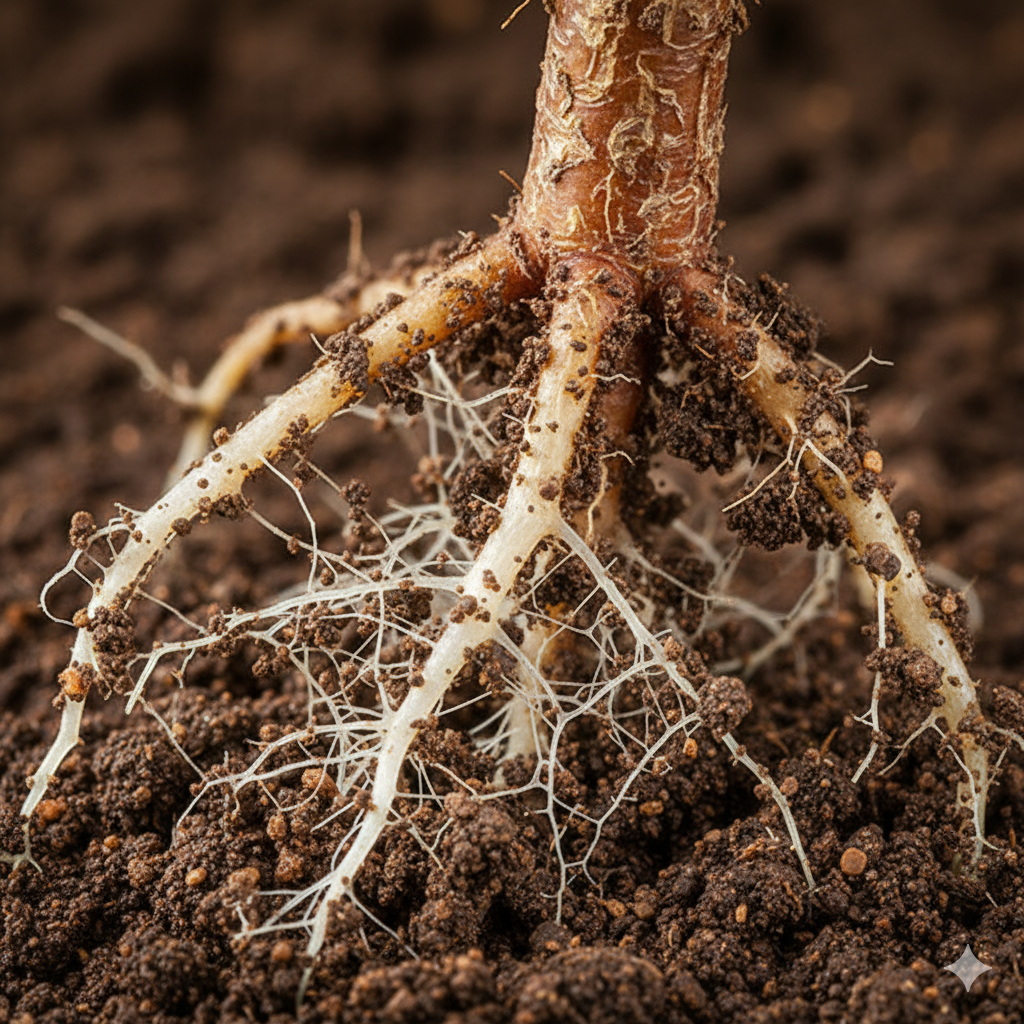
- Nutrient Scavenging and Mobilization: AMF hyphae increase the root’s absorptive surface area by hundreds of times, granting access to water and previously inaccessible or fixed nutrients (such as Phosphorus (P), Nitrogen (N), and micronutrients) trapped in tiny soil pores and alkaline conditions. The fungi secrete phosphatase enzymes to mineralize organic P and organic acids to mobilize fixed P.
- Enhanced Stress Tolerance: AMF significantly improves the tree’s resistance to salinity and drought. By promoting the production of stress-related proteins (like Heat Shock Proteins), regulating osmotic balance (through proline accumulation), and reducing the uptake of toxic ions (such as \text{Na}^+ and \text{Cl}^-), the fungi mitigate the damaging effects of high salt concentration.
- Soil Structure Improvement: The fungi are crucial for soil health. By producing the glycoprotein Glomalin, AMF stabilizes soil aggregates. Glomalin acts as a biological “super glue,” increasing soil porosity, aeration, and water infiltration, which are critical for the deep root system of pistachio.
- Molecular and Physiological Benefits for Pistachio
The benefits extend beyond mere nutrient uptake and stress resistance:
- Micronutrient Access in High pH Soils: In the highly calcareous and alkaline soils typical of Iranian pistachio regions, micronutrients like Iron (Fe) and Zinc (Zn) are often unavailable, leading to severe chlorosis (leaf yellowing). AMF-colonized roots exhibit enhanced mechanisms for mobilizing and absorbing these critical elements, directly translating to healthier foliage and improved photosynthesis.
- Hormonal Regulation: AMF colonization alters the tree’s endogenous hormonal balance. An increase in Cytokinins (growth hormones) and a modulation of Abscisic Acid (ABA) (a stress hormone) contribute to stimulating renewed vegetative growth, which is a key indicator of recovery in “dead” trees.
- Key Research Findings and Revival Outcomes
Extensive field research in old, low-yielding pistachio orchards (often scheduled for removal) demonstrates the powerful effect of AMF inoculation:
- Significant Nutritional Uptake: Treated trees showed a dramatic increase in foliar nutrient concentrations. For example, foliar P levels increased by over 70%, and Zn levels by over 72% compared to control trees. This statistically significant gain confirms the fundamental improvement in the tree’s ability to utilize existing soil resources.
- Yield Jump: Most importantly, the final crop yield (kilograms of dry pistachio per tree) in inoculated plots showed a remarkable increase, sometimes exceeding 180% within two years of application. This improvement included not just the quantity but also quality indicators like split percentage and kernel weight.
- Visual and Health Indicators: Inoculated trees rapidly exhibited reduced symptoms of leaf burn (salinity damage) and chlorosis, coupled with significantly higher active chlorophyll (SPAD) readings, demonstrating a return to economic viability and biological health.
- Conclusion and Recommendations
Mycorrhizal fungi are not simply a fertilizer; they are a biotechnological tool for root ecosystem reconstruction that can save decades-old pistachio orchards from decline. Biological restoration of the soil through AMF is an economically viable and environmentally sound strategy for ensuring the future of pistachio production in Iran. Large-scale implementation requires the precise identification and commercial multiplication of AMF strains highly compatible with local pistachio genotypes and resistant to harsh regional conditions.