

Pistachio vs. Walnuts, Almonds & Hazelnuts: The Ultimate Nutritional Showdown
Meta Description: Who is the King of Nuts? We compare Pistachios with Almonds, Walnuts, and Hazelnuts based on nutritional value, taste, and health benefits. Order premium Iranian Pistachios (WhatsApp: 00989214773705).
👑 The King of Nuts: Pistachio vs. The Nut Elite in the Ultimate Showdown
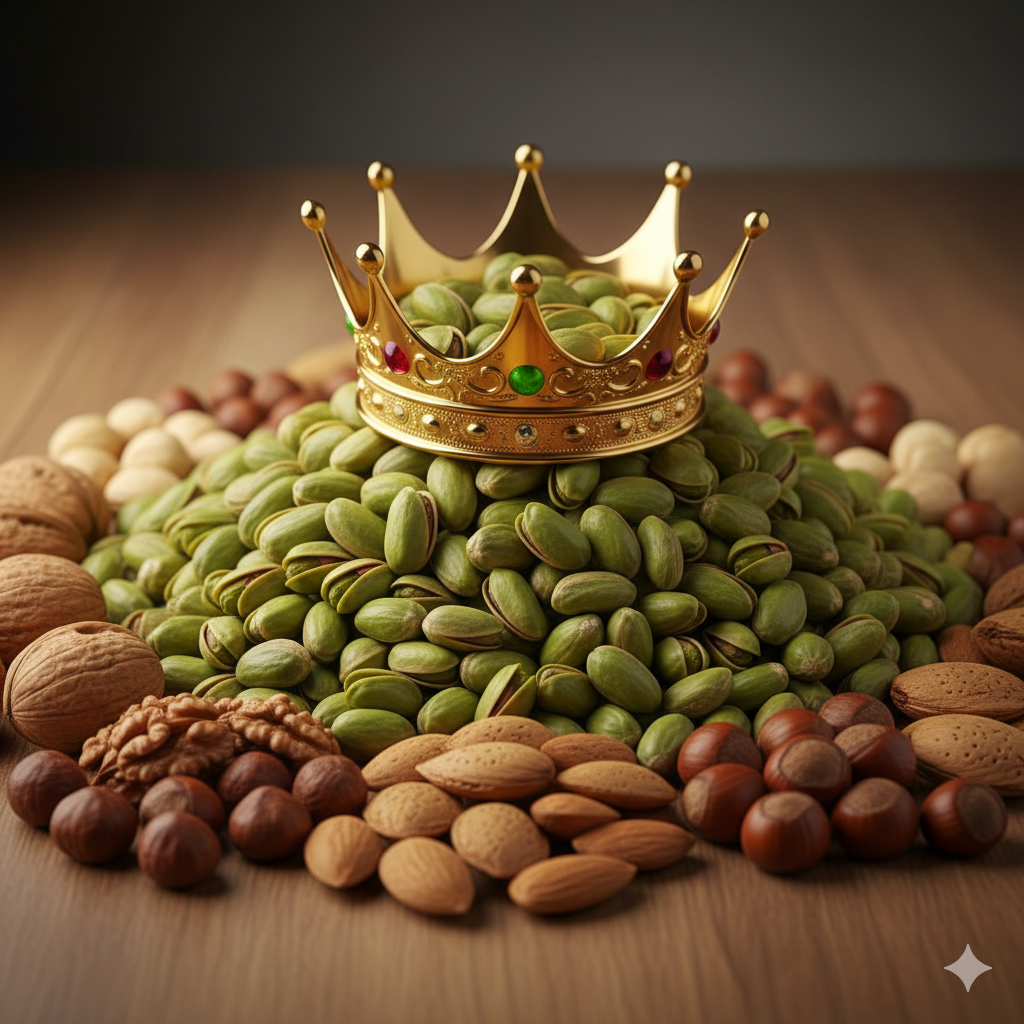
When discussing nuts, the pistachio, with its iconic smile and vibrant green kernel, has long been a contender for the title of the King of Nuts. But does this claim hold up against the formidable competition from walnuts, almonds, and hazelnuts? This comprehensive debate will analyze the contestants across three critical areas—nutritional science, culinary versatility, and economic status—to determine which nut truly deserves the crown.

- The Nutritional Battlefield: Which Nut Reigns Supreme in Health?
While all nuts are powerhouse sources of healthy fats, protein, and fiber, their specific micronutrient profiles tell a fascinating story of unique health advantages:
a. The Protein & Vitamin E Champion (Almonds):
If the primary focus is pure plant-based protein and Vitamin E, the Almond often takes the lead, boasting over 21 grams of protein per 100g and being an exceptional source of the antioxidant Vitamin E. This makes almonds fantastic for skin health and cell protection.
b. The Brain & Heart Champion (Walnuts):
When it comes to cardiovascular and cognitive health, the Walnut is the undeniable winner. It contains the highest concentration of Omega-3 fatty acids (specifically Alpha-Linolenic Acid or ALA) among all nuts. These fats are crucial for reducing inflammation and supporting brain function.
c. The Eye Health & Micronutrient Champion (Pistachios):
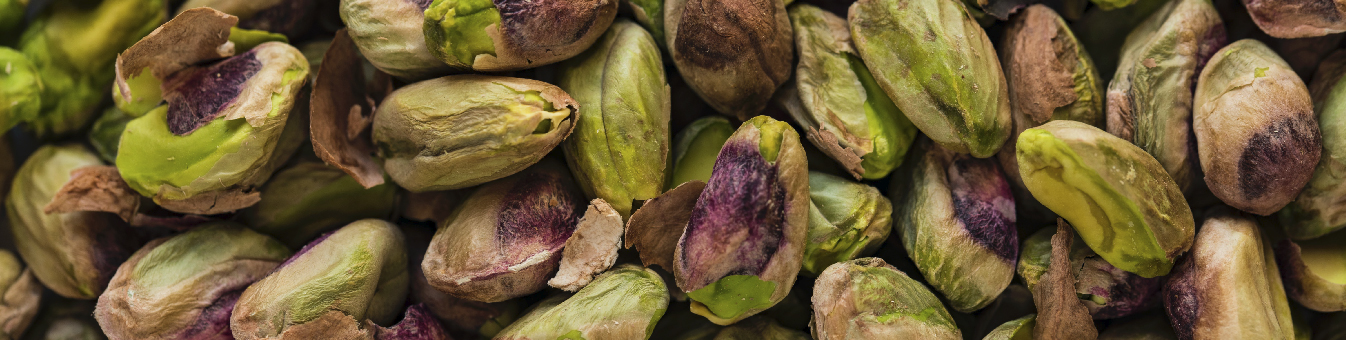
This is where the Pistachio (especially the Iranian variety) shines uniquely. Pistachios are one of the very few nuts that contain significant amounts of Lutein and Zeaxanthin. These powerful carotenoids are vital for eye health, acting as natural filters to protect the retina from light damage, and helping prevent age-related macular degeneration. Furthermore, pistachios offer high fiber content, making them excellent for gut health.
d. The Flavor Champion (Hazelnuts):
While nutritionally strong, Hazelnuts are primarily revered for their rich, buttery flavor, which is a staple in high-end confectionaries and chocolate pairings.
- The Culinary & Cultural Significance Challenge
Beyond pure nutrition, a king must have cultural significance.
- Pistachios (The Luxury Snack): In Middle Eastern and Asian cultures, pistachios are the staple of celebrations, holidays (like Nowruz in Iran), and luxurious hospitality. Their unique color makes them the ultimate garnish for pastries (like Baklava) and ice creams. The “smiling” or open Iranian pistachio is universally recognized as a premium snack.
- Walnuts & Almonds (The Culinary Staples): Walnuts are often used as a core ingredient in cooking (e.g., stews like Fesenjoon) and baking. Almonds are highly versatile for making milk, flours, and coating confections.
Conclusion: While walnuts and almonds are essential culinary ingredients, the pistachio holds a higher status as a symbol of luxury, tradition, and celebratory snacking, giving it a powerful cultural edge.