


The Iranian pistachio industry, often referred to as the Green Gold of the national agricultural economy, has consistently faced severe environmental and climatic challenges. This scientific-research paper analyzes the impact of current climate change trends (rising temperatures, reduced chilling requirements, and persistent drought) on the future of Iranian pistachios. Findings indicate that without the rapid adoption of cutting-edge agricultural technologies (such as smart irrigation, drought-resistant cultivars, and climate prediction systems), the sustainability of pistachio production in traditional regions (especially Kerman) is seriously threatened. The article concludes by proposing scientific and practical strategies for transitioning to sustainable pistachio production in Iran, including shifting production hubs to less water-stressed areas and implementing modern farming models.
- Introduction: The Strategic Importance of Pistachios in the National Economy
Pistachios (Pistacia vera L.) are a strategically vital export commodity, contributing significantly to Iran’s GDP and foreign exchange earnings. However, the crop’s inherent need for substantial water resources and the natural cycle of on-and-off bearing make it highly vulnerable to environmental crises. The future of pistachios is critically dependent on a deep understanding of these challenges and the implementation of innovative solutions. Preserving this sector is not just an economic necessity but a cultural imperative for arid regions. - Literature Review: Climate Change and Pistachio Chilling Requirements
Recent studies confirm that the increase in global average temperatures directly and negatively impacts the chilling requirements of pistachio trees during their dormancy period. The failure to meet the adequate chilling hours (typically below 7.2^{\circ}C) results in reduced bud break, irregular flowering, and consequently, a significant drop in yield. Agro-climatic models project a continuous and significant rise in daily and nightly temperatures across key pistachio-producing provinces like Kerman and Yazd. This trend gravely endangers pistachio production in the medium to long term, necessitating urgent and comprehensive national adaptation strategies. - Methodology and Analysis: Water Stress Mitigation Models
The water crisis remains the most significant threat to the Iranian pistachio industry. This research evaluates the efficacy of modern methods based on data from agricultural organizations and research centers:
- Pressurized (Drip) Irrigation: Reduces evaporation and ensures targeted delivery of water and fertilizer, potentially increasing water use efficiency by over 40%. This also facilitates precise nutrient management (Fertigation).
- Adoption of Resistant Cultivars: The introduction and promotion of late-flowering varieties and those resistant to thermal and water stress (e.g., certain local genotypes or newly bred lines) are essential for sustainable pistachio development. Research must prioritize scion and rootstock resistance to salinity and drought.
- Implementation of Smart Moisture Systems: Installing soil moisture sensors and leveraging the Internet of Things (IoT) to determine the exact timing and amount of irrigation optimizes water consumption and minimizes resource wastage.
- Results and Discussion: Opportunities in New Regions and Export Market Development
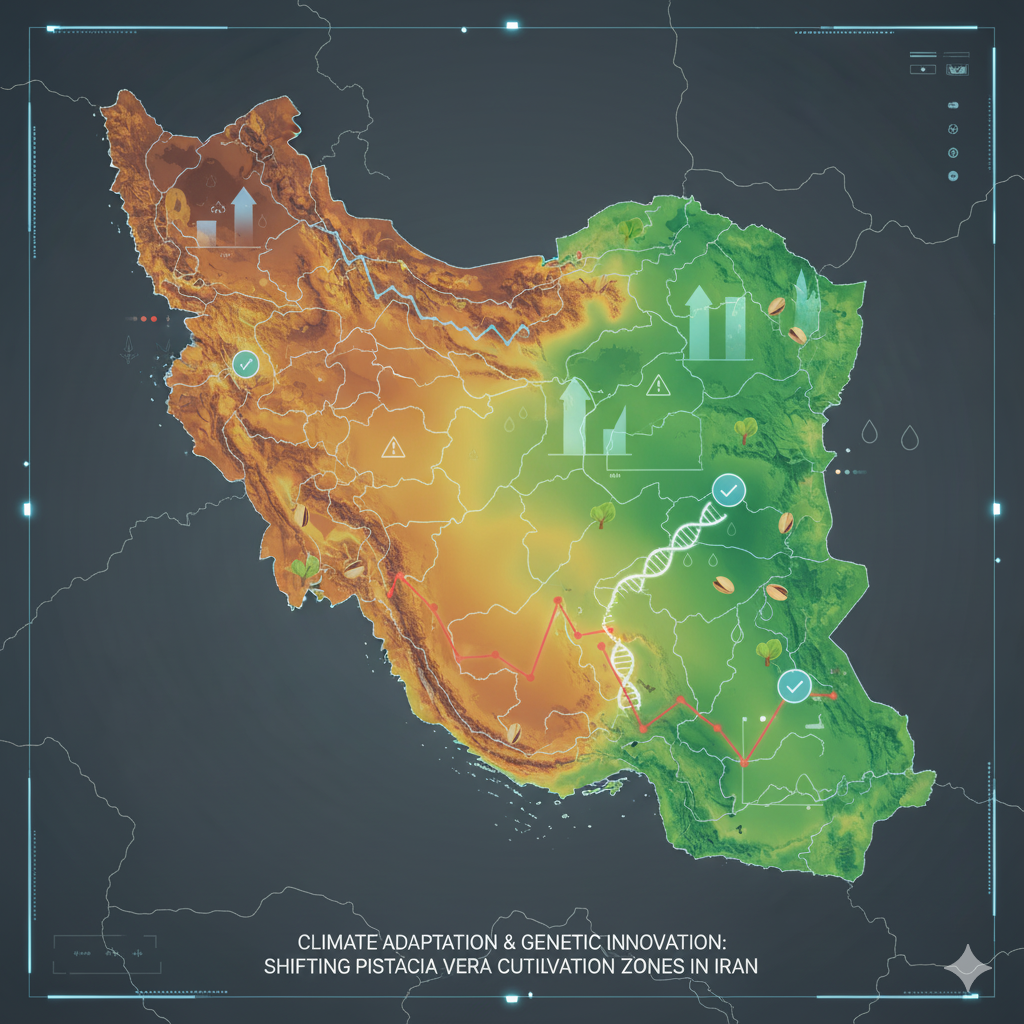
Despite the escalating challenges in traditional zones, regions like Damghan in Semnan Province (known for high per-hectare yield), Qazvin, and Razavi Khorasan present viable alternatives as complementary production hubs for the future of pistachio cultivation. These areas possess more favorable microclimates and better quality groundwater resources. Focusing on advanced processing, quality improvement (Aflatoxin control), and innovative packaging for new target markets (such as China and Europe) is crucial to maintain and enhance Iran’s share in the global pistachio market.
- Conclusion and Recommendations
The future of Iranian pistachios requires a national master plan encompassing deeper research into pistachio genetics, the development of smart irrigation infrastructure, and extensive farmer training in modern technology adoption. The survival of this valuable crop depends on moving decisively from traditional farming methods toward scientific, modern agriculture, demanding collaboration across governmental, private, and research sectors.