

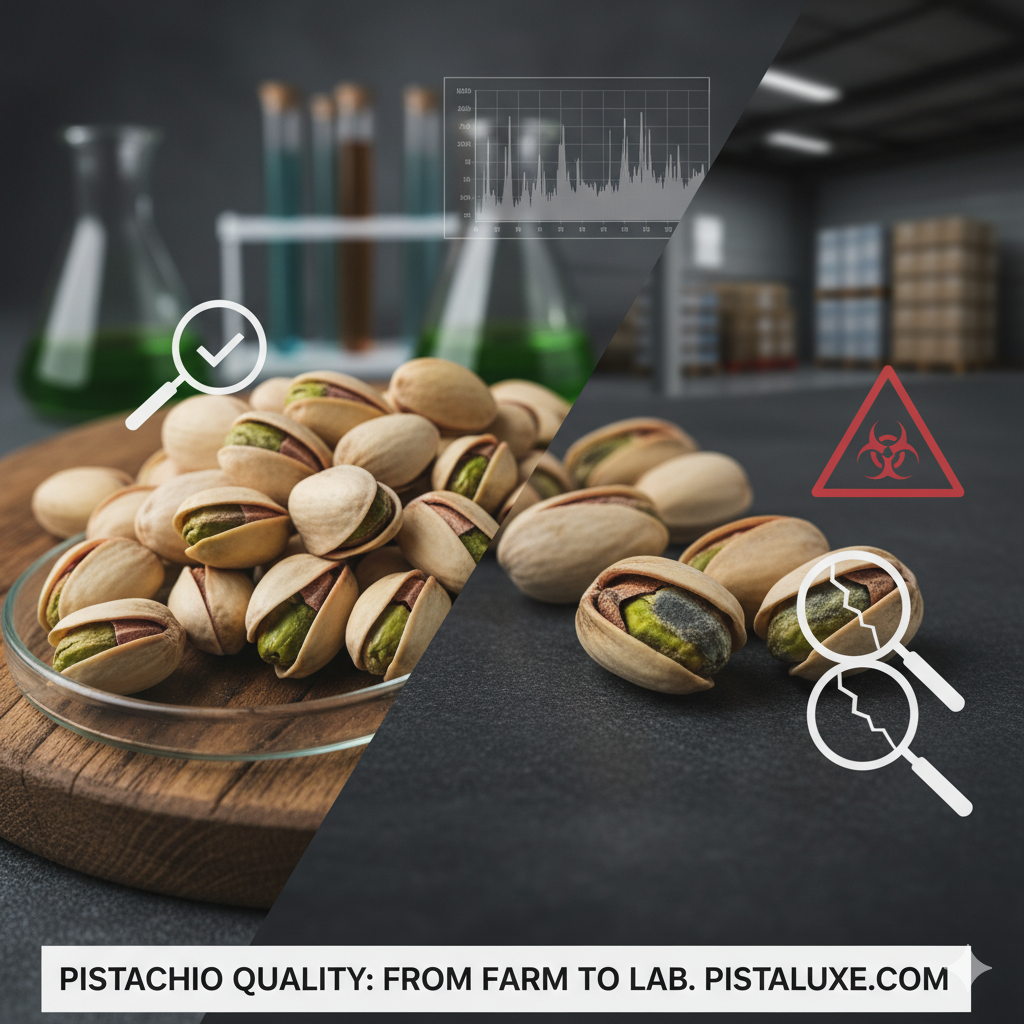
Aflatoxins are among the most potent naturally occurring toxins known to science, posing a severe threat to public health. These mycotoxins are primarily produced by the molds Aspergillus flavus and Aspergillus parasiticus, which thrive in warm, humid conditions on crops like pistachios. Aflatoxin contamination is a critical concern globally due to its strong carcinogenic potential (especially liver cancer) and its ability to suppress the immune system.
While specialists strongly emphasize the necessity of advanced laboratory testing (like HPLC) for accurate quantification of contamination, consumers can become informed frontline detectors. By carefully employing their senses of sight, smell, and taste, you can detect severe and visible contamination at home, ensuring you avoid consuming highly suspect pistachios and protecting your family’s health.
Part 1: Visual Inspection and External Signs of Contamination
- Close Examination of Mold Color and Texture (The Mold Producer):
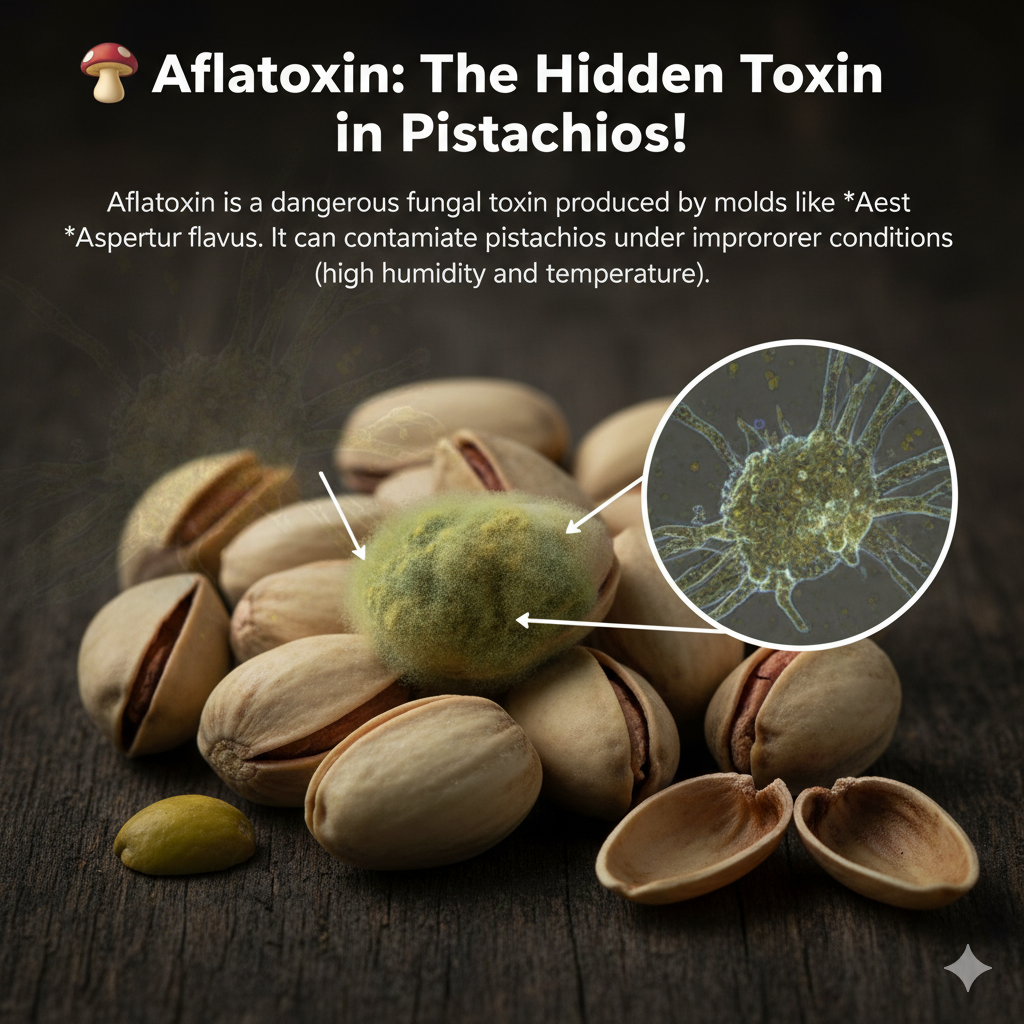
- The Aspergillus flavus mold, the primary producer of Aflatoxin \text{B1}, often appears as a powdery or fluffy mass with a characteristic yellowish-green or dark green color on the pistachio kernel. This mold might be hidden deep within the kernel crevices or near the split point of the shell.
- Educational Note: While not all mold produces Aflatoxin, the presence of any visible mold on a pistachio is a serious warning sign of product spoilage and significantly increases the likelihood of mycotoxin presence.
- Abnormal Kernel Appearance and Discoloration:
- A healthy pistachio kernel should have a natural, relatively uniform color (ranging from green to purple, depending on the variety). Contaminated pistachios may exhibit severe spotting, a change to a dull grey, dark brown, or muddy colour, indicating general deterioration.
- Shriveling and Brittleness: In cases of chronic contamination or improper storage, the pistachio kernel may appear severely shriveled, compressed, and excessively dry and brittle compared to a healthy nut.
- Inspecting for Entry Points (Early Splits and Damage):
- The highest potential for Aflatoxin contamination is found in nuts where the hard shell cracked prematurely while still on the tree (known as “Early Splits”). These cracks serve as the primary gateway for the mold to penetrate the kernel. Furthermore, nuts damaged by insects or birds are also significantly more susceptible to higher contamination levels.
Part 2: Engaging the Senses of Smell and Taste - Off-Putting Odor and Mustiness:
- One of the clearest indicators of fungal spoilage and contamination is a foul smell. A healthy pistachio has a mild and appealing aroma. A contaminated nut often emits a pungent, stale, earthy, sour, or distinctly musty odor. This smell is the result of volatile chemicals and metabolites produced by the molds.
- Bitter, Unpleasant, or Rancid Taste:
- Aflatoxins themselves can contribute to an off-flavour, and their presence at high levels masks the desired sweetness and flavour of the pistachio. Any pistachio that tastes bitter, astringent, soapy, or generally unpleasant should be immediately discarded and not consumed.
Educational Conclusion: The Limitations of Home Detection
It is crucial to understand that the methods outlined above are only effective for detecting gross and high-concentration contamination that is visually evident. Lower levels of Aflatoxin, which still exceed legal safety limits but show no visible signs, can only be detected in sophisticated laboratories. Therefore, always choose to purchase pistachios from reputable sources with certified quality control guarantees regarding maximum Aflatoxin limits.