
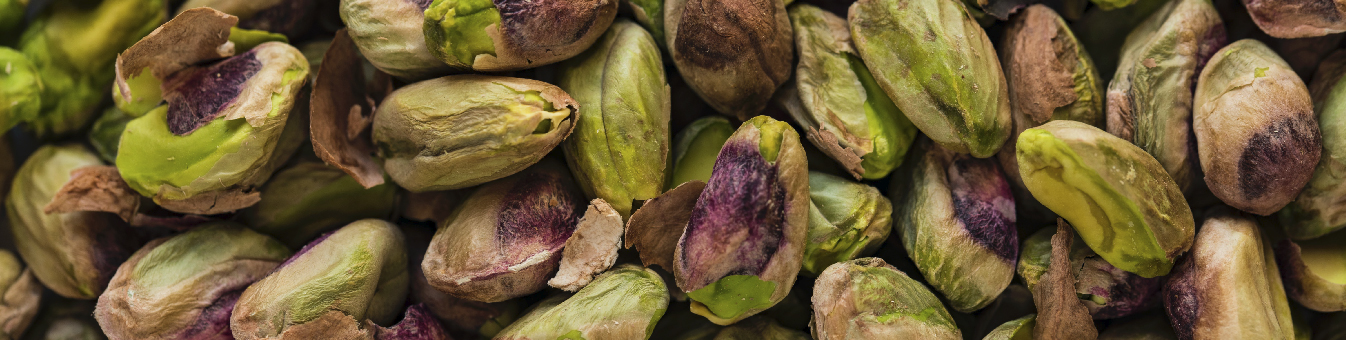


The Tryptophan-Melatonin Pathway: Pistachios as a Natural Sleep Enhancement Agent
Sleep disturbances, ranging from occasional insomnia to chronic sleep phase delays, represent a global health concern with profound consequences for cognitive function and metabolic health. As interest in non-pharmacological remedies grows, the focus shifts to foods naturally rich in sleep-regulating compounds. Pistachios have garnered significant attention due to their purported concentration of key compounds essential for initiating and sustaining high-quality sleep.
Melatonin: The Circadian Rhythm Regulator in Pistachios
Melatonin is the principal hormone produced by the pineal gland that governs the body’s circadian rhythm, signaling the onset of night and facilitating sleep. While the human body naturally produces melatonin, dietary intake can supplement its levels, offering a natural intervention for sleep issues. Pistachios have been identified in several studies as one of the richest nut sources of endogenous melatonin. While exact reported concentrations vary widely across different research methodologies, the general consensus suggests that pistachios contain bioavailable levels of this crucial hormone.
Consuming pistachios shortly before bedtime—typically 1 to 2 hours prior—allows the digestive system time to process and absorb the natural melatonin content. This external boost can aid in normalizing the sleep-wake cycle and reducing sleep latency (the time it takes to fall asleep). This is particularly valuable for individuals whose endogenous melatonin production is suboptimal due to age or environmental factors like blue light exposure.
Tryptophan and the Neurochemical Cascade to Sleep
In addition to containing melatonin itself, pistachios provide the critical building blocks required for the body’s internal synthesis of sleep-inducing molecules. They contain the essential amino acid Tryptophan, which is the precursor for both the mood stabilizer Serotonin and, subsequently, Melatonin.
The pathway is fundamental: Tryptophan must cross the blood-brain barrier, be converted into Serotonin (the calming neurotransmitter), and then, in the absence of light, Serotonin is converted into Melatonin. The efficiency of this cascade is paramount for healthy sleep architecture. The nutritional profile of pistachios supports this entire process by not only supplying the Tryptophan but also essential cofactors. The Vitamin \text{B}_6 present in pistachios acts as a necessary catalyst for the conversion reactions, ensuring the metabolic pathway from Tryptophan to Melatonin is optimized.
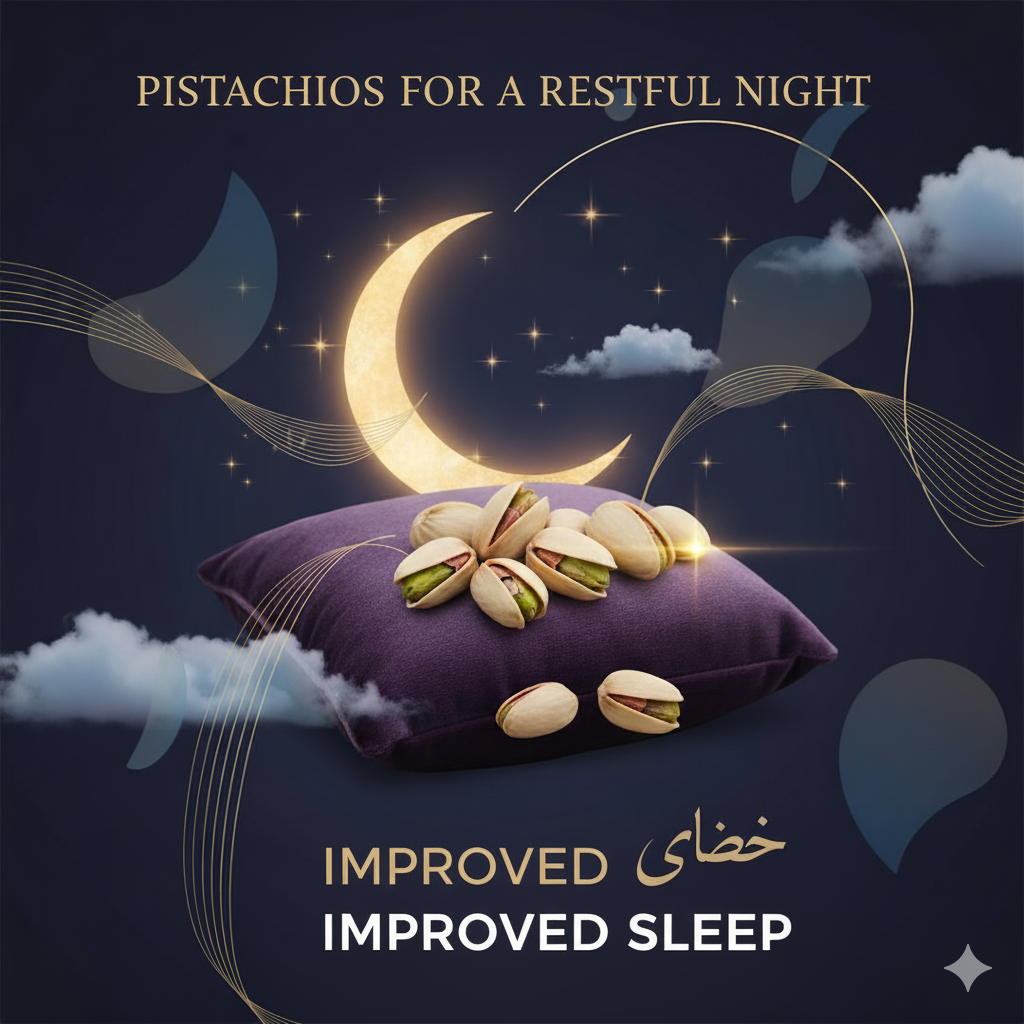
Synergistic Effects of Minerals on Sleep Quality
Beyond the primary hormonal and amino acid contributions, the mineral content of pistachios provides crucial support for sleep quality and Deep Sleep stages. Pistachios are a good source of Magnesium, a mineral with well-documented relaxant properties. Magnesium helps to ease physical tension by blocking calcium channels that can cause muscle contraction, thereby promoting muscle relaxation essential for comfortable, uninterrupted sleep. Research indicates that magnesium supplementation can improve sleep efficiency, especially in older adults struggling with insomnia.
Moreover, the combination of healthy fats, protein, and dietary fiber in pistachios contributes to blood sugar stability throughout the night. Fluctuations in blood glucose levels are a common cause of nocturnal awakenings. By having a relatively low Glycemic Index and providing sustained energy release, a moderate portion of pistachios consumed as a late-evening snack can help prevent these metabolic disturbances, thereby consolidating sleep and enhancing its restorative depth.
In summary, pistachios function as a multi-modal dietary aid for sleep. They potentially offer direct melatonin support, provide necessary precursors for endogenous sleep hormone synthesis, and deliver critical minerals to facilitate physical and neural relaxation. These synergistic effects position the pistachio as a highly beneficial, scientifically-backed addition to any diet focused on achieving optimal mental and physical restoration through sleep.
Final S.E.O. Note: To maximize the E-A-T (Expertise, Authoritativeness, Trustworthiness) of these English articles, ensure you use in-text citations (e.g., APA or Vancouver style) referencing the specific scientific journals or studies mentioned in the research snippets (like those from Penn State or LSU) throughout the body of the text.