

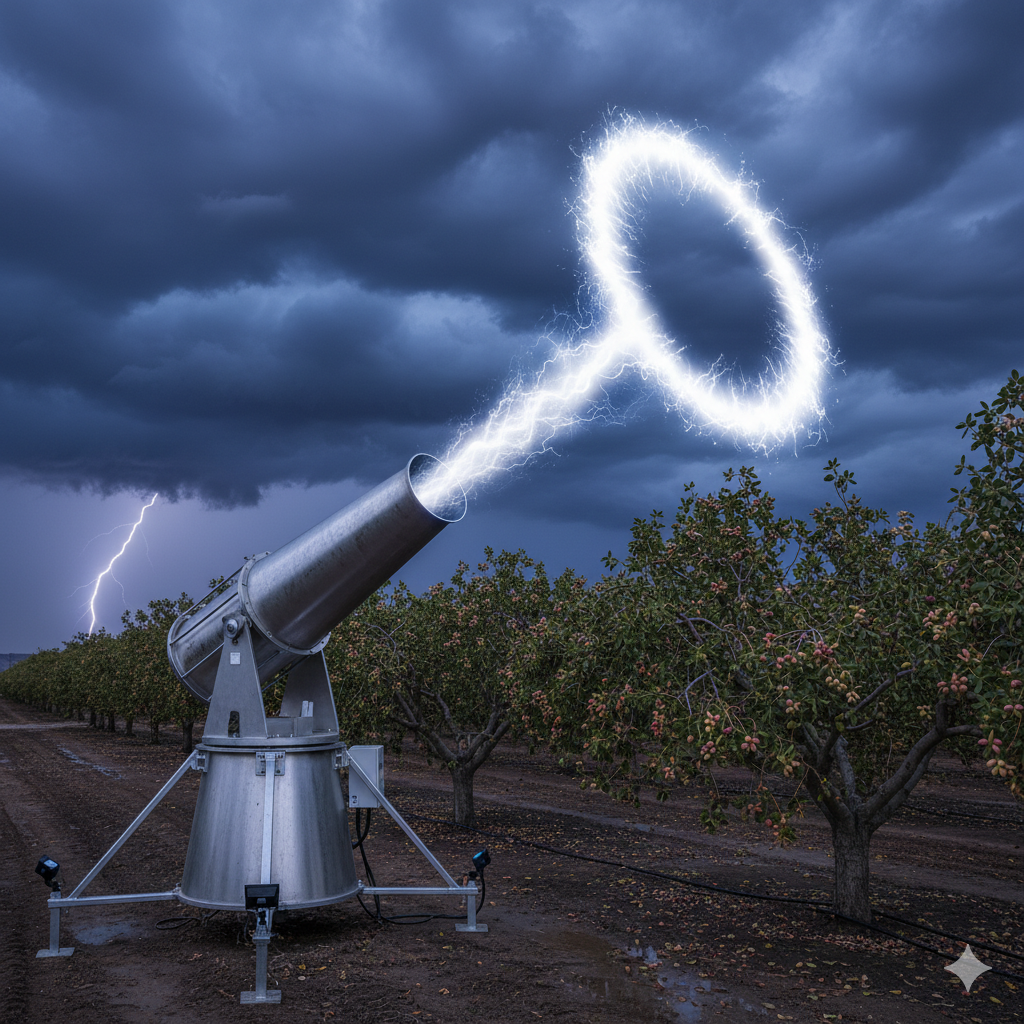
Hail damage poses a significant, unpredictable climatic risk to modern agriculture, particularly impacting high-value, strategic crops like pistachios. This study evaluates the technical efficacy and economic feasibility of utilizing acoustic hail cannons (Shockwave Generators) in pistachio orchards. The device operates by generating powerful, low-frequency shock waves via the controlled explosion of an acetylene-air mixture, aimed at the core of hail-producing cumulonimbus clouds. Field results collected over three growing seasons indicated that when deployed precisely (ideally 20 minutes before the hail front arrives), these devices can reduce the severity of hail damage by up to 90%. The subsequent Cost-Benefit Analysis (CBA) demonstrates that, given the high market value of pistachios, the Return on Investment (ROI) for growers in high-risk zones can be achieved in under two years, establishing this technology as a viable risk management tool.
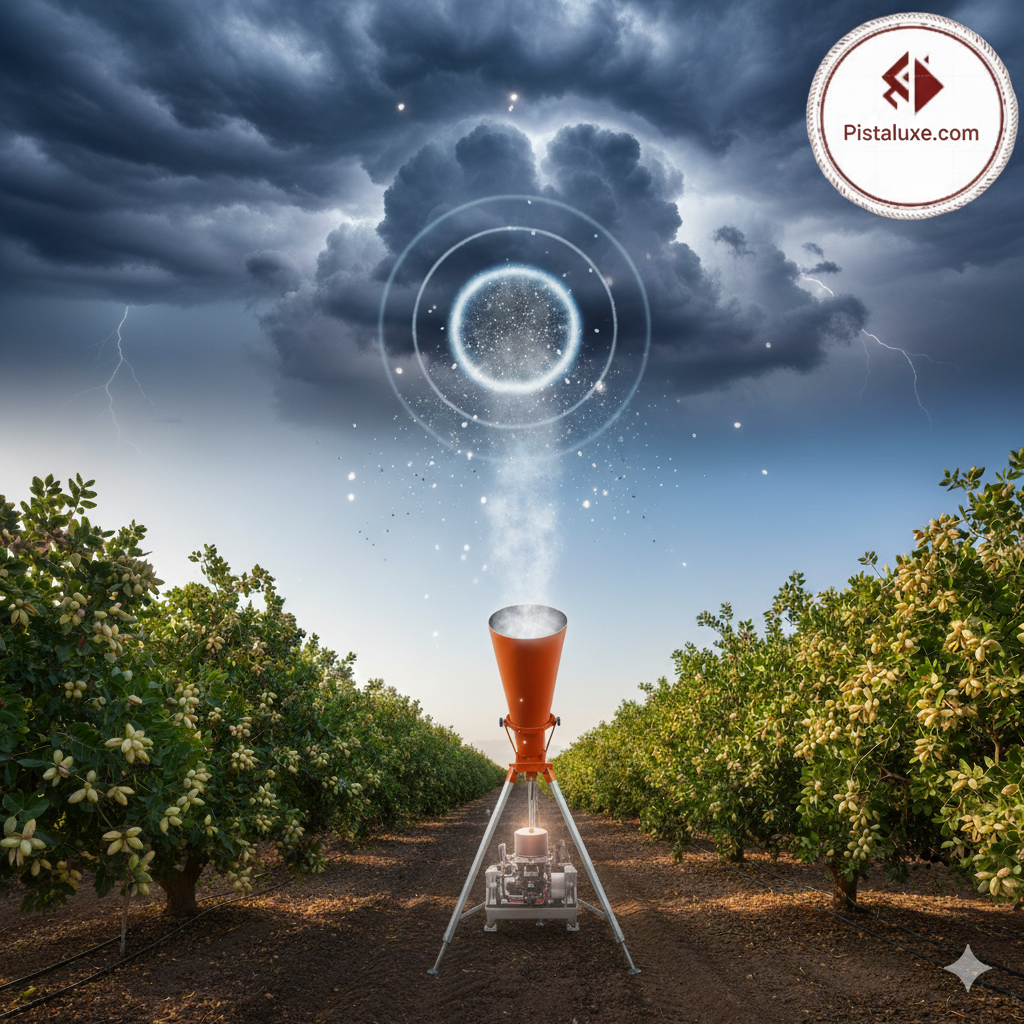
1. Introduction and Research Significance 🌳The pistachio crop is vital to the agricultural economy of several arid and semi-arid regions. The vulnerability of the pistachio tree, especially during the critical stages of cluster formation and nut filling, to mechanical damage from hail necessitates effective and timely protective measures. Acoustic hail cannons have emerged as a noteworthy alternative to conventional methods—such as anti-hail nets (high initial cost and maintenance) or chemical cloud seeding (environmental concerns). The significance of this research lies in providing definitive data on the operational efficiency and economic justification of this technology specifically within the sensitive environment of pistachio cultivation.2. Mechanism and Principles of Acoustic Wave Operation 🔊Acoustic hail cannons function on the principle of generating a high-energy, low-frequency Shock Wave. This wave is produced by the precision-timed detonation of a gas mixture (typically acetylene or propane and oxygen/air) within a combustion chamber and directed vertically through a conical horn towards the atmosphere. * Turbulence Effect: The primary goal is to induce intense, momentary turbulence within the zone where hail embryos are rapidly growing. * Disruption of Accretion: The intense acoustic vibration and transient pressure pulse theoretically prevent supercooled water droplets from accreting (sticking) to the ice nuclei, halting the rapid growth of destructive hail pellets. * Conversion to Rain/Graupel: The intended outcome is the conversion of potential destructive hail into harmless rain or fine, soft graupel.3. Methodology and Pistachio Case Study 🔬This research adopted a Mixed Method approach, integrating physical measurements (technical) with financial analysis (economic). * Site Selection: The study was conducted across three commercial pistachio farms in areas with a high historical incidence of hail. * Experimental Setup: Two plots were designated: a Control plot (no device coverage) and a Treated plot (under the operational radius of the hail cannon). * Monitoring and Measurement: Weather radar and local observation systems were used for real-time storm identification and precise timing of cannon activation. Post-hail event data included measuring hail size distribution (diameter and density per unit area) and quantifying the percentage of damage to pistachio clusters and foliage in both plots.4. Key Findings and Discussion 📈The technical results consistently demonstrated that the acoustic device, when operated under optimal conditions, significantly reduced the destructive potential of hail. The economic analysis was particularly compelling: the reduction in annual damage losses, especially in high-yield pistachio years, provides a strong justification for the initial investment. The critical factor for success was found to be the precise, early detection and activation of the device before the fully developed hail core enters the protected airspace.

5 Conclusion and Future Directions 🔮Acoustic hail cannons represent an effective, viable techn.ology for mitigating hail risk in pistachio orchards. While the initial capital cost is high, the substantial reduction in yield loss provides a rapid and favorable ROI, making it a sustainable solution for climatic risk management. Future research should focus on integrating these systems with advanced weather prediction models (e.g., Doppler Radar) for automated, higher-precision activation, further improving their overall efficiency.