

Author: Mr. Ravanshad
Company: Pistaluxe (Qomes Tejarat Asia)
Reading time: ~10 minutes | Audience: Quality Assurance (QA) Managers, Food Technologists, Professional Procurement Officers
Introduction: Beyond the Surface
In the global pistachio trade, “good quality” is a subjective term used by many, but a technical reality measured by few. For a professional buyer in the European food industry, a visual inspection of a sample is merely the first—and perhaps least reliable—step.
To truly mitigate risk and ensure the stability of your production lines, you must look deeper. This guide provides a professional, multi-dimensional framework for evaluating pistachio quality, moving from sensory perception to rigorous laboratory metrics.
1. Physical & Sensory Evaluation: The First Line of Defense
While not definitive, the physical characteristics of the kernels provide immediate clues about the processing and storage history.
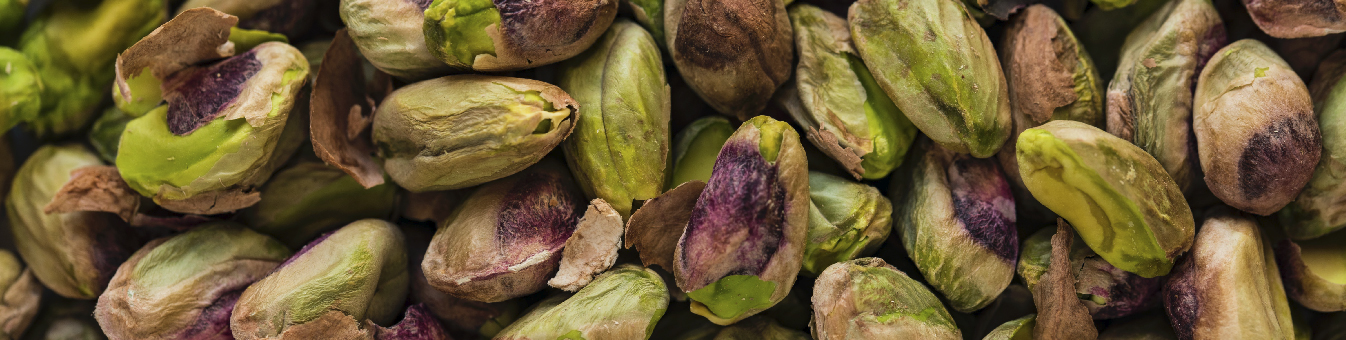
- Color Uniformity (The “Greenness” Factor): High-quality Iranian varieties (like Akbari or Ahmad Aghaei) should exhibit a vibrant, consistent green hue. Pale or yellowish kernels often indicate over-roasting, improper drying, or aging.
- Kernel Integrity & Shape: For whole kernels, look for “plumpness.” High rates of shrivelled or “empty” kernels suggest poor irrigation during growth or improper dehydration.
- Aroma & Flavor Profile: A fresh, high-quality pistachio must have a clean, nutty, and slightly sweet aroma. Any hint of “mustiness,” “earthiness,” or “chemical” notes is an immediate red flag for fungal activity or rancidity.
- Texture & Crunch: The kernel should have a crisp, firm snap. A “soft” or “leathery” texture is a primary indicator of high moisture content or lipid oxidation (rancidity).
2. The Technical “Must-Haves”: Laboratory Metrics
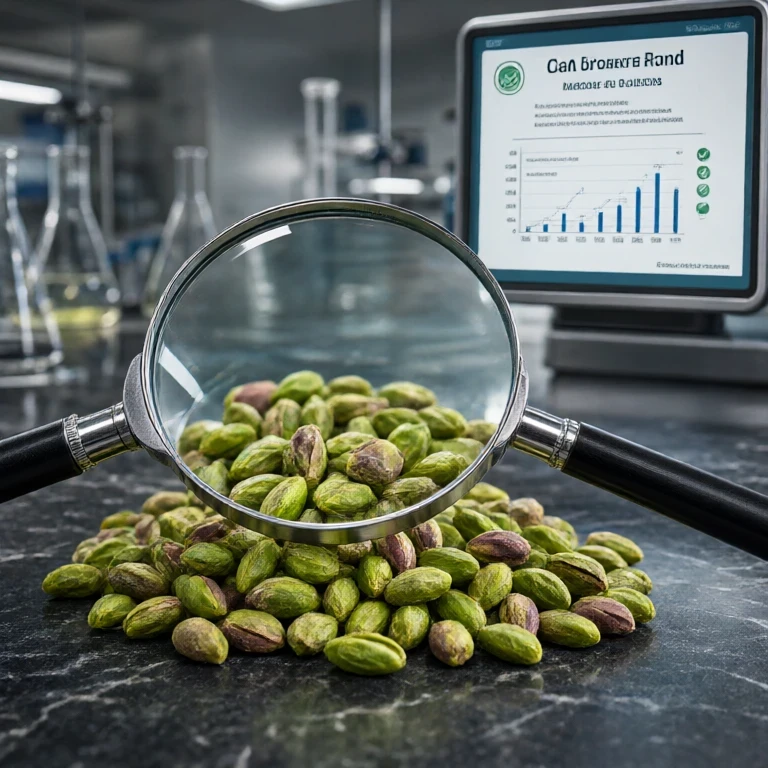
Professional procurement requires moving from “sight” to “science.” When reviewing a Certificate of Analysis (CoA) from a supplier, these are the critical parameters you must scrutinize:
A. Moisture Content (The Stability Key)
- Ideal Range: Typically < 5% for whole kernels and even lower for processed flours/pastes.
- Risk: High moisture is the primary driver of microbial growth and aflatoxin development. It also significantly affects the shelf-life of your finished products (e.g., causing sogginess in pastries).
B. Free Fatty Acids (FFA) & Peroxide Value (The Freshness Key)
- Metric: FFA and Peroxide Value (PV) measure the degree of lipid oxidation.
- The Test: Low FFA and PV levels indicate that the natural oils in the pistachio are fresh and have not begun to break down. High levels mean the product is already “going rancid,” which will ruin the flavour of any food product it is added to.
C. Particle Size Distribution (PSD) for Derivatives
- The Requirement: If you are buying pistachio flour or paste, you must request a PSD report.
- The Impact: For a chocolatier, a paste that is too coarse will create an unpleasant mouthfeel. For a baker, flour that is too inconsistent will affect the structural integrity of doughs.
3. The Regulatory Checklist: Compliance Verification
In the European market, a product is only as good as its documentation. A professional buyer must verify:
- Aflatoxin & Mycotoxin Limits: Ensure the CoA specifically tests for Aflatoxin B1, B2, G1, and G2, with results well within EU regulatory thresholds.
- Pesticide Residue Analysis: Verify that the residue levels comply with the latest EU Maximum Residue Limits (MRLs).
- Accreditation Check: Always confirm that the laboratory that issued the CoA is ISO/IEC 17025 accredited. A report from an unaccredited lab is often legally insufficient in an audit.
4. The Professional Buyer’s Summary Checklist
When evaluating a new pistachio supplier or a fresh batch, use this rapid-fire checklist:
| Step | Checkpoint | Red Flag (Reject/Escalate) |
|---|---|---|
| 1 | Visual Inspection | Discoloration, shrivelled kernels, dust/debris. |
| 2 | Aroma Test | Musty, fermented, or “old oil” smell. |
| 3 | Moisture Check | Any report showing > 5% for whole kernels. |
| 4 | Oxidation Check | High Peroxide Value (PV) or FFA levels. |
| 5 | Compliance Check | Missing CoA or non-ISO 17025 accredited lab. |
| 6 | Traceability | Inability to provide orchard-to-port documentation. |
Conclusion: Quality is a Partnership, Not a Product
True quality in the pistachio industry is not something you “find”; it is something you ensure through partnership. A supplier who provides transparent, data-driven, and accredited documentation is not just selling you a nut—they are providing you with the peace of mind required to scale your business.
At Pistaluxe, we don’t just ship pistachios; we ship verified technical data. Our processes are designed to meet the exact standards of the world’s most demanding food manufacturers.
Need a technical datasheet or a sample for your QA lab? Contact us today.
📞 Connect with Us Directly
- Direct WhatsApp / Call: +98 921 477 3705
- Professional Email: info@pistaluxe.com
- Official Website: pistaluxe.com