
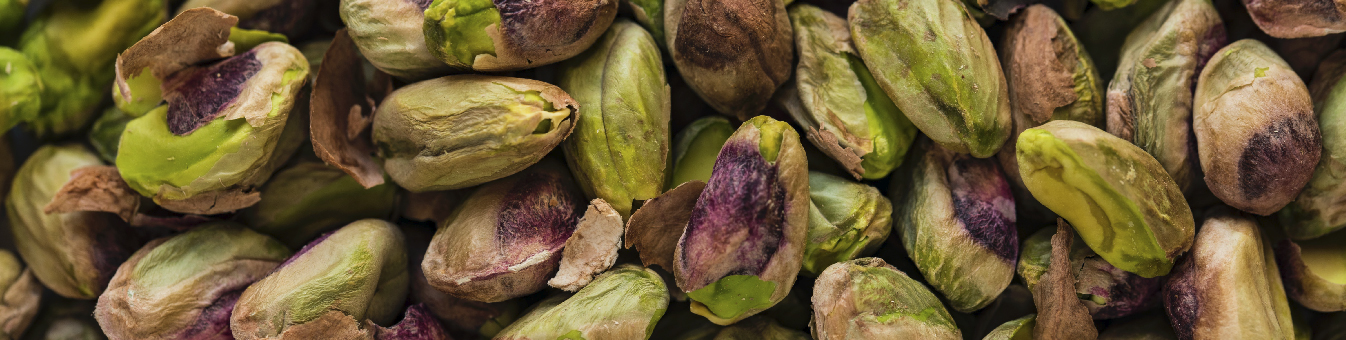

For international food distributors and retailers, the quality of Iranian pistachios is not just a matter of taste—it is a matter of compliance and safety. When importing premium nuts, the primary concern for any professional buyer is Aflatoxin levels. At Pistaluxe (Qomes Tejarat Asia), we recognize that trust is built on transparency, rigorous testing, and strict adherence to global food safety standards.
In this article, we delve deep into the technical side of our quality assurance protocols and what you, as an importer, should look for in your supply chain.
The Aflatoxin Challenge: Why Standards Matter
Aflatoxins are naturally occurring mycotoxins that can develop in nuts under specific temperature and humidity conditions. For markets like the European Union, which maintains some of the world’s strictest food safety regulations, compliance is non-negotiable.
Exceeding these limits can result in cargo rejection, significant financial losses, and damage to your brand reputation. This is why Pistaluxe implements a multi-layered safety protocol that spans from the moment of harvest to the point of dispatch.
Our “Zero-Compromise” Quality Protocol
Our commitment to safety is integrated into every stage of our supply chain:
- Orchard-to-Warehouse Protocol: We work directly with farms that adhere to GAP (Good Agricultural Practices). Proper drying immediately after harvest is the most effective way to prevent the development of contaminants.
- Advanced Sorting Technologies: We utilize state-of-the-art electronic sorting machines that use optical sensors to identify and remove any nuts with shell defects, discoloration, or potential damage. This is followed by a rigorous manual sorting process to ensure only the highest-grade kernels make it to your order.
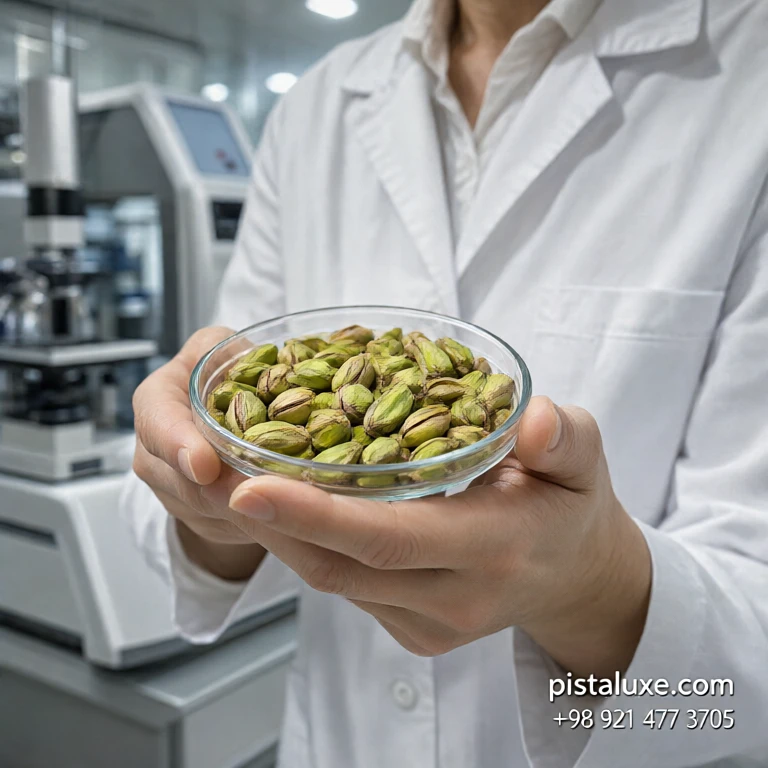
- Laboratory Verification: Every batch is tested using high-performance liquid chromatography (HPLC) or ELISA methods to ensure that Aflatoxin B1 and total Aflatoxin levels remain well within international safety limits. We provide full certificates of analysis (COA) for all bulk shipments.
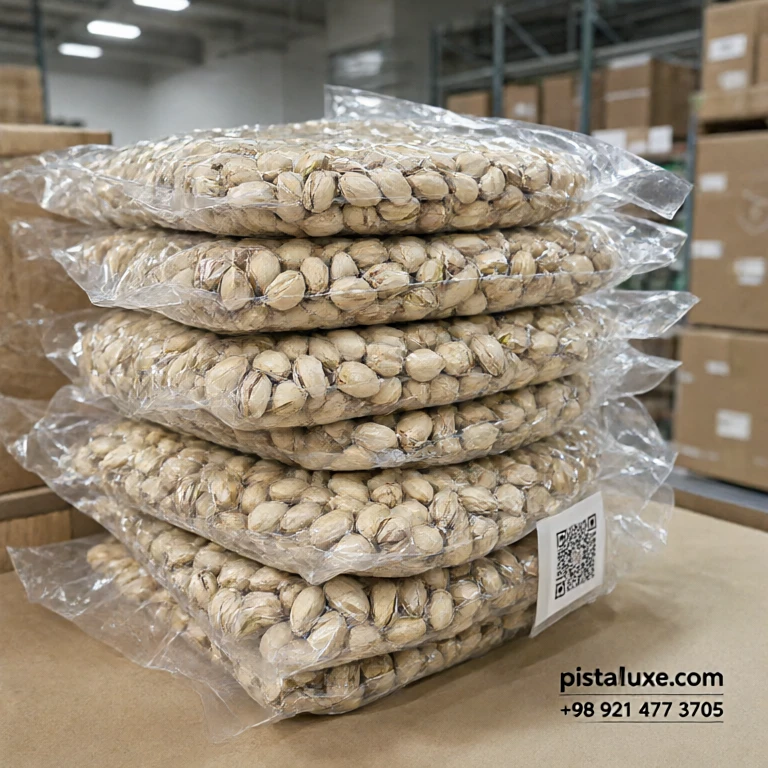
- Controlled Storage and Packaging: Once processed, our products are stored in temperature-controlled facilities to maintain freshness. We offer various packaging options, including vacuum-sealed bags and food-grade polypropylene sacks, designed to protect the cargo from moisture and external contaminants during long-haul shipping.
How to Vet Your Supplier: A Checklist for Importers
When you are selecting an Iranian pistachio supplier, do not just look at the price. Ask these three critical questions:
- “Can you provide a COA (Certificate of Analysis) from an accredited laboratory for the current batch?”
- “What are your documented storage protocols regarding humidity and temperature?”
- “Do you provide batch traceability? Can we track a container back to its processing date and facility?”
At Pistaluxe, we provide this data as standard. We believe that an informed buyer is a successful business partner.
Ready to Secure Your Supply Chain?
We have compiled our detailed quality standards, including specific threshold charts and testing methodologies, into a comprehensive guide for professional importers.
Download the Pistaluxe Expert Export Guide Here
Partner with Pistaluxe
Quality is not an accident—it is our protocol. If you are looking for a reliable partner to manage your pistachio imports with transparency and rigor, I am personally ready to help.
Contact Mr. Ravanshad:
📧 Email: info@pistaluxe.com
📱 WhatsApp: +98 921 477 3705
Pistaluxe: Premium Quality, Guaranteed.